




About
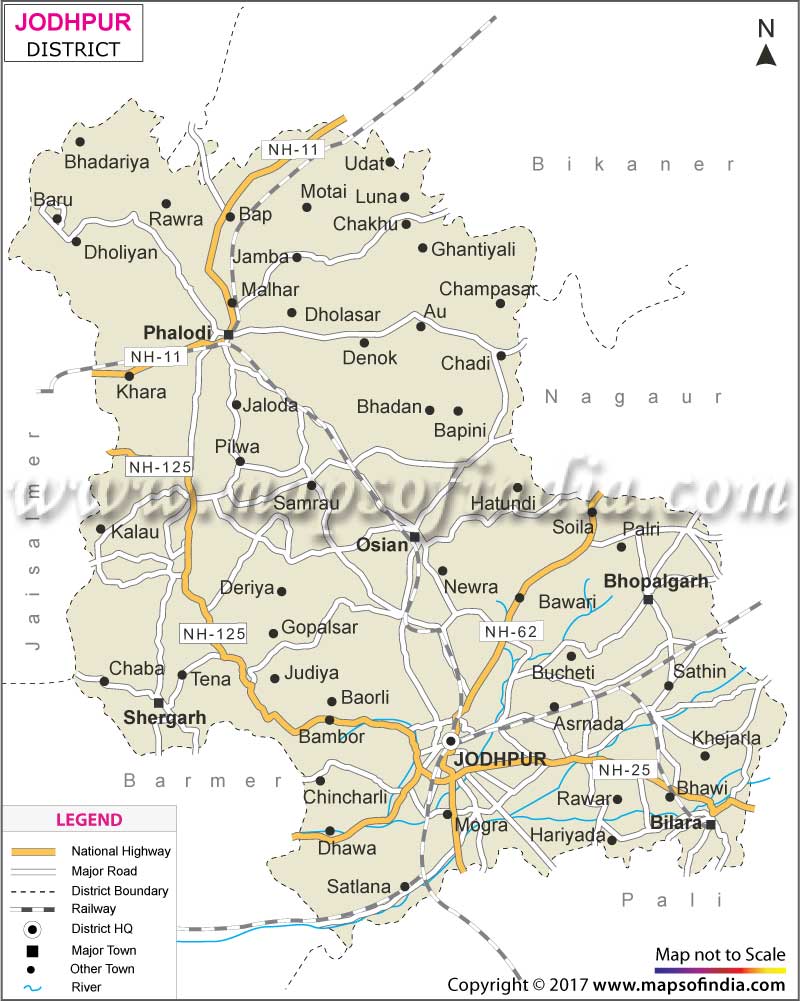
Home to sweeping sands and ancient roots, Jodhpur shapes much of western Rajasthan’s identity through governance, heritage, and terrain. Its title traces back - not loosely but precisely - to Rao Jodha, a determined leader of the Rathore Rajputs who carved out this fortress city in 1459. Known far beyond India's borders as the Blue City, thanks to clusters of deep blue-painted homes crowding its older lanes, it also bears another label: Sun City - earned from relentless daylight bathing the land each season. Sitting near the center of the state, it touches Bikaner up north, meets Nagaur on one flank, links with Pali and Barmer toward the lower edge, while facing Jaisalmer off to the west. Because of where it lies, movement flows easily here - goods shift through quietly, travelers pass without delay.
History and Culture
In 1459, Rao Jodha moved his base from Mandore to present day Jodhpur. The shift followed earlier displacements of the Rathore clan after losing their rule in Kannauj. This group claimed roots in ancient royal lines from northern regions. On the new site rose Mehrangarh Fort - massive, built on sheer rock, central to power in Marwar. Though harsh, the desert terrain did not slow growth. Instead, political ties shifted carefully through time: first adjusting to Delhi's sultans, then balancing demands under Mughal reach. Much later, dealings extended toward the British presence in India.
Over time, Jodhpur gained more wealth and clout, even though the land around it stayed unforgiving. Sitting high above on rugged stone, the Rathores ruled steadily through changing times - each new leader holding fast to authority.
Under Mughal sway, the kingdom climbed highest, especially when Raja Udai Singh ruled, then later Maharaja Jaswant Singh. Art began merging with new forms, not just in painting but in how buildings rose and defenses were laid out. From this mix came wealth unlike before, power growing quiet but deep. Jodhpur stood apart afterward - richer than most, stronger by design, a name that carried weight across Rajput lands.
Later came a moment that reshaped everything - India gained freedom in 1947. Not long afterward, power changed hands quietly when Maharaja Hanwant Singh agreed to join the new nation. His decision carried weight; through the Instrument of Accession, an ancient line bowed to democracy. Centuries of royal rule dissolved into structure, forming what now stands: a district run by offices, not palaces.
Life in Jodhpur pulses with age-old customs, where art and legend shape everyday routines. Its unique painting tradition stands out - marked by vivid hues, dramatic expressions, rich scenes of courts, hunts. From this land emerge powerful dance forms: Kalbeliya, Ghoomar, Chari - each carried forward by movement and sound. Music flows through Langa and Manganiyar performers, their strings pulled on kamayacha, sarangi, filling air with emotion. Season after season, festivals transform quiet stretches of sand into lively gatherings. One such event, the Marwar Festival, honors Rajasthani valor each year through song, sport, and camels dressed in finery. Meanwhile, Gangaur and Teej draw women from every background into moments of solemn devotion, joy woven into ritual. Out here in Jodhpur, cooking evolved under harsh conditions - dry land, little water, needs for long-lasting foods.
Economy
Backed by strong output, Jodhpur’s economy spans multiple sectors instead of relying on just one. Once centered on farming, it now hosts expanding industries along with growing service networks. Billions flow into Rajasthan’s total production thanks to this shift. Handicraft traditions persist here alongside large-scale mineral extraction. Government projects add momentum across regions. Corporate activities, increasingly sophisticated, operate within the same space without overshadowing older trades.
Government Sector
Jodhpur’s economy leans heavily on state-backed roles, drawing strength from widespread public employment and steady growth patterns. Holding status as Rajasthan’s judicial center means the city shelters the main branch of the state High Court, fueling demand for lawyers, clerks, and support networks around justice delivery.
Public Sector
Most of the region’s core systems rely on government oversight to keep functioning smoothly. Branches run by institutions such as the State Bank of India stretch into remote farming areas, offering loans critical for village economies, while also serving city-based small businesses through widespread banking access. Power supply in western Rajasthan moves through agencies like JdVVNL and its larger counterpart responsible for transmission across the state. Because rainfall stays low year after year, clean water depends on agencies like PHED building long-distance canals - some linked to the Indira Gandhi project - to sustain both homes and factories. Far from being just transport routes, railway lines centered in Jodhpur support entire communities of workers who operate and repair trains linking distant parts of the west.
Services Sector
Home to India’s biggest export hub for handmade crafts and woodwork - worth hundreds of millions yearly - Jodhpur sees intricate networks of artisans, freight operators, certification bodies, and independent exporters move goods across continents. Fueled mainly by overseas visitors, the city’s service economy surges forward through lodging options stretching from palace-turned-hotels to modest guesthouses welcoming countless tourists. Not far behind, retail trade gains momentum alongside rising property projects, tech-based ventures, and privately run clinics drawing skilled youth into fresh professional roles.
Tourism
High above the city, Mehrangarh Fort dominates the view with quiet strength. Built on a steep drop that cuts straight into rock, it holds spaces such as Moti Mahal, Phool Mahal, and Sheesh Mahal - rooms shaped by generations of royal taste. Inside those heavy stone boundaries, visitors encounter a museum full of moments from the past, telling stories of the Rathore lineage. Artifacts like ornate litters, old arms, and garments worn by rulers line the halls, speaking without words. Though silent now, these objects once moved through grand processions under open skies.
Standing apart from the old fortifications rises the grand Umaid Bhawan Palace, spread over vast landscaped lawns - among the biggest private homes anywhere. Constructed solely with fitted blocks of pale gold stone, held together without adhesive or cement, this modern-era residence lives multiple roles today: one part still a royal household, another transformed into a heritage hotel, while sections remain preserved as a public museum
A wing once sealed now welcomes visitors, transformed into a lavish retreat where history meets indulgence. Its corridors whisper stories while offering stays steeped in grandeur. Guests step into spaces shaped by time yet refined for modern ease. Opulent textures meet architectural legacy beneath high ceilings. Here, past elegance blends with present comfort, room by room. Apart from the main halls, one section opens into a public gallery where fragile treasures - antique clocks, classic cars, and relics quietly recovered from Jodhpur’s regal history - are preserved under careful watch.
Outside city edges, history folds into landscape through quiet ruins and living traditions. Rising above green meadows, carved memorials at Mandore stand like echoes of temple spires, watched over by lounging langur monkeys. Instead of crowds, visitors find space in Machia’s protected stretch near Kaylana Lake, where fenced trails guide eyes toward swift blackbucks, shy desert foxes, and seasonal wings gliding low over water. Temples appear suddenly in Osian, shaped by hands nearly twelve hundred years ago, their sandstone figures still sharp under sun - proof of old trade wealth and deep belief.
Demographics
Among India's western Rajasthan zones, Jodhpur emerges clearly through its human landscape - how people are spread, how communities shift toward new norms, and what languages take root. Official figures from the 2011 national headcount place the region’s inhabitants at 3,687,165, a tally that ranks it among Rajasthan’s densely settled areas. While nearly two-thirds live across villages (2,422,551), cities within the district hold the rest - 1,264,614 - in growing clusters. Following the decade before 2011, numbers rose sharply: growth reached about 27.69%. Such momentum came not quietly - it followed waves of movement to towns along with factory-led changes.
Across the region, an average of 161 people occupy each square kilometer - this stems largely from wide stretches of dry land shaping settlement patterns in the outer edges of the Thar Desert. Where life takes root, it tends to follow dependable water points and pockets of farmable soil. For every thousand men, there are 916 women, a gap that persists despite ongoing support through schooling initiatives and community health outreach. Progress here links closely to long-term investment in girls’ access to learning and basic services.
Years have brought steady growth in reading skills and school opportunities throughout Jodhpur. Backed by figures from 2011, the area reports a general literacy level of 65.94%, holding its ground when measured against broader regional trends. Still evident? A sharp gap between genders - men reach 78.95% literacy, showing stronger pathways into learning systems, women sit at 51.83%, trailing due to long-standing barriers, leading officials to launch focused efforts on schooling girls and teaching adults in remote zones. In homes and markets, people most often speak Marwari, a vivid local form of Rajasthani enriched by stories passed through generations.
Administration
Efficiency drives how Jodhpur district organizes its governance across wide lands and many people. At the top, one official holds dual responsibility - revenue oversight comes first, then development planning, followed by maintaining peace. Smaller units handle daily tasks, shaped long ago but adjusted carefully as needs changed. Originally split into seven zones for tax matters and local courts, these areas evolved without sudden shifts. Each main zone now supports stability through consistent routines. Their roles remain central even as functions shift slightly over time. These foundational divisions continue guiding operations on the ground.
Jodhpur Tehsil stands as the core of dense city development, directing governance across urban zones alongside local administrative bodies.
Across the northeast lies Osian Tehsil, managing age-old farming traditions alongside deep-rooted customs. Land shaped by seasons guides both crop cycles and community rhythms here. Where fields stretch wide, heritage remains tied to soil and ritual alike.
Farming lands east of Bilara thrive within the Luni River's reach. Water flow shapes how fields are worked across the tehsil. Soil richness supports crop growth year after year. This area depends on seasonal patterns more than mechanical methods. People rely on steady river supply during dry stretches. Cultivation continues where moisture remains sufficient.
Across the countryside, governance reaches farther through subdivisions like community development blocks and panchayat samitis nested within each tehsil. Roughly 1,836 revenue villages make up the district’s rural administrative framework, each formally acknowledged by law. At the heart of village-level organization stands the Gram Panchayat, directly elected by residents. From education oversight to maintaining power access in remote areas, these bodies handle essential services locally. Because they distribute welfare programs funded by the state, authority flows more clearly from urban centers to isolated desert communities.
| Facts of Jodhpur District | |
|---|---|
| State | Rajasthan |
| District | Jodhpur |
| District HQ | Jodhpur |
| Population | 3687165 |
| Growth | 27.74% |
| Sex Ratio | 916 |
| Literacy | 65.94 |
| Area (km2) | 22850 km2 |
| Density (/km2) | 3,900/km2 |
| Tehsils | Bhopalgarh, Bilara, Jodhpur, Luni, Osian, Phalodi, Shergarh |
| Lok Sabha Constituencies | Jodhpur, Pali |
| Assembly Constituencies | Bhopalgarh, Bilara, Jodhpur, Lohawat, Luni, Osian, Phalodi, Sardarpura, Shergarh, Soorsagar, Pokran |
| Languages | Hindi, Rajasthani including Marwari |
| Rivers | Luni, Mithri |
| Lat-Long | 26.68673,72.892685 |
| Travel Destinations | Mehrangarh Fort, Jaswant Thada, Umaid Bhawan Palace, Government Museum, Rai-ka-Bag Palace, Umed Garden, Raj Ranchhodji Temple, Achal Nath Shivalaya, Siddhnath Shiv temple, Ganesh Temple, Mandor, Balsammand Lake & Palace, Kaylana Lake, Guda Bishnoi, Jaswant Sagar Dam etc. |
| Government Colleges/Universities | Jai Narain Vyas University, Government College (Jodhpur) Govt. College (Balesar), Govt. College (Balesar), J.N.M.P. Government College, S.P.M. Government PG College, S.S.D.C.L.B. Government Girls College etc. |
FAQs
Q1: How many villages exist within the Jodhpur district boundaries?
Spread across Jodhpur district is a wide network of around 1,836 officially recorded revenue villages. These settlements fall under structured administration through multiple tehsils alongside panchayat samitis.
Q2: What is the population of the district?
3,687,165 people live in Jodhpur district, based on official Census figures. Among them, rural areas account for 2,422,551. Urban zones hold the remainder: 1,264,614. The numbers reflect a clear geographic divide. Data comes directly from national records.
Q3: What is the district of Jodhpur most famously known across the world?
Worldwide recognition comes to Jodhpur through the grandeur of Mehrangarh Fort. Dwellings painted in deep indigo define the historic urban core, giving rise to the name Blue City. Cultural life pulses strongly here, shaped by Marwari traditions over time. Export markets receive substantial craft and furniture goods from this region each year.
Last Updated on : June 22, 2026
