Historical Roots of Mudiyettu
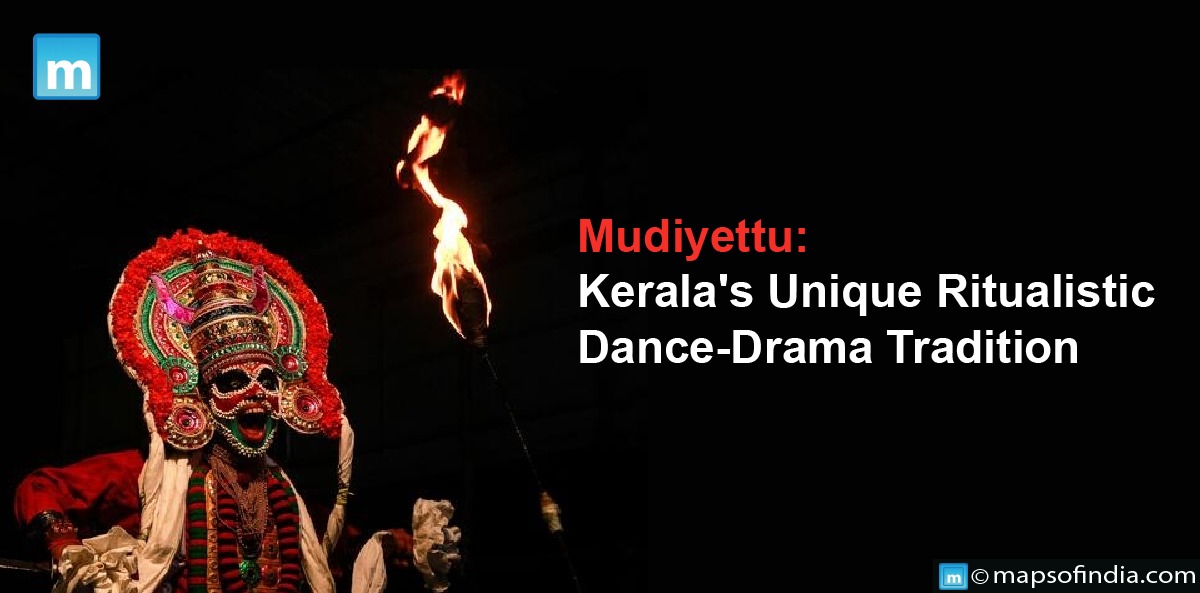
Mudiyettu's origins can be traced back to Kerala's medieval period, with references dating back to the 13th century. The word "Mudiyettu" is made up of two parts: "Mudi," which means "crown" or "headgear," and "ettu," which means "to wear." The elaborate headgear worn by the performers, a distinguishing feature of the art form, inspired the name. The "Bhagavathi Mudiyettu," dedicated to the goddess Bhadrakali, is one of the oldest and most well-known Mudiyettu traditions. The performance usually revolves around the mythology of Bhadrakali and is held on temple grounds, especially during the Navratri festival. Different regions of Kerala have developed variations of Mudiyettu over the years, each with its own stories and characters. Still, the core elements of the art form have remained consistent.Significance of Mudiyettu
Mudiyettu is deeply ingrained in the cultural and religious ethos of Kerala. It is more than just a form of entertainment; it is a way of invoking the divine, appeasing the gods and goddesses, and retelling mythological stories from the state's rich heritage. The ritualistic performances are usually held in temple courtyards and are regarded as a form of worship. They are thought to bring the community blessings and protection. Kurups or Marars are traditionally male performers regarded as the guardians of this ancient tradition. From a young age, they are subjected to rigorous training, learning the intricate dance movements, expressions, and vocal techniques required for a successful Mudiyettu performance. Typically, the art form is passed down through generations, ensuring its continuity and authenticityElements of Mudiyettu
-
Elaborate Costumes and Headgear
-
Intricate Makeup
-
Dance Movements
-
Vocal Music
-
Ritualistic Elements
-
Narrative Structure