 The thing about technology is that it is ever evolving and what we have witnessed over the last four decades is that the pace of evolution in technology is increasing with time.
Till the 1980s, IBM’s mainframes were the mainstay of the computing world and all companies were hedging their bets on developing bigger mainframes, but time showed it was the other way round. The desktop soon emerged as the mainstay of everyday computing and then the laptops and then the mobile phones.
We are now currently going through the phase where information, communication, transaction and entertainment are all moving to mobile and wearable devices. With websites being the go-to platform to engage visitors for the above mentioned activities, the mobile ‘app’ is now becoming commonplace. Therefore, it is no surprise that there is a vociferous debate happening on whether the ‘website’ for e-commerce should give way to company- or brand-specific ‘app’ or can they co-exist?
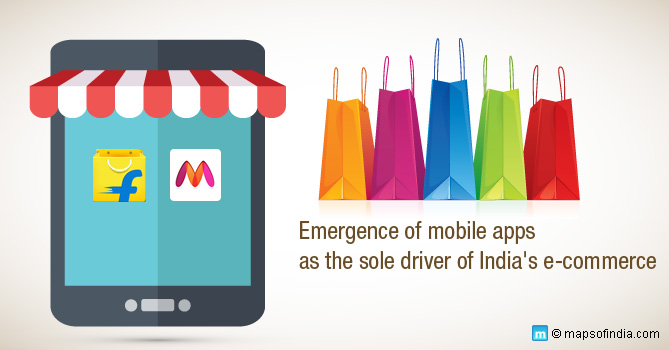
It is in this context that the decision by e-commerce fashion retailer Myntra to shut down its popular website and shift to an ‘app-only’ platform running on mobile devices has surprised many. The move is not restricted to Myntra alone, Flipkart, currently India’s largest e-commerce company, has also followed suit in shifting to an ‘app-only’ model. So have several smaller start-ups.
So what’s making the big e-commerce companies shut down their popular websites and shift to an ‘app-only’ model? The answer lies in evolving technology, user preference, and buyer behaviour.
Let’s examine the three.
Evolving Technology
Mobile phone is fast replacing laptop and desktop as the preferred hardware to access information, undertake transaction and seek entertainment. With 3G and 4G technologies offering a significantly faster and better user experience, the consumer preference is shifting towards smartphones. Thanks to the explosive growth in mobile phones, the number of persons having access to the Internet has significantly risen by each year. This is borne out by the data released by IAMAI in January 2015 that confirmed that there were over 300 million internet users in India, with user base increasing 32% over the previous year. With India’s population well over a billion and growing, the potential for expansion of smartphones and other wearable devices is tremendous.
User Preference
People now want to remain connected all the time and want instant access to information or service. This is possible only on a mobile device. Users don’t want to ‘log-in’ and then go through a ‘search’ process before accessing what they want over the Internet. People are not even willing to wait for the usual ‘boot’ time. With smartphones, it’s an ‘always on’ experience and therefore meets user expectations more than the earlier practice. This behavioural shift has led to smartphones becoming more popular over traditional hardware like desktops or laptops.
Buyer Behaviour
Buyer preference and behaviour are the major reasons e-commerce is growing exponentially now but failed when it was first introduced as the next big thing during the last dotcom boom, at the turn of the century. Internet availability and bandwidth are improving significantly with the introduction of 4G technology in India. Access to a shopping platform is now instant and easy; user experience is much better. Integrated distribution logistics is rapidly improving, with the ‘same day’ delivery acting as a catalyst to the shopping experience. Protecting user’s data and securing online transaction has vastly improved and now e-commerce is changing how people shop, react, behave and experience, acquiring a new product or service over the Internet.
Website vs. App-Only Model
Why have e-commerce companies like Myntra and Flipkart decided to abandon their existing and popular websites in favour of ‘app-only’ model?
Two primary reasons:
The thing about technology is that it is ever evolving and what we have witnessed over the last four decades is that the pace of evolution in technology is increasing with time.
Till the 1980s, IBM’s mainframes were the mainstay of the computing world and all companies were hedging their bets on developing bigger mainframes, but time showed it was the other way round. The desktop soon emerged as the mainstay of everyday computing and then the laptops and then the mobile phones.
We are now currently going through the phase where information, communication, transaction and entertainment are all moving to mobile and wearable devices. With websites being the go-to platform to engage visitors for the above mentioned activities, the mobile ‘app’ is now becoming commonplace. Therefore, it is no surprise that there is a vociferous debate happening on whether the ‘website’ for e-commerce should give way to company- or brand-specific ‘app’ or can they co-exist?
It is in this context that the decision by e-commerce fashion retailer Myntra to shut down its popular website and shift to an ‘app-only’ platform running on mobile devices has surprised many. The move is not restricted to Myntra alone, Flipkart, currently India’s largest e-commerce company, has also followed suit in shifting to an ‘app-only’ model. So have several smaller start-ups.
So what’s making the big e-commerce companies shut down their popular websites and shift to an ‘app-only’ model? The answer lies in evolving technology, user preference, and buyer behaviour.
Let’s examine the three.
Evolving Technology
Mobile phone is fast replacing laptop and desktop as the preferred hardware to access information, undertake transaction and seek entertainment. With 3G and 4G technologies offering a significantly faster and better user experience, the consumer preference is shifting towards smartphones. Thanks to the explosive growth in mobile phones, the number of persons having access to the Internet has significantly risen by each year. This is borne out by the data released by IAMAI in January 2015 that confirmed that there were over 300 million internet users in India, with user base increasing 32% over the previous year. With India’s population well over a billion and growing, the potential for expansion of smartphones and other wearable devices is tremendous.
User Preference
People now want to remain connected all the time and want instant access to information or service. This is possible only on a mobile device. Users don’t want to ‘log-in’ and then go through a ‘search’ process before accessing what they want over the Internet. People are not even willing to wait for the usual ‘boot’ time. With smartphones, it’s an ‘always on’ experience and therefore meets user expectations more than the earlier practice. This behavioural shift has led to smartphones becoming more popular over traditional hardware like desktops or laptops.
Buyer Behaviour
Buyer preference and behaviour are the major reasons e-commerce is growing exponentially now but failed when it was first introduced as the next big thing during the last dotcom boom, at the turn of the century. Internet availability and bandwidth are improving significantly with the introduction of 4G technology in India. Access to a shopping platform is now instant and easy; user experience is much better. Integrated distribution logistics is rapidly improving, with the ‘same day’ delivery acting as a catalyst to the shopping experience. Protecting user’s data and securing online transaction has vastly improved and now e-commerce is changing how people shop, react, behave and experience, acquiring a new product or service over the Internet.
Website vs. App-Only Model
Why have e-commerce companies like Myntra and Flipkart decided to abandon their existing and popular websites in favour of ‘app-only’ model?
Two primary reasons:
- Increasing competition
- Need for greater customer engagement