What is a recession?
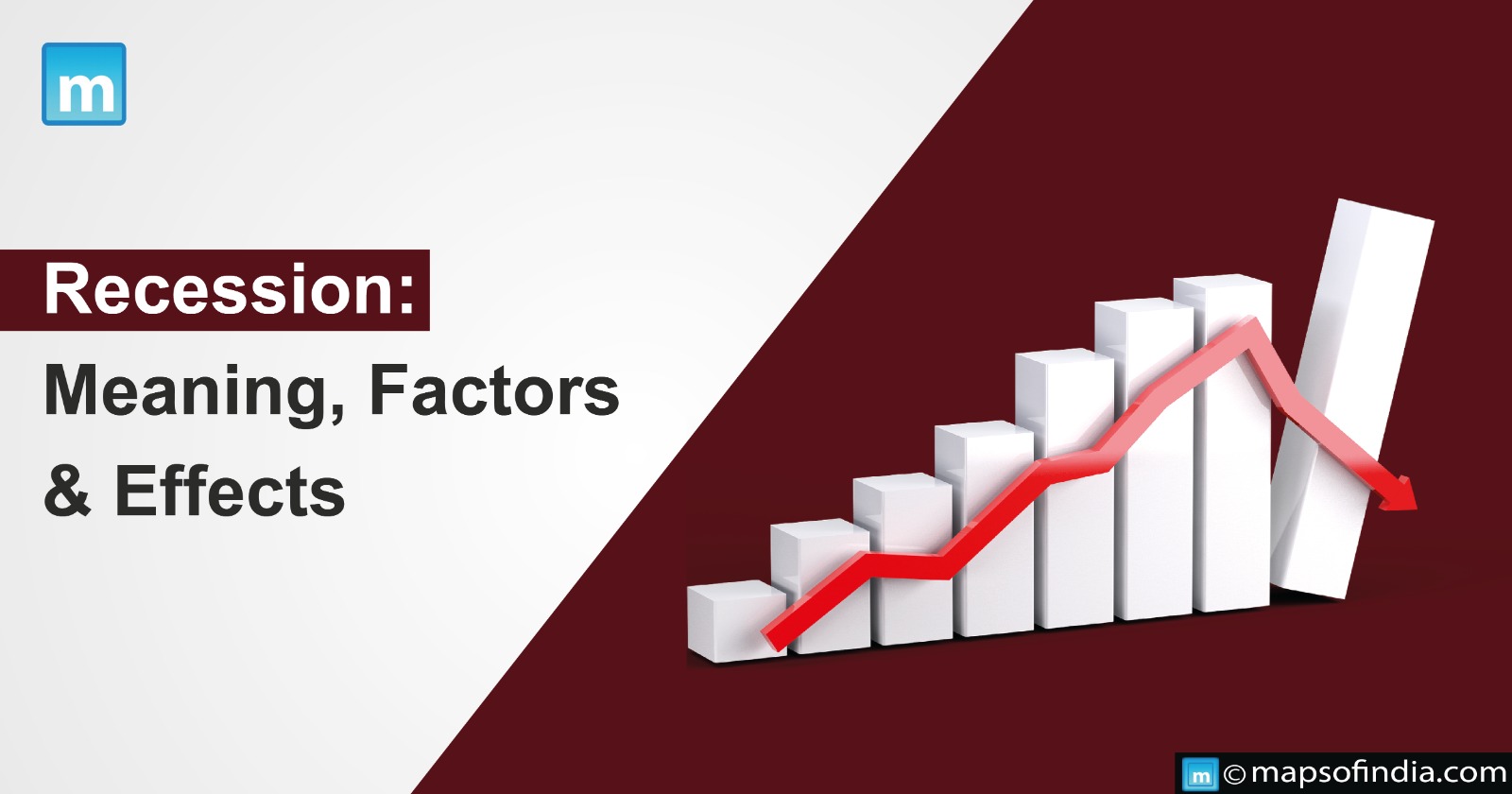
Since Industrialisation, most nations' long-term economical trend has been positive. However, short-term fluctuations have paralleled this long-term progress, with major macroeconomic indicators weakening or falling for intervals from 6 months to a few years before reverting to their long-term growing economy. Recessions are short-term economic downturns. As a result, a recession is defined as a broad reduction in economic growth that lasts for over a few months and is evident in the gross domestic product, income, jobs, manufacturing output, and distributor sales. Recessions are characterised by a wave of company failures, typically involving bank failures, poor or negative output growth, and significant unemployment. Even if a recession is just transitory, the economic pain it causes can have far-reaching implications that can reshape an economy.Factors Responsible for Recession
- Recessions can occur due to economic structural changes, such as fragile or antiquated enterprises, sectors, or technology collapsing and being washed away.
- It can also occur due to drastic policy reactions by the administration and financial institutions, which can effectively rewrite the laws for firms.
- A recession can be triggered by the social and political instability produced by massive joblessness and economic misery.
- High-interest rates exacerbate recessions by reducing liquidity or the amount of money available for investment.
- Another problem is rising inflation. Inflation is characterised by a raise in the cost of products and services over time. As inflation grows, the proportion of products and commodities that can be acquired with the same amount of money decreases.
- A market confidence loss is another factor that might contribute to a recession. Consumers who believe the economy is struggling are less inclined to spend money. Consumer sentiment is psychological, yet it has significant economic implications.
- Another factor is lower real earnings and salaries modified to reflect inflation. When real wages decline, it indicates that a worker's salary is not keeping up with inflation. The worker's purchasing power has fallen despite earning the same amount of money.
The Relationship between Recession and the Gross Domestic Product
- Gross domestic product is the market value of all goods and services produced in a country during a specific period.
- A recession is often defined as a decline in GDP for more than two consecutive quarters.
Depressions and Recessions
An economic recession is a significant economic slump characterised by a drop in the share market, a joblessness increase, and a housing market collapse. A recession is often less severe than a depression. Simply described, depression is a prolonged period of economic downturn.The Effects of the Recession
-
Budget Shortfall
-
Real Income Drops