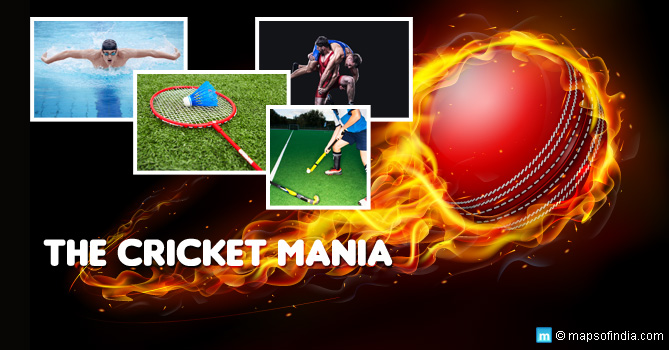
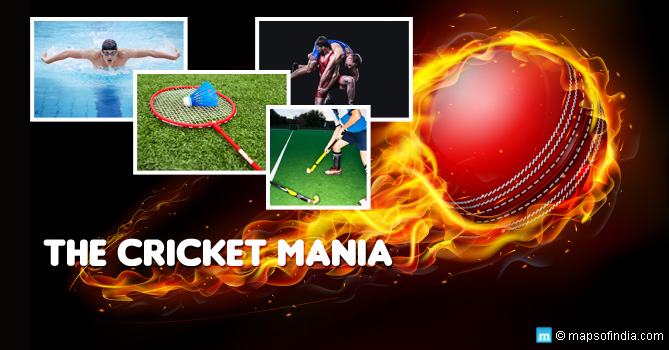
 If Sachin is God, cricket is certainly the national religion of India. Not many in the country found it odd or funny when the cricketing icon of the country became the central idol in a temple built in Bihar. Cricket is a high stakes game and another colonial legacy that India chooses to carry on. Each child in the country is an aspiring cricketer, no matter that only 11 of the best can play in the international team. Making it to the team ensures skyrocketing income levels, a steady fan following, and possibly added perks in the form of sports cars and apartments. Cricket stars of the country are among the glamourous elite, some of them more so due to their successful marriages to very beautiful and coveted actresses. It is every young man’s dream future. But does the national obsession come at the cost of other games and sports in the country? This is the question the country has been asking for decades now.
Enter IPL
While most people credit erstwhile ICC president, Mr. Jagmohan Dalmia with bringing huge amounts of money into cricket, his death has done nothing to erode BCCI's (Board of Cricket Control of India) coffers. In 2013, BCCI was reported to be the richest cricket board in the world with an annual profit of almost USD 50 million. The establishment of the Indian Premier League (IPL), a professional cricket (Twenty20) league in India, in the year 2008 became the catalyst in taking the stakes sky high. By 2014, the IPL brand value was pegged at about USD 7.2 billion. With such money comes associated ad revenue and visibility. In a country where cricket mania is already an epidemic, IPL has erased support for the Indian national team and replaced it with only one great obsession – cricket. This, however, has become extremely detrimental to the growth of other sports. Sponsors flock towards cricket players, and cricketing boards claim priority, often at the cost of budding talent in other games.What is India’s National Game?
What is India’s national game? If you thought it was Hockey, think again. While most of us have grown up studying from text books that told us that hockey is India’s national game, the Ministry of Youth Affairs and Sports has a different take on the matter. In 2012, a 10-year-old girl, Aishwarya Parashar became famous for the RTI (right to information) queries she had filed to satisfy her curiosity. One of the queries was a seemingly simple one about India's national game. In response, the Ministry of Youth Affairs and Sports said that India does not have a national game as no game has been notified to be India’s signature game. The answer flummoxed Ms. Parashar and the rest of the nation. India’s national hockey team has been its major strength and pride at most international sports meets. If cricket brings out our fierce sense of competition, hockey is the one sport that evokes a sense of nationalism. It is not due to movies such as Chak De, but due to the fact that 8 of the 9 Olympic gold medals won by India were won by the hockey team. Our national hockey team also earned us one silver and two bronze medals at the Olympics games. If hockey is not currently India’s national game, isn’t it time the government steps up and declares it to be the national sport? And is it not time the Ministry of Sports does something substantial to improve the lot of hockey players in the country – honour our Olympians and encourage the deteriorating team’s talent?India’s Performance at the Olympics
India is the second most populous country in the world. Talent and sportsmanship is abundant. It is rather unfortunate that despite no lack of ambition or skilled aspirants, India is unable to push forward its performance at the Olympic Games. Since the 1900 Paris Olympics, India has won 9 gold medals, 6 silver medals and 11 bronze medals; totaling about 26 medals at the Summer Olympic Games and none in any Winter Olympics. In comparison, China, the most populous country in the world has bagged 201 gold medals, 144 silver medals, and 128 bronze medals, taking their total to about 473 medals in the Summer Olympics alone. In the Winter Olympic Games, the People’s Republic of China has bagged some 9 golds, 18 silvers, and 17 bronze medals. This marked disparity has one very clear reason - a lack of emphasis on sports apart from cricket. The country’s youth is exposed greatly to cricket, thanks to television and media. Finding avenues for coaching and participating in other sports is an arduous task.TRP Games
Apart from the money and the glamour, the Indian Premier League has added a lot more to the TRPs of Indian television channels than any other show or broadcast could. India, however, has 9 other professional sporting leagues –- Indian Athletics League
- Indian Racing League
- Indian Volley League
- Indian Golf League
- Indian Badminton League
- Indian Wrestling League
- Indian Super League (football)
- Pro Kabaddi League
- Indian Hockey League