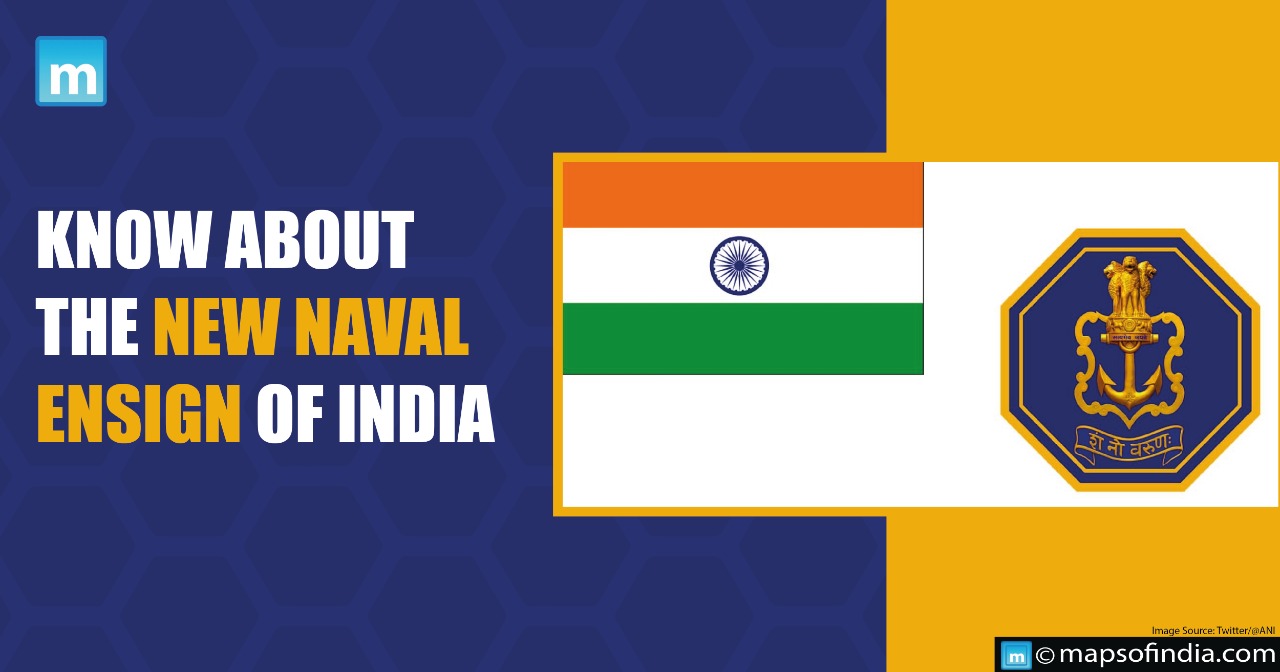
- The Navy's Ensigns are flags flown by navy vessels and formations to identify their nationality.
- Chhatrapati Shivaji Maharaj's regal seal appears on the new Navy flag in place of the St George's Cross.
- The national flag is shown in the upper canton of the new ensign. The navy's motto is overlaid on a banner with a blue octagonal form bearing the national insignia.
- Chhatrapati Shivaji Maharaj placed a high value on sea-faring prowess, laying the groundwork for a modern naval power in the 17th century.
- The Indian Navy has long recognised this reality, naming a training facility at Lonavla INS Shivaji and a Western Naval Command logistical and administrative centre in Mumbai INS Angre after the renowned Maratha naval leader Kanhoji Angre.
- The inclusion of the octagonal pattern of Shivaji's seal on the new Naval Ensign is an official mark on the Indian Naval's umbilical links with the Maratha empire's navy.
- Shivaji's strategic thinking secured establishing a strong naval presence across the Konkan coast to safeguard the Maratha empire's maritime trade.
- According to an Indian Navy document, “The navy under Shivaji was so strong that the Marathas could hold theirs against the British, Portuguese and Dutch. Shivaji realised the importance of having a secure coastline and protecting the western Konkan coastline from the attacks of Siddis’ fleet”.
- Shivaji constructed ships at places like Bhivandi, Goa, and Kalyan to trade and develop a military fleet.
- According to the Indian Express navy document, “He also built a number of sea forts and bases for repair, storage, and shelter. Shivaji fought many lengthy battles with Siddis of Janjira on the coastline. The fleet grew to reportedly 160 to 700 merchant, support, and fighting vessels. He started trading with foreigners on his own after possession of eight or nine ports in the Deccan,”