- Terracotta ceramics, beads, decorations made of gold and copper, inscriptions, fish hooks, animal figures, tools, urns, and a few imported vessels are among the artefacts discovered here.
- Remains of a copper smelter show that the Dholavira-dwelling Harappans were proficient in metallurgy.
- The traders of Dholavira are said to have imported final goods from the UAE, Oman, and the present-day states of Rajasthan, where copper ore is found.
- In addition to producing jewellery out of shells and semi-precious minerals like agate, it was also a significant exporter of wood.
- The world's oldest sign board with 10 massive stone inscriptions written in Indus Valley script was also discovered.
- Reservoirs in a flowing succession.
- Exterior fortification.
- Two multipurpose areas, one of which served as a venue for events and the other as a market.
- Nine gates with distinctive patterns.
- Tumulus, hemispherical monuments resembling Buddhist stupas, are a common feature in funerary architecture.
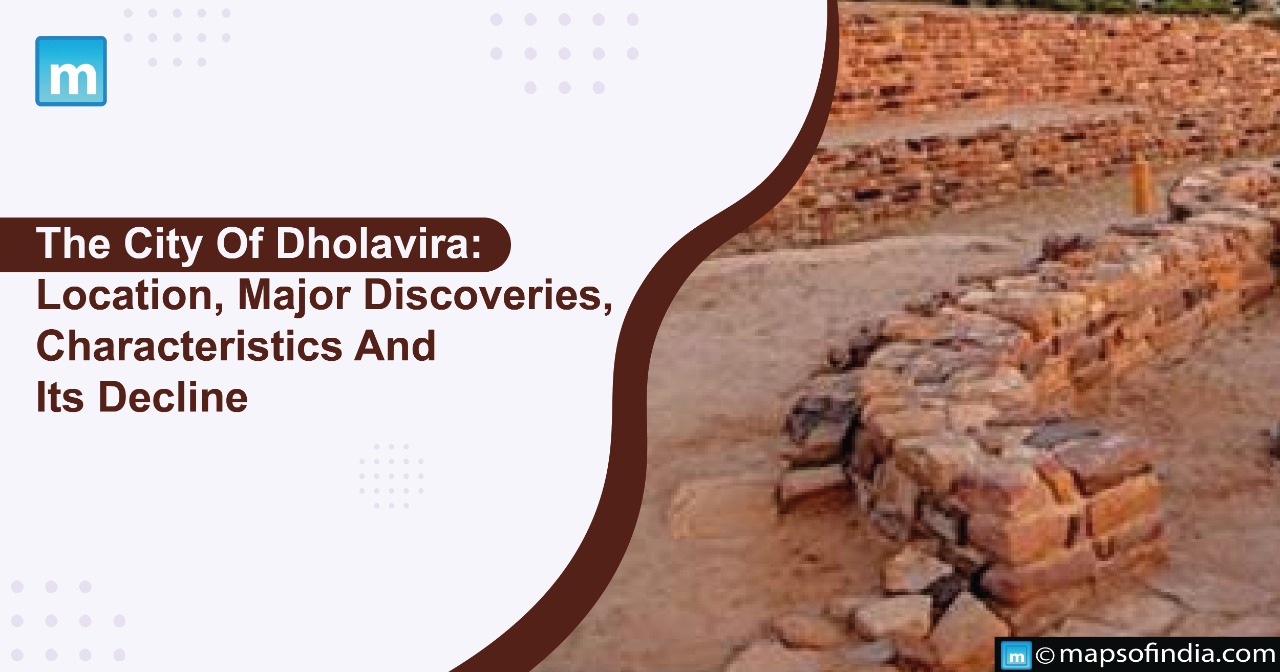
- Defence systems with several layers, an abundance of stone in the structure, and unique burial structures.
- The elaborate water management system built to store every drop of accessible water demonstrates the inventiveness of the inhabitants to endure the quick geo-climatic changes.
- Large stone-cut reservoirs still present along the eastern and southern walls were used to obtain and store water diverted from seasonal streams, little precipitation, and accessible terrain.
- Among the oldest examples, a few rock-cut wells may be seen throughout the city for additional water access; the most notable is in the Citadel.
- Dholavira's complex water conservation strategies are exceptional and rank among the most effective ones from ancient times.
- Its demise also occurred at the same time Mesopotamia fell, demonstrating economic interconnectivity.
- When Mesopotamia collapsed, the maritime Harappans lost a sizable market, which impacted the local quarrying, manufacturing, marketing, and export industries.
- Due to climate modifications and the drying up of rivers like the Saraswati, Dholavira experienced a period of extreme aridity.
- Due to the drought, people migrated into the Ganges valley, south Gujarat, and Maharashtra.
- Additionally, the Great Rann of Kutch, which encircles the Khadir island where Dholavira is situated, was formerly navigable but has since turned into a mudflat due to the sea's slow retreat.