
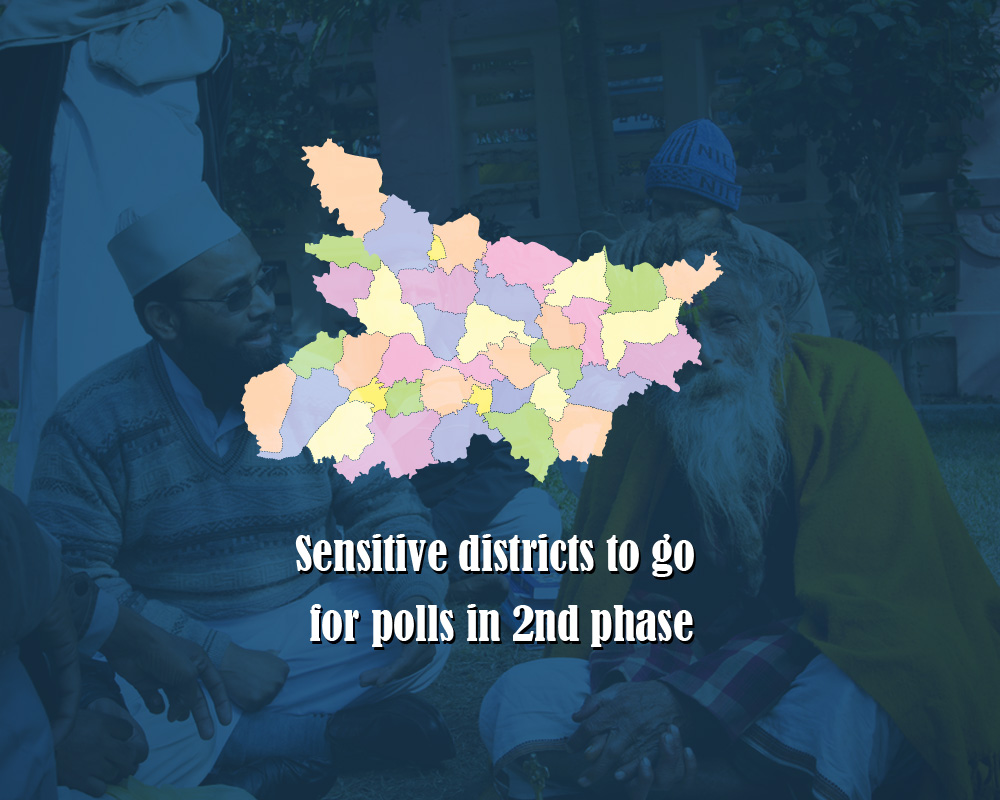
 The second phase of polling on Friday 16 October covers some of the most sensitive districts that have been hit by Maoist and caste-related violence. The six districts that go to polls are Kaimur (Bhabua), Rohtas, Arwal, Jahanabad, Aurangabad and Gaya.
The EC’s office, along with security forces, is on its toes for the forthcoming polls on Friday. They are taking no chances and have stepped up surveillance while conducting raids in not just the above mentioned districts, but in neighbouring areas as well. On 13 October, CRPF personnel carried out raids in Dhansa which falls under the Rohtas police station and discovered two 7kg landmines along with detonators that were meant to target security personnel. A bomb disposal squad was immediately dispatched to defuse the bombs that could have inflicted serious damage had it not been for the vigilant security personnel.
In a separate raid carried out in Barachatti area in Gaya district, CRPF recovered stocks of ammonium nitrate, a chemical that is used in bomb making. In Deo village of Aurangabad district, the security forces recovered three cane bombs along with detonators. This is in addition to several small arms, ammunition and cash that the police have been recovering on a daily basis, under supervision of the EC’s office.
The above mentioned districts have seen several incidents of violence resulting from caste-related tensions. The Maoist insurgency has been strong in these districts which have been victims of state neglect over several decades. During the 90s, members of Ranvir Sena, promoted by the upper castes, were frequently clashing with other castes and CPI(ML) cadres, in a series of brutal violence from all sides. Unfortunately, all political parties have been exploiting the already tenuous situation prevailing for their own political gains.
The districts have suffered on almost all parameters of development and social justice, as a result, the Maoists have been able to garner support from the rural communities that have been living in abject poverty with little intervention from the state administration. That said, it is also true that since Nitish Kumar first took over as Chief Minister, he has undertaken several measures, though not adequate but still significant, which has resulted in waning support for the Maoists, especially in rural areas, which have traditionally been their stronghold.
As in every election, the Maoists have given a call this time too for people to boycott the polls but its impact is expected to be minimal given the elaborate security measures that have been put in place including air surveillance and special checks, along with intensive patrolling in nearby forest areas to check any attempt to infiltrate the security zone.
The second phase of polling on Friday 16 October covers some of the most sensitive districts that have been hit by Maoist and caste-related violence. The six districts that go to polls are Kaimur (Bhabua), Rohtas, Arwal, Jahanabad, Aurangabad and Gaya.
The EC’s office, along with security forces, is on its toes for the forthcoming polls on Friday. They are taking no chances and have stepped up surveillance while conducting raids in not just the above mentioned districts, but in neighbouring areas as well. On 13 October, CRPF personnel carried out raids in Dhansa which falls under the Rohtas police station and discovered two 7kg landmines along with detonators that were meant to target security personnel. A bomb disposal squad was immediately dispatched to defuse the bombs that could have inflicted serious damage had it not been for the vigilant security personnel.
In a separate raid carried out in Barachatti area in Gaya district, CRPF recovered stocks of ammonium nitrate, a chemical that is used in bomb making. In Deo village of Aurangabad district, the security forces recovered three cane bombs along with detonators. This is in addition to several small arms, ammunition and cash that the police have been recovering on a daily basis, under supervision of the EC’s office.
The above mentioned districts have seen several incidents of violence resulting from caste-related tensions. The Maoist insurgency has been strong in these districts which have been victims of state neglect over several decades. During the 90s, members of Ranvir Sena, promoted by the upper castes, were frequently clashing with other castes and CPI(ML) cadres, in a series of brutal violence from all sides. Unfortunately, all political parties have been exploiting the already tenuous situation prevailing for their own political gains.
The districts have suffered on almost all parameters of development and social justice, as a result, the Maoists have been able to garner support from the rural communities that have been living in abject poverty with little intervention from the state administration. That said, it is also true that since Nitish Kumar first took over as Chief Minister, he has undertaken several measures, though not adequate but still significant, which has resulted in waning support for the Maoists, especially in rural areas, which have traditionally been their stronghold.
As in every election, the Maoists have given a call this time too for people to boycott the polls but its impact is expected to be minimal given the elaborate security measures that have been put in place including air surveillance and special checks, along with intensive patrolling in nearby forest areas to check any attempt to infiltrate the security zone.
The second phase of polling on Friday 16 October covers some of the most sensitive districts that have been hit by Maoist and caste-related violence. The six districts that go to polls are Kaimur (Bhabua), Rohtas, Arwal, Jahanabad, Aurangabad and Gaya.
The EC’s office, along with security forces, is on its toes for the forthcoming polls on Friday. They are taking no chances and have stepped up surveillance while conducting raids in not just the above mentioned districts, but in neighbouring areas as well. On 13 October, CRPF personnel carried out raids in Dhansa which falls under the Rohtas police station and discovered two 7kg landmines along with detonators that were meant to target security personnel. A bomb disposal squad was immediately dispatched to defuse the bombs that could have inflicted serious damage had it not been for the vigilant security personnel.
In a separate raid carried out in Barachatti area in Gaya district, CRPF recovered stocks of ammonium nitrate, a chemical that is used in bomb making. In Deo village of Aurangabad district, the security forces recovered three cane bombs along with detonators. This is in addition to several small arms, ammunition and cash that the police have been recovering on a daily basis, under supervision of the EC’s office.
The above mentioned districts have seen several incidents of violence resulting from caste-related tensions. The Maoist insurgency has been strong in these districts which have been victims of state neglect over several decades. During the 90s, members of Ranvir Sena, promoted by the upper castes, were frequently clashing with other castes and CPI(ML) cadres, in a series of brutal violence from all sides. Unfortunately, all political parties have been exploiting the already tenuous situation prevailing for their own political gains.
The districts have suffered on almost all parameters of development and social justice, as a result, the Maoists have been able to garner support from the rural communities that have been living in abject poverty with little intervention from the state administration. That said, it is also true that since Nitish Kumar first took over as Chief Minister, he has undertaken several measures, though not adequate but still significant, which has resulted in waning support for the Maoists, especially in rural areas, which have traditionally been their stronghold.
As in every election, the Maoists have given a call this time too for people to boycott the polls but its impact is expected to be minimal given the elaborate security measures that have been put in place including air surveillance and special checks, along with intensive patrolling in nearby forest areas to check any attempt to infiltrate the security zone.
The second phase of polling on Friday 16 October covers some of the most sensitive districts that have been hit by Maoist and caste-related violence. The six districts that go to polls are Kaimur (Bhabua), Rohtas, Arwal, Jahanabad, Aurangabad and Gaya.
The EC’s office, along with security forces, is on its toes for the forthcoming polls on Friday. They are taking no chances and have stepped up surveillance while conducting raids in not just the above mentioned districts, but in neighbouring areas as well. On 13 October, CRPF personnel carried out raids in Dhansa which falls under the Rohtas police station and discovered two 7kg landmines along with detonators that were meant to target security personnel. A bomb disposal squad was immediately dispatched to defuse the bombs that could have inflicted serious damage had it not been for the vigilant security personnel.
In a separate raid carried out in Barachatti area in Gaya district, CRPF recovered stocks of ammonium nitrate, a chemical that is used in bomb making. In Deo village of Aurangabad district, the security forces recovered three cane bombs along with detonators. This is in addition to several small arms, ammunition and cash that the police have been recovering on a daily basis, under supervision of the EC’s office.
The above mentioned districts have seen several incidents of violence resulting from caste-related tensions. The Maoist insurgency has been strong in these districts which have been victims of state neglect over several decades. During the 90s, members of Ranvir Sena, promoted by the upper castes, were frequently clashing with other castes and CPI(ML) cadres, in a series of brutal violence from all sides. Unfortunately, all political parties have been exploiting the already tenuous situation prevailing for their own political gains.
The districts have suffered on almost all parameters of development and social justice, as a result, the Maoists have been able to garner support from the rural communities that have been living in abject poverty with little intervention from the state administration. That said, it is also true that since Nitish Kumar first took over as Chief Minister, he has undertaken several measures, though not adequate but still significant, which has resulted in waning support for the Maoists, especially in rural areas, which have traditionally been their stronghold.
As in every election, the Maoists have given a call this time too for people to boycott the polls but its impact is expected to be minimal given the elaborate security measures that have been put in place including air surveillance and special checks, along with intensive patrolling in nearby forest areas to check any attempt to infiltrate the security zone.


