Historical Background: Partition and the Kashmir Conflict
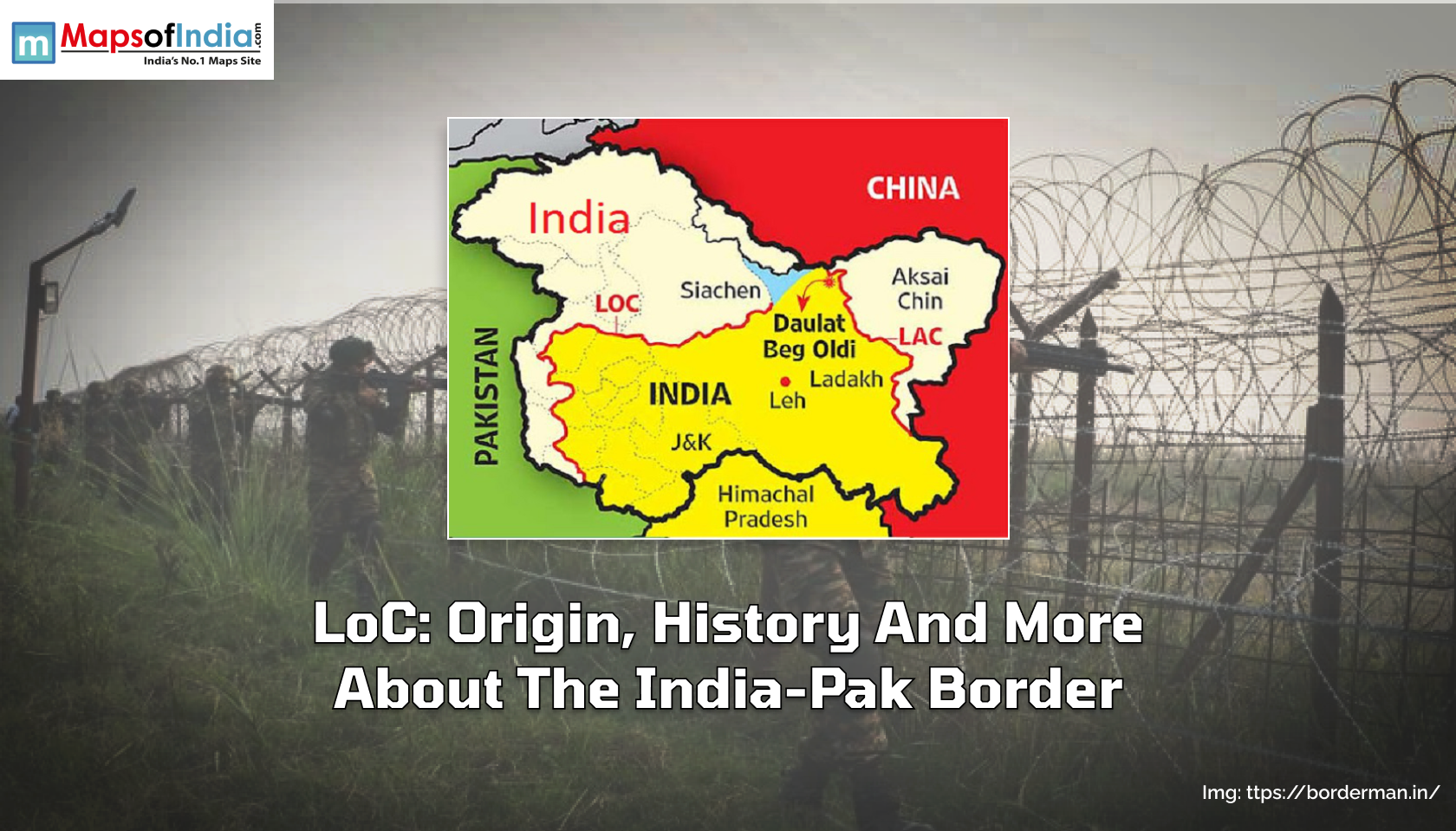
The LoC originated in the 1947 division of British India, which resulted in the two independent dominions of India and Pakistan. The princely state of Jammu and Kashmir became a flashpoint. The state had a Muslim majority and a Hindu Maharaja. Originally seeking to remain independent, the king, Maharaja Hari Singh, finally agreed to India in October 1947 after the Pakistani tribal army invaded his country. This accession began the first India–Pakistan conflict over Kashmir and continued until the end of 1948. The conflict produced both nations under control of different portions of the territory but without a clear, mutually agreed-upon border.The Ceasefire Line (CFL) Karachi Agreement of 1949
A United Nations-brokered truce sought to end hostilities. Announced in January 1949, the Karachi Agreement was signed by the military representatives of India and Pakistan in July 1949 under the United Nations Commission for India and Pakistan (uncip). The agreement set the Ceasefire Line (CFL), which defined each side's positions when the ceasefire took effect. The Karachi Agreement mentioned: "The government of India and Pakistan has invited the fully authorised military representatives under the auspices of this Commission's Truce Sub-committee to meet jointly in Karachi as it was mentioned in the letter dated July 2, 1949, by the United Nations Commission for India and Pakistan.” With NJ9842 as the last marked point since areas north of the glaciers were deemed inaccessible at the time, the CFL ran from Manawar in Jammu north to Keran in the Kupwara district and then eastward towards the glacier region. Established to track the ceasefire and document violations, the United Nations Military Observer Group in India and Pakistan (UNMOGIP) would subsequently become a dispute between the two nations.From Ceasefire Line to Line of Control: The Simla Agreement 1972
Until 1971, when the Indo-Pakistani War took place, the CFL continued to exist as the de facto border. After the war, Indian Prime Minister Indira Gandhi and Pakistani President Zulfikar Ali Bhutto signed the ISO Agreement on July 2, 1972. This agreement was a watershed because it converted the CFL into the Line of Control (LoC) and defined the basis for further bilateral relations.Key Simla Agreement Provisions
- As of December 17, 1971, the truce line was renamed the "Line of Control," Conversion of CFL to LoC.
- Not withstanding their respective legal interpretations or differences, both sides agreed not to change the LoC unilaterally.
- The agreement underlined the need to resolve all differences, including the Kashmir issue, by peaceful means and bilateral negotiations, lowering the role of third parties, including the United Nations.
- The agreement sought to bring back diplomatic ties between India and Pakistan and advance peace and cooperation.