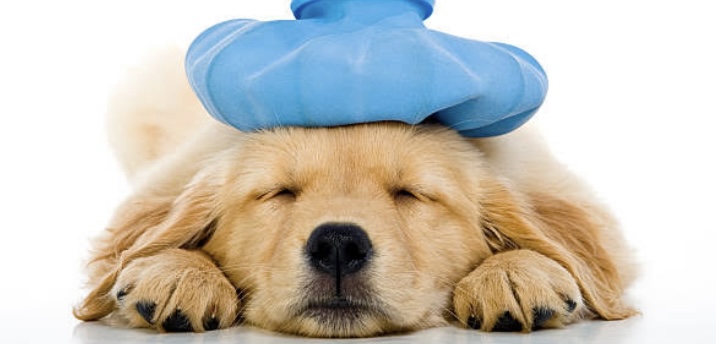
- Keep sick dogs in a warm, quiet, dim-lit place. Try not to disturb them.
- Keep sick dogs clean. Special care should be taken if they are suffering from diarrhoea and vomiting for psychological and sanitary reasons. All animals become distressed if allowed to foul themselves; if they have fouled themselves, they should be gently washed with soap and water. A little talcum powder dusted on after washing is helpful.
- Larger dogs should be turned regularly, every four hours, to avoid bedsores.
- Apart from doing what is necessary for its well-being, you should leave a sick dog alone as much as possible. There is a difference between loving care and fussing. So do not fuss over a sick dog.
- All bowls, dishes, spoons, etc., that come in contact with the dog must be sterilized in boiling water after each meal.
- A pair of sharp-edged, blunt-pointed scissors.
- A pair of forceps (tweezers)
- A roll of 2 Elastoplast
- Four rolls of 2 roller bondage
- A packet of cotton wool
- A packet of lint
- A bottle of hydrogen peroxide
- A bottle of antiseptic, e.g. Savlon, Dettol, Roccal
- A razor blade
- A packet of needles
- Codeine tablets
- Paracetamol tablets
- A packet of cotton buds
- Milk of magnesia Table salt
- An eyedropper
- Wash the bite with soap and cool boiled water.
- Rinse the soap off
- Cover the bite with a clean bandage.
- Visit your doctor or the casualty department of the local hospital. Remember, all animal bites are contaminated and, if it is a deep bite, an anti-tetanus injection can not be avoided.