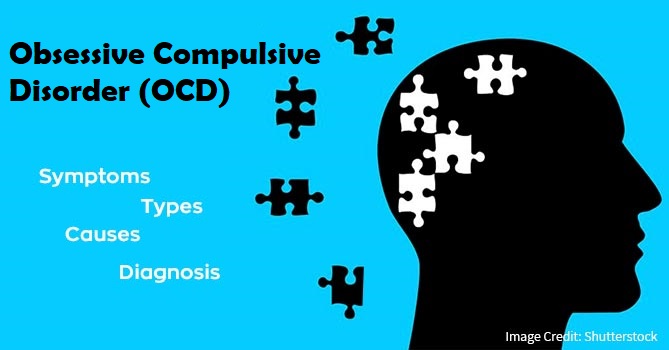
Causes of OCD
- Biological factors: It is a belief that OCD comes from a breakdown in the circuit in the brain that clears or "censors" the various thoughts, ideas and impulses that we have each day. If one had OCD, the brain could have difficulty understanding which thoughts and impulses to turn off. As a consequence, one could experience obsessions and compulsions. The breakdown of this system may be related to serotonin abnormalities.
- Family history: One could also be at higher risk if there is a family history of the disorder. Research has suggested that if one's parent or a sibling has OCD, there is a 25% chance that another immediate family member could also sustain that.
- Genetics: A single "OCD gene" has not been recognised; OCD may be related to particular groups of genes.
- Stress: Stress from issues like unemployment, relationship difficulties, problems at school, illness, or childbirth can be significant triggers for symptoms of OCD
Symptoms of OCD
- Checking: A look over at things repeatedly, namely alarm, locks, systems, ovens, light switches or pondering about having a medical condition like pregnancy or schizophrenia.
- Obsessions: A person can have aggressive thoughts towards others or self or wants everything in a proper format and way.
- Contamination: One could be afraid of things that might be dirty or a compulsion to clean any surface. Mental contamination includes feeling like one has been treated like dirt.
- Symmetry and Ordering: The need to have things queued up in a straight line with a complete arrangement or always wants to see like that.
Following are the treatments for OCD:
- Psychotherapy: Cognitive behavioural therapy can assist develop thinking patterns. In a form known as exposure and response prevention, the doctor gets you in a situation structured to create anxiety or set off compulsions. One learns to lessen and then gradually decreases OCD thoughts or actions.
- Relaxation: Simple things such as meditation, yoga, and massage can help with stressful OCD symptoms and alleviate the body further.
- Medication: Psychiatric drugs called selective serotonin reuptake inhibitors to help many people stop obsessions and compulsions. They might take 2 to 4 months to begin working and being in effect. Common ones comprise citalopram (Celexa), escitalopram (Lexapro), fluoxetine (Prozac), fluvoxamine, paroxetine (Paxil), and sertraline (Zoloft). If one still has symptoms, the doctor gives antipsychotic drugs like aripiprazole (Abilify) or risperidone (Risperdal).
- Neuromodulation: In some cases, when therapy and medication aren't resulting in a tremendous difference, the doctor might converse with you about devices that change the electrical activity in a specific area of the brain. One of the types named transcranial magnetic stimulation is FDA-approved for OCD treatment. It undertakes magnetic fields to stimulate nerve cells. A more complex method, deep brain stimulation, uses electrodes that are implanted in your head.