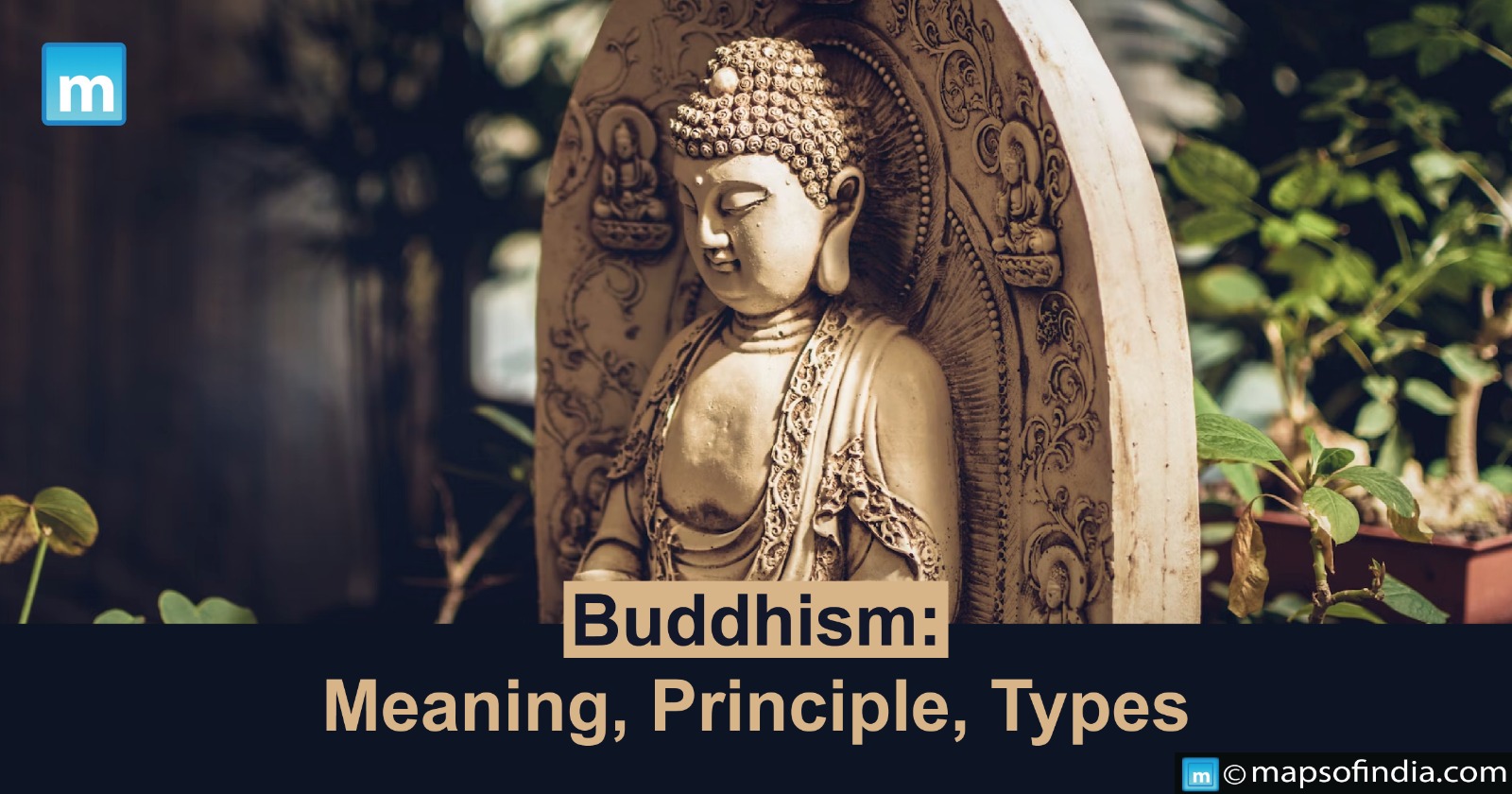
What is Buddhism?
Buddhism is a prominent international religion that emerged roughly 2,500 years ago in ancient India. It is centred on Siddhartha Gautama's doctrines, who became renowned as the Buddha, meaning "awakened one." According to Buddhism, the ultimate purpose of life is to reach awakening or enlightenment, which is a condition of ultimate serenity and escape from suffering. Buddhism also teaches the concept of karma, which is the idea that a person's actions and intentions create a cumulative effect that determines their future lives.Principles of Buddhism
Buddhism is a spiritual and intellectual philosophy founded on the lessons imparted by the Buddha, Siddhartha Gautama. The Noble Eightfold Path and The Four Noble Truths summarise Buddhist concepts.The Four Noble Truths are as follows:
- The truth of suffering: All living beings experience suffering, pain, and unsatisfactoriness.
- The truth of the cause of suffering: Suffering arises from craving and attachment, which stem from ignorance.
- The truth about misery elimination: There is a technique to abolish suffering by removing desire and attraction.
- According to Buddhist doctrine, the Noble Eightfold Way is the true road that leads to the end of suffering.
Types of Buddhism followed around the world
Buddhism is a major world religion with diverse traditions and practices. Here are some of the main types of Buddhism followed around the world:-
Theravada Buddhism
-
Mahayana Buddhism
- Vajrayana Buddhism
-
Zen Buddhism