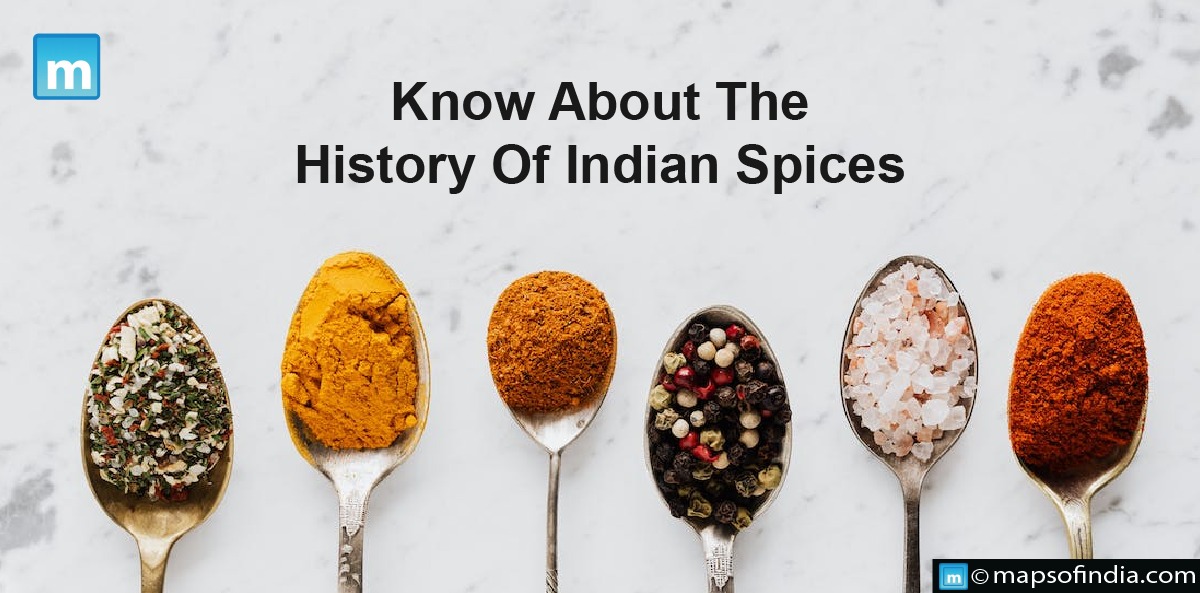
Let's look at the intriguing history of Indian spices and the trading routes that allowed them to travel the world:
History of Indian Spices
The usage of Spices in India can be traced back to the Indus Valley Civilization (2500-1700 BC). People took spices like cumin, coriander, and turmeric in their cooking during the period. Spices were used in cooking and religious rites during the Vedic period (1500-500 BC). The Vedas, the oldest Hindu scriptures mention spices such as black pepper, ginger, and cardamom. India became a major spice exporter under the Gupta Empire (320-550 AD). The Gupta Empire was in charge of trade routes to the Middle East, Central Asia, and China. Spices from India were in high demand in these areas. In the 15th century, the Portuguese came to India. They set up commercial posts along the Indian coast and began exporting spices to Europe. Following the Portuguese were the Dutch, French, and British. The European spice trade had a significant impact on Indian culture and civilization. It resulted in the formation of new social strata and new commercial routes. Indian spices became worldwide commodities when European countries expanded their empires. They transformed gastronomy and influenced medical treatments and cultural customs worldwide. The Portuguese, for example, transported chili peppers from the New World to India, forever transforming Indian cuisine. Similarly, Indian spices made their way to the Americas, helping to shape new world cuisines.Trade Routes of Indian Spices Over The Years
Indian spice trade routes have changed, reflecting geography, technology, and global power balance developments. Here are some of the various trade channels for Indian spices over the years:-
The Silk Road (circa 200 BCE - 1450 CE)
-
The Arabian Peninsula Spice Route (1st century CE - 15th century CE)
-
The Maritime Route of Vasco da Gama (late 15th century CE - 20th Century)
-
Modern Spice Trade Routes (20th century - present)