A Legacy Steeped in Storytelling
The exact origin of Kavad art remains shrouded in some mystery. Legends trace it back to the bardic tradition of the Bhopas, who used narrative paintings to accompany their epic tales. Historical evidence suggests that Kavad flourished in the 16th and 17th centuries, finding patronage from Rajput royalty. Today, the village of Bassi is the sole custodian of this traditional art form, practised by a handful of skilled craftspeople.The Art of the Kavad
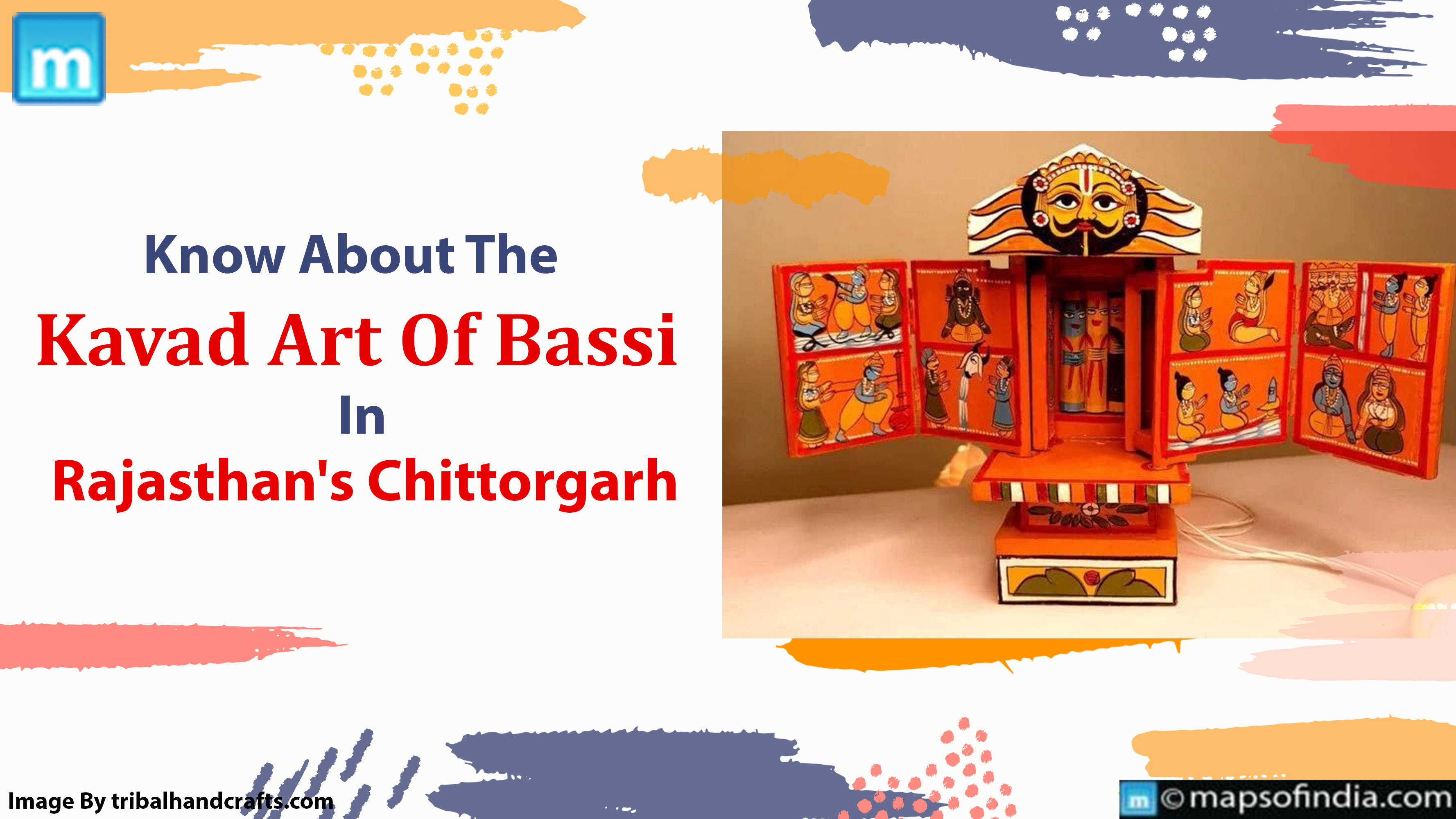
Kavad, translated to "door" or "panel" in Hindi, is a wooden portable shrine. Typically rectangular, the Kavad features multiple hinged panels that unfold to reveal a captivating narrative. The creation process itself is a meticulous dance of carpentry, painting, and storytelling:- Crafting the Canvas: Suthar artisans, a hereditary community of carpenters, meticulously constructed the wooden Kavad frame. The size and number of panels can vary, with larger, multi-panel Kavad considered more elaborate.
- A Brushstroke of Faith: Chitrakar artists, traditionally from the Nai community, take centre stage. Using natural pigments derived from vegetables, minerals, and even cow dung, they paint the Kavad panels. The vibrant red, green, yellow, and blue hues dominate, breathing life into the stories.
- A Universe Unfolds: The central theme of Kavad art revolves around religious narratives. Deities like Krishna, Rama, and Durga are often depicted, along with scenes from Hindu epics like the Ramayana and Mahabharata. Local heroes and mythical creatures may also find themselves on the Kavad panels. Geometric patterns and floral motifs are decorative backdrops, framing the central story.