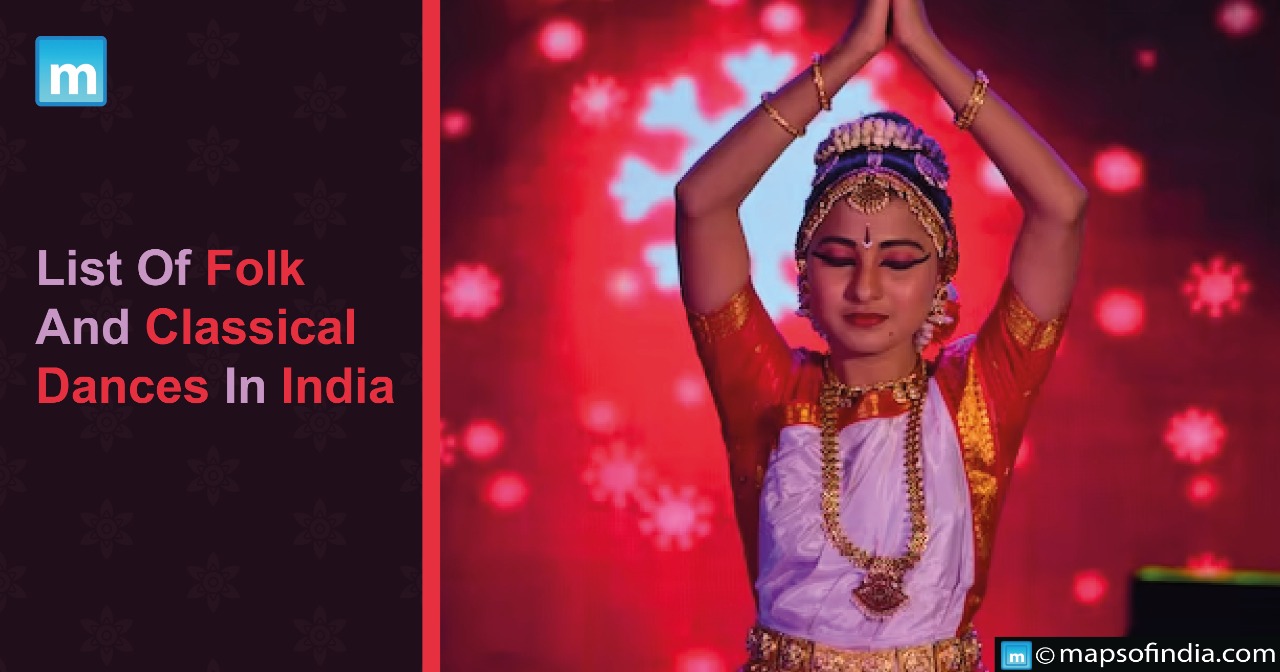
India is a land of diversity where people find variety in food, songs, dance, taste, languages, and culture. India has 28 states and eight union territories with a long list of folk dances. At every festival or celebration, these folk dances are practised.What is folk dance?Folk dance is made up of two different words: folk and dance. Here, it represents the people or an ordinary man. This means that folk dance is the dance by the common man. Generally, they are practised in groups more than individually. These folk dances are performed during celebrations such as weddings, the arrival of seasons, especially rain, born day of a child, anniversaries, agricultural harvest and many other happy occasions.Each state of India has their folk dance based on the traditions and characteristics of each dance that make it unique.The list of folk dances is as follows:Andhra Pradesh: Kuchipudi, Andhra Natyam, Dappu, Kolattam, Veeranatyam, Vilasini Natyam, Lambadi, Dhimsa and Butta bommalu.Arunachal Pradesh: Chalo, Wancho, Pasi Kongki, Popir, bardo, and chhamAssam: Bihu, Khel Gopal, Naga Dance, Jhumura Hobjanai, Bichhua, Maharas, Bagurumba, Natpuja, and Tabal Chongli.Bihar: Jata jatin, Bakho bakhain, panwaria, bidesiya, and sama chakwa.Chhattisgarh: Chandaini, Charit, Raut Nacha, Pandwani, and Gaur MariaGoa: samayi nrutya, tonya mell, koli, dekhni, fugdi, shigmo, and tarangamel.Gujarat: Dandiya ras, Garba, Bhawai, and Tippani juriun.Haryana: Jhumar, Phag, Daph, Dhamal, Loor, gagor, Khor, and Gugga.Himachal Pradesh: Dangi, Nati, Dhaman, Jhora, Jhali, Chhapeli, Mahasu, and Chharhi.Jammu and Kashmir: Kud dandi nach, Rauf, Damali, Hikat, and Mandjas.Jharkhand: karma Munda, Agni, jhumar, phagua, Mundari dance, jhitka, danga, and ghora naachKarnataka: Huttari, suggi, Yakshagan, Karga, and lambi.Kerala: kathakali, Kaikottikali, Mohiniattam and Ottam thulalLakshadweep: Lava, Kolkali, and ParichakaliMadhya Pradesh: Jawara, Matki, Aada, khada nach, phul pati, grida dance, selalarki, and maanch.Maharashtra: Lavani, Nataka, Koli, Dahikala Dasavtar, Gafa, and LezimManipur : Dol cholam, thang ta, lai haraoba, khamba thaibi, nuoa dance, and Lhou sha.Meghalaya: Ka shad suk mynsiem, Nongkrem, and LahoMizoram: Par lam, cheraw dance, khuallam, chailam, and zangtalamNagaland: Rangma, Bamboo dance, Hetaleulee, Temangnetin, and GethinglimOdisha: Ghoomar, Painka, Odissi, savari, chhau, and munariPunjab: Bhangra, daff, giddha, Nakual, Dhaman, and bhandRajasthan: Ghumar, Chakri, Ganagor, Jhulan, Leela, jhuma, ghapal and kalbeliyaSikkim: Khukuri dance, tashi yangku, chutkey, maruni, yak chaam, and denzing gneha.Tamil Nadu: Bharatnatyam, kolattam, kavadi, and kumiTripura: Hojagiri Uttar Pradesh: Jhora, Jaita, Natanki, Kajri, Raslila, and ChhapeliUttarakhand: Kumauni, Garhwali, jhora, kajri, chhapeliWest Bengal: Keertan, Mahal, Marasia, Baul, Dhari, Jatra, gambhira, and kathiOn an important note, India has two forms of dance. One is a folk dance, and the other is a classical dance. Many times, these terms are used interchangeably. But there is a minor difference between folk and classical dance.To learn the difference in detail, we must go through each of the basics.What is classical dance?Classical dance traces its origins to Natya Shastra. According to scholars, there are eight classical dances in India. These classical dances are the following:Assam: SattriyaAndhra Pradesh: KuchipudiKerala: Kathakali and MohiniattamManipur: ManipuriOdisha: OdissiTamil Nadu: BharatnatyamUttar Pradesh: Kathak