- Johnson & Johnson India ranks first or second in its respective categories with over a dozen renowned brands in its consumer sector.
- Their infant care, feminine cleanliness, facial care, OTC, oral care, and wound care products include trusted brands like Johnson's Baby, Stayfree, Clean & Clear, Benadryl, Listerine, BAND-AID®, and ORSL that are trusted by people and medical practitioners in India and throughout the world.
- The medical division of Johnson & Johnson India, the country's largest manufacturer of medical devices, has contributed significantly to surgery for more than 60 years.
- Its products target unmet needs in orthopaedics, peripheral vascular, cardiovascular disease, arrhythmias, diabetes care, neurovascular disease, cancer surgery, vision care, bariatric and metabolic surgery, and many other fields.
- By the All-India Organization of Chemists and Druggists, the infant product industry in India will be valued at more than $15 billion by 2022 and controlled by J&J.
- Rajiv Singhal, General Secretary of AIOCD, stated, "When you talk about the baby talcum product market in India, Johnson & Johnson still has the lion’s share in this portfolio. It has about 60 to 70% of market share in the country today,”
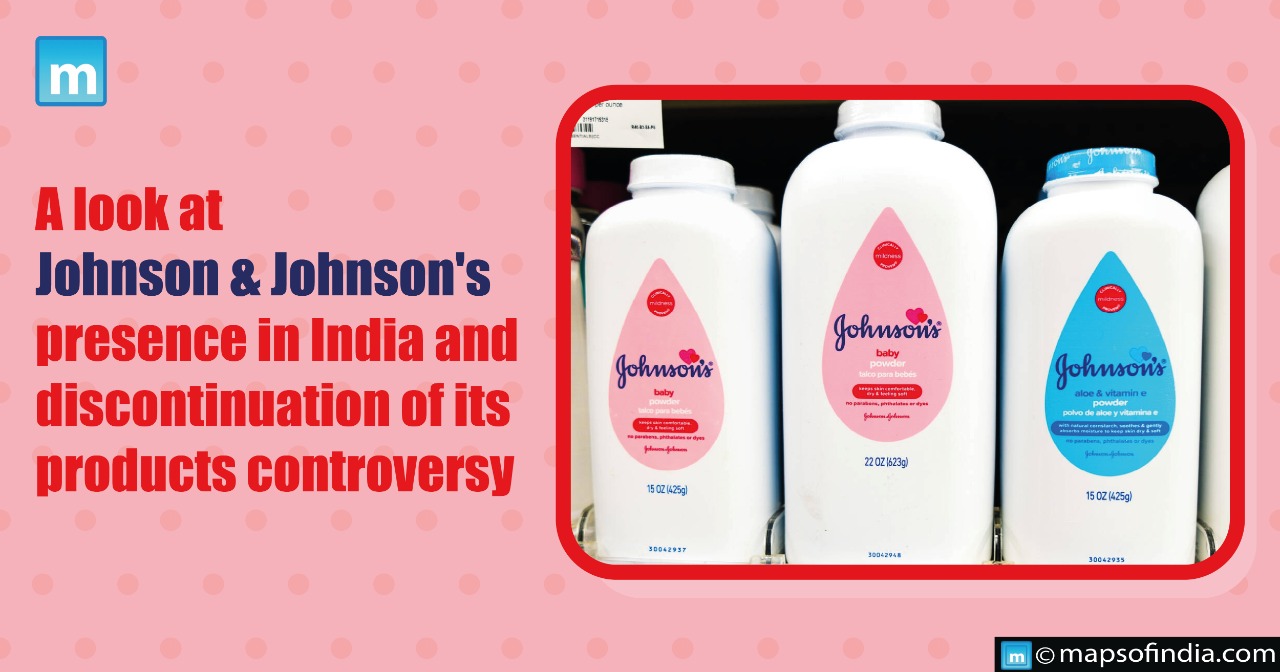
- In recent times, J&J has been encircled by various controversies. Numerous lawsuits were filed against the company's talc-based product.
- In response to these tens of hundreds of lawsuits filed by women alleging that the product caused their ovarian cancer due to the contamination of asbestos, a known carcinogen, J&J announced on August 11 that it would stop selling its talc-based baby powder globally in 2023.
- The corporation has upheld the product's safety for years, which was restated on August 11.
- It said, "Our opinion on the quality of our facial talc remains unaltered."
- J&J affirmed that their talc-based JOHNSON'S Baby Powder is harmless, does not contain toxic asbestos, and does not increase cancer risk by citing generations of independent scientific examination by medical professionals.
- Experts questioned J&J for not pulling the product off the market and why it should be supplied to Indians since the talc-based product is not in sale and is being sued. The corporation stopped selling the item in the United States more than two years ago.
- In India, the corporation is lagging in adopting the policy it has embraced in the Western world. "Why should a product be offered, and why not recall it if it is being withdrawn for manufacturing?" an official inquired.
- According to CDSCO norms, any batch of items that do not fulfil quality requirements in India must be recalled willingly or statutorily.
- Talc is produced from subterranean sources and is the world's softest mineral. The US Food & Drug Administration (FDA) is chemically known as hydrous magnesium silicate. It is a component of many cosmetic and personal care items, including foundation, lipstick, eyeshadow, and baby powder.
- It may absorb moisture and lessen the friction when ground to a fine powder, keeping the skin dry, preventing rashes, preventing cosmetics from caking, and enhancing the quality and appearance of a product.
- Talc deposits are often accompanied by asbestos deposits, a natural silicate mineral.
- The FDA states that "talc has a risk for asbestos contamination." Asbestos is a material that has been used in production and construction and is known to trigger mesothelioma, ovarian cancer, lung cancer, and other illnesses.
- The American Cancer Society states that it is widely acknowledged that Talc tainted with asbestos can result in cancer. However, It is less specific, though, if asbestos-free Talc is also dangerous.
- Importantly, Talcum powder has been linked to ovarian cancer since the 1960s, when it was first used on sanitary products or in the vaginal region.