 The World Health Organization (WHO) defines health as follows:
“Health is a state of complete physical, mental and social well-being and not merely the absence of disease or infirmity.”
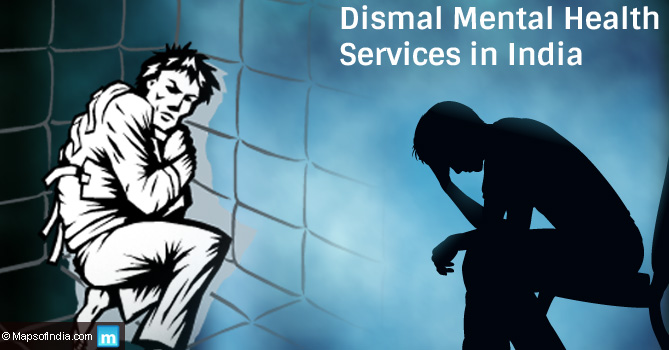
However, while health as a whole is an under-funded and under-resourced area in India, it is the mental health in particular that has really suffered over the years.
According to WHO, neuropsychiatric disorders in India are estimated to contribute to 11.6% of the global burden of disease. The suicide rate for men is 12.2 per 100,000 of population, and for women it is 9.1 per 100,000. While 14% of the global burden of diseases is attributable to mental disorders, the access to mental health services is poor across the world. In countries such as India, the WHO estimates that nearly 3/4th of those affected by mental illnesses do not have access to quality mental health services due to various reasons. According to WHO's estimates, there are 0.301 psychiatrists per 100,000 population, 0.166 nurses, 0.047 psychologists, and 0.033 mental health social workers.
The World Health Organization (WHO) defines health as follows:
“Health is a state of complete physical, mental and social well-being and not merely the absence of disease or infirmity.”
However, while health as a whole is an under-funded and under-resourced area in India, it is the mental health in particular that has really suffered over the years.
According to WHO, neuropsychiatric disorders in India are estimated to contribute to 11.6% of the global burden of disease. The suicide rate for men is 12.2 per 100,000 of population, and for women it is 9.1 per 100,000. While 14% of the global burden of diseases is attributable to mental disorders, the access to mental health services is poor across the world. In countries such as India, the WHO estimates that nearly 3/4th of those affected by mental illnesses do not have access to quality mental health services due to various reasons. According to WHO's estimates, there are 0.301 psychiatrists per 100,000 population, 0.166 nurses, 0.047 psychologists, and 0.033 mental health social workers.
National Mental Health Programme
The National Mental Health Programme (NMHP) has been in existence since 1982. Initially, its objectives were as follows:- To ensure the availability and accessibility of minimum mental healthcare for all in the foreseeable future, especially to the most vulnerable and underprivileged sections of the population
- To encourage the application of mental health knowledge in general healthcare and social development
- To promote community participation in the mental health service development and to stimulate efforts towards self-help in the community