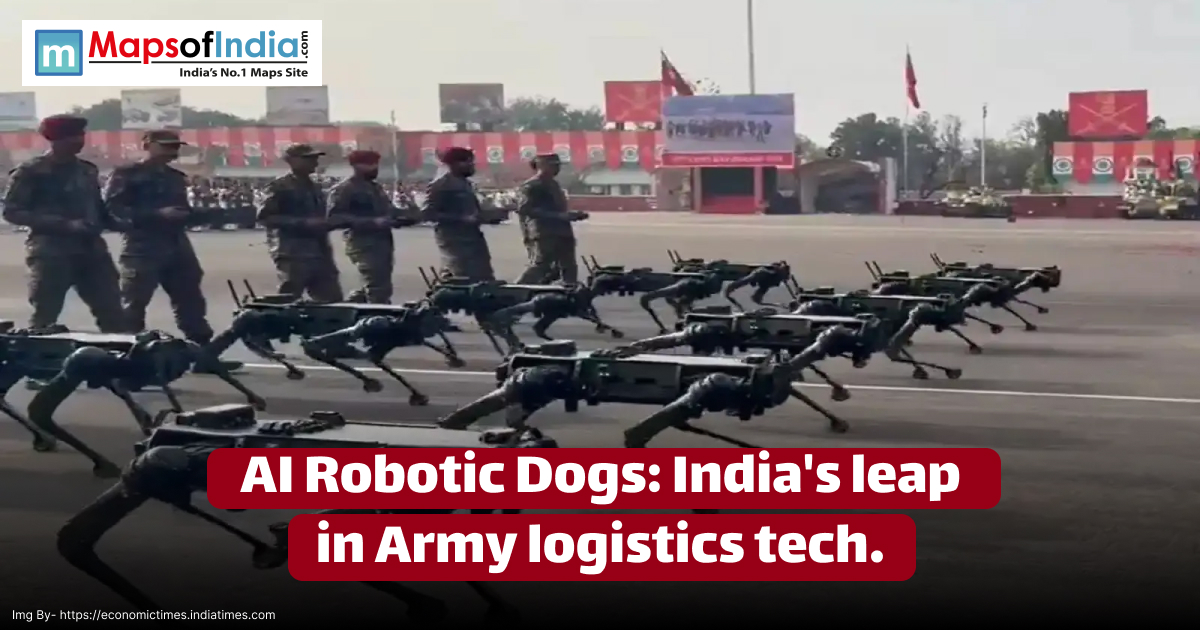
The Rise of AI-Powered Robotic Dogs
Robot dogs aren’t an entirely new concept. Right from the beginning, Boston Dynamics-era iconic quadrupedal robot, the "Spot" was ground-breaking. India’s interest in such robotic platforms is unique because it wants to modify the technology for its own operational and logistical needs. Harnessing the power of AI, machine learning, and robotics, these robotic dogs can do tasks that can supplement and amplify human activity. DRDO and private companies in India have developed indigenous designs in robotic systems over the past few years. These are intelligent machines, autonomous and smart machines that can navigate without a hazard, detour from an obstacle, carry a payload, and decide in real-time. They have their sector of walking troops and are useful for the Indian Army in difficult terrain and high-risk work areas.Uses of Army Logistics
Logistics — the backbone of any military operation — is just one of the main functions of these robotic dogs. Logistics helps to get crucial materials (such as food, ammunition, and medical supplies) to soldiers based in remote or hostile environments promptly. Here is how such AI-based robotic dogs are changing this segment:-
Moving Materials in Challenging Terrain
-
Minimizing Human Exposure in Dangerous Areas
-
Observation and Investigation
-
Emergency Response
Technological Features
The technological complexity of AI-powered robotic dogs is the secret behind their efficiency:- Autonomous Navigation: Advanced AI algorithms enable these robots to chart their course and navigate obstacles autonomously.
- Payload Capacity: Robotic dogs can carry anything between a few and a few dozen kilograms depending on the model, which is useful for a wide range of logistical tasks.
- Durability: These robots are constructed with tough materials that can endure rough handling and severe weather.
- Communication System: They are integrated with secure communication systems to provide feedback information to operators or command centres.
- Energy Efficiency: Most models also allow for intensive daily usage, some like solar charging.
Benefits for the Indian Army
-
Improved Productivity
-
Cost-Effectiveness
-
Scalability
-
Technological Edge
Challenges and Concerns
The promise sounds great, but the cosmetic use of AI-powered robotic dogs has its challenges:- High price: The initial investment to develop and purchase these machines is very high. Technical constraints: Problems with electric batteries, operating range and vulnerability against hacking are still in question.
- Ethical Concerns: The use of AI in the military is another issue that raises many ethical questions, particularly concerning who is responsible for this technology and if it can be misused when applied as autonomous devices.
- Training Constraint: The implementation and integration of such technology is a big ask of militaries as well, as militaries would need to undergo repainting of old training and operational frameworks to host such tech.
- Over-Reliance on Technology: Heavy reliance on robotic systems can lead to challenges if these machines malfunction or hack.