- AstroSat was deployed in September 2015 by PSLV-C30 from Sriharikota Station in Andhra Pradesh.
- It is the first specialised Indian mission based on astronomy aiming to explore celestial bodies and their sources in the X-ray, UV, and Optical spectral bands simultaneously.
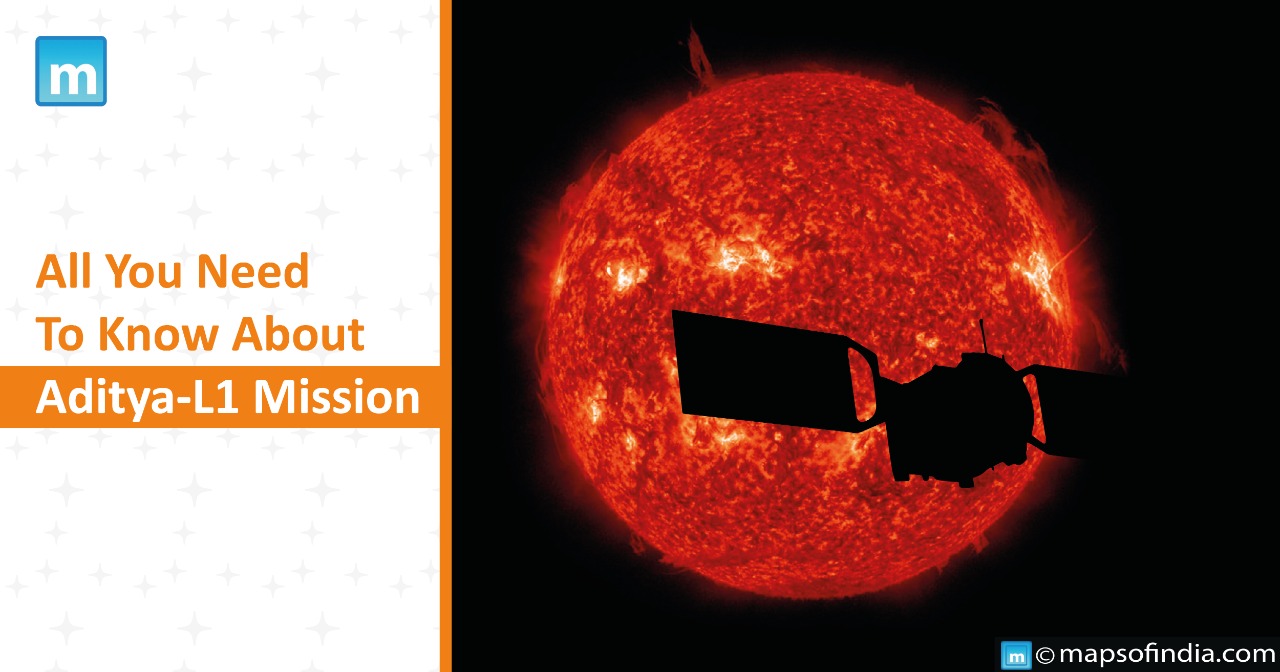
- Aditya L1 will be propelled by the Polar Satellite Launch Vehicle (PSLV) XL, which will also deploy seven other payloads into Low Earth Orbit (LEO).
- It will continuously monitor the Sun and investigate its corona, photosphere (X-rays), chromosphere (Ultra Violet), solar storms and fluxes, and coronal mass ejections (CMEs).
- The Sun's distance from Earth is roughly around 15 crore Kilometers. This enormous distance presents a scientific problem.
- Due to the hazards involved, payloads in previous ISRO missions were mostly immobile in orbit. However, Aditya L1 will include some moving components, increasing the possibility of collision.
- Other concerns include extremely high temperatures and radiation in the solar environment. Aditya L1 will, however, stay considerably further away, and the heat will not likely be a serious issue for the equipment on board.
- Every celestial body, including Earth and the exoplanets outside the Solar System, is regulated by its parent star, which in our case is the Sun.
- The Sun's weather and atmosphere influence the whole system's condition. As a result, it is critical to understand the Sun.
- Variation in the Solar Weather System: Variations in this weather can cause satellites' orbits to shift or their lifetimes to be cut short, tamper with or impair onboard equipment, and cause power outages and other disruptions on Earth.
- Understanding space weather requires knowledge of solar occurrences.
- Continuous solar observations are required to learn about, track, and anticipate the impact of Earth-directed storms.
- Many of the project's equipment and parts are being built in the country for the first time.