What is the mythological origin of the Kumbh Mela?
The origins of the Mela are deeply embedded in Hindu mythology. The Mahakumbh originates in the ancient Hindu legend of ‘Samudra Manthan’. According to this mythology, gods and demons attempted to retrieve ‘amrita’ or ‘amrut’, which is nothing but the nectar of immortality. Both sides worked together by churning the ocean, as only then could they receive ‘amrita’. During the churning, the first to emerge from this was a venomous poison. Lord Shiva consumed this poison and came to be called ‘Nilkantha’. Post this, the churning continued for thousands of years, and the gods and demons continued to churn mountain Mandrachala to receive ‘amrita’. Finally, God Dhanvantri appeared with the ‘Amrit kalasa’, which had the ‘Amrit’. However, as soon as the demons saw the kalasa, they snatched it from the god and ran away. To retrieve it, Lord Garuda was sent to follow the demons. During this time, a few drops from the kalasa fell on four cities: Haridwar, Prayagraj, Nashik-Trimbakeshwar, and Ujjain. Later, the Kalasa ultimately remained with the gods, and they consumed it in its entirety. Due to this mythological sequence, the Kumbh Mela has been held in these four places for as long as history can remember. It is important to note that different sacred texts provide different accounts regarding the entire occurrence of ‘Samudra Manthan’; the one mentioned here is one of those accounts.When is the Kumbh Mela held?
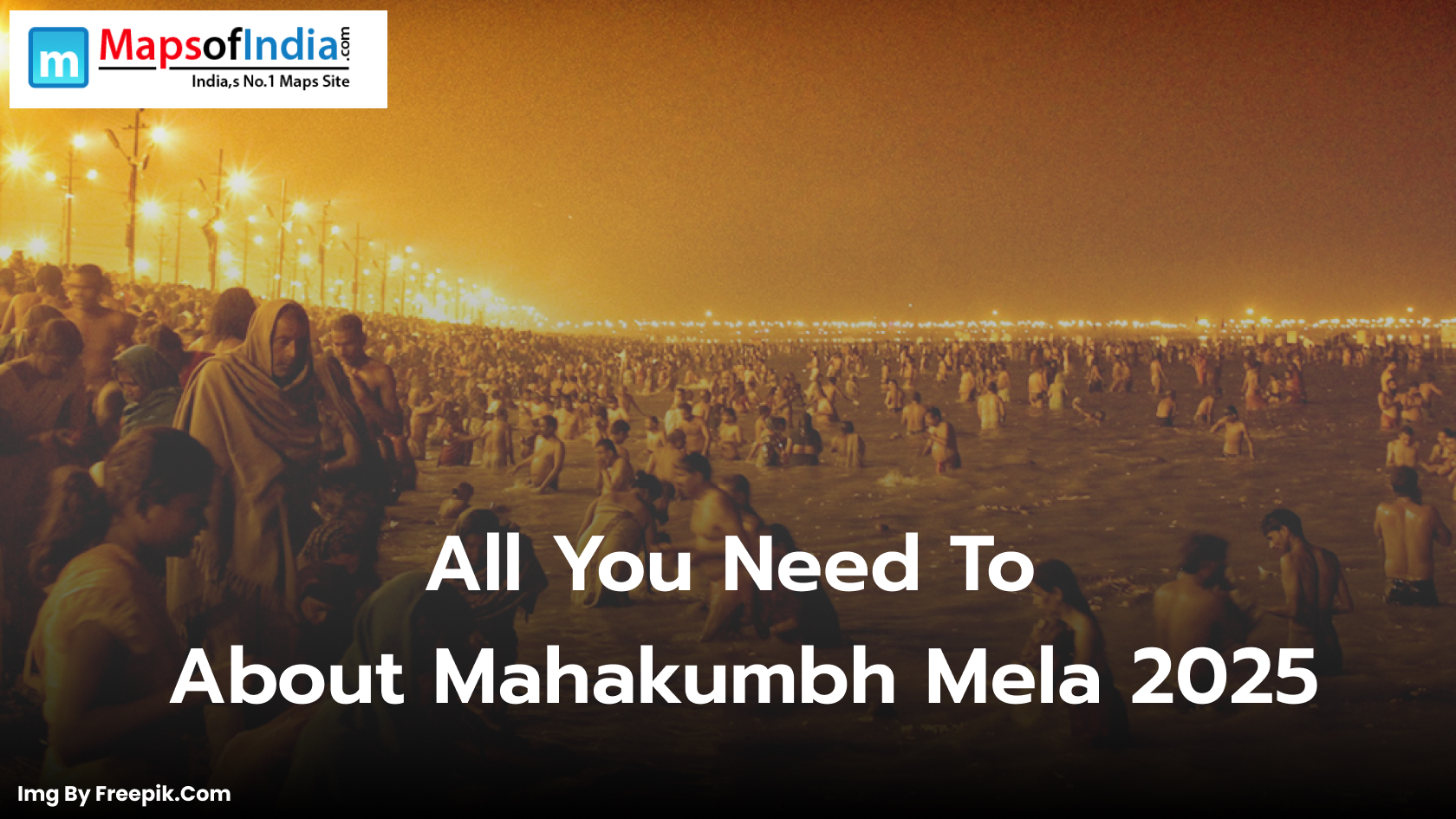
One will find the normal Kumbh Mela to be held every three years. The Ardh (half) Kumbh is held every six years at Haridwar and Prayagraj. In comparison, the Purna (complete) Kumbh takes place every twelve years in any of the four areas mentioned above, depending upon the planetary movement. This year, the Mahakumbh is being celebrated at Prayagraj after 144 years. This signifies that twelve Purna Kumbh Melas have been celebrated since the last time the Kumbh was held at Prayagraj.What happens during the Kumbh Mela?
Kumbh Mela is visited by different people, such as Sadhus, Naga Sadhus, Hermits, and common people. During the Mela, several events and ceremonies take place simultaneously. Some of these are mentioned hereunder:- Shahi Snan: Shahi Snan is one of the major highlights of the Kumbh Mela. During these snans, certain ascetic orders known as Akharas come to take a holy dip in the rivers. Grand processions precede all of this. The belief behind this practice is that the dip in the holy river will cleanse one’s sins and generate spiritual value for oneself.
- Recitation of Sermons and Sacred Texts: During the Kumbh, several Akharas set up tents and stages where devotees can hear sermons or recitations of sacred texts. Usually, anyone can come to hear these, and they happen for the entire day.
- Ganga Aarti: Every morning, the visitors can witness the grandeur of Ganga Aarti. This is a mesmerising experience. The priests chant prayers and perform aarti to honour the river goddess Ganga. At this time, the entire environment is filled with devotion and serenity.
- Shopping and Culinary Delights: Since the Mela attracts a variety of people from across the world, it also offers a variety of local delicacies and traditional crafts. The visitors can indulge themselves in the rich delicacies and arts and crafts while embracing the devotional environment of the place.
What are the key dates for this year’s Kumbh Mela?
- Mahakumbh Mela starts on: January 13, 2025
- Mahakumbh Mela ends on: February 26, 2025
- Paush Purnima: January 13, 2025
- Makar Sankranti (First Shahi Snan): January 14, 2025
- Mauni Amavasya (Second Shahi Snan): January 29, 2025
- Basant Panchami (Third Shahi Snan): February 3, 2025
- Maghi Purnima: February 12, 2025
- Maha Shivratri: February 26, 2025
Initiatives by the Government
Due to its cultural and religious importance, the Mahakumbh Mela will be an extravagant affair. The visitors will visit the holy place to fulfil their obligations. So, keeping in mind the estimated crowd, the Government of Uttar Pradesh has undertaken several initiatives like:Infrastructure Development
- The government has undertaken the renovation of 92 roads and the beautification of 17 roads.
- The government will construct 30 bridges using 3,308 pontoons to facilitate the movement of cars and people alike.
- The government has planned to install 800 multilingual signage to help visitors reach their desired destinations.
- The Mahakumbh Nagar is being transformed into a temporary city. It will have tents and shelters, including super deluxe accommodation offering deluxe tent and villas with luxurious amenities.
- The government has installed more than 2,69,000 checkered plates for the pathways. In addition, multiple mobile toilets and waste management systems have been installed in several places across the tent city to ensure hygiene.
Safety and Security measures
- The government has allocated Rs. 131 crore for fire safety measures. The authorities are ensuring the deployment of four articulating water towers (AWTs), which can tackle fires up to a height of 35 meters and a width of 30 meters.
- The government has made elaborate plans to ensure the safety and security of all the area's pilgrims. The authorities plan to use AI-powered crowd density monitoring, CCTV cameras, and drones for aerial surveillance.
- Further, the government will also deploy underwater drones that can dive up to 100 meters. This will ensure that round-the-clock surveillance is present in the Sangam area.
Medical Facilities
- The government is setting up temporary hospitals with surgical and diagnostic facilities.
- A Bhishma Cube has been set up to treat 200 people simultaneously.
- Netra Kumbh is being organised to conduct eye tests for lakhs of pilgrims.