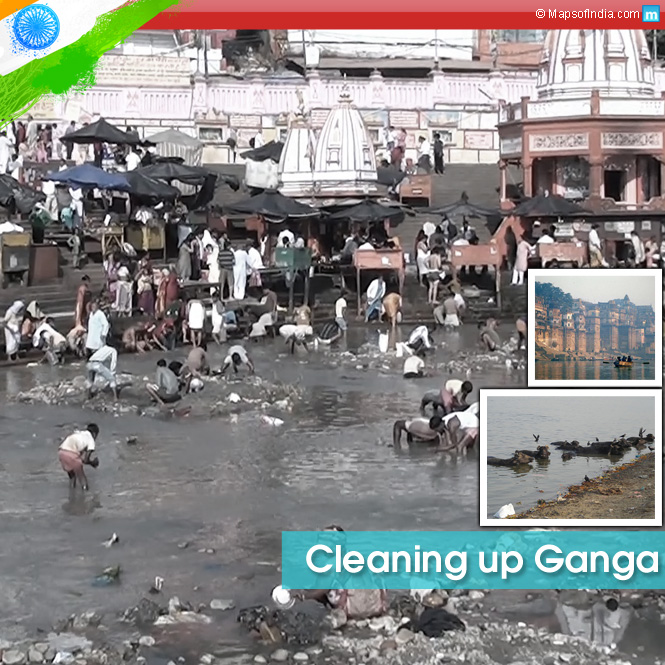
 One of the major stated aims of Narendra Modi, in both his pre-poll campaign as well as after becoming the Prime Minister of India, has been to clean river Ganga. Regarded as the holiest river in India, it also happens to be the most polluted in the country and this makes the PM’s mission seem like a gargantuan task.
The primary and perhaps the biggest problem that the environmental bodies, who are entrusted to clean the river, will face is the humongous inflow of industrial effluents and sewage into the river. The river covers a distance of 2500 km and there are 50 cities located along the bank of this river that put in 2,723.2 million litres of wastewater into it on a daily basis.
Kali, Ramganga too heavily polluted
This data has been revealed in the latest assessment report to have come out of the Central Pollution Control Board (CPCB). As of now the systems presently in India can only take care of 44% of the waste water or 1208.8 MLD. This implies there has been a gap of 1515 MLD and in order for the situation to be improved there is a requirement to bring down that gap. Incidentally the report, which contains all this data, is yet to be brought into the public domain by the Environment Ministry.
As many as 138 drains are responsible for polluting Ganga and two of its tributaries – Kali and Ramganga. These rivers are heavily polluted. Ramganga that covers a length of 596 km is full of industrial waste from the Kashipur paper mills as well as sewage emanating from Moradabad. Kali covers a distance of 500 km and has industrial sewage from the slaughterhouses of Meerut and the paper units and distilleries of the following cities:
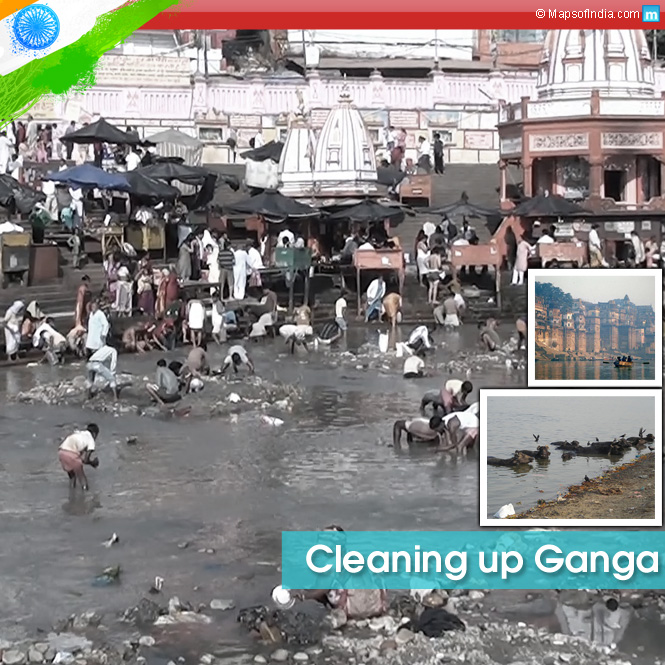
One of the major stated aims of Narendra Modi, in both his pre-poll campaign as well as after becoming the Prime Minister of India, has been to clean river Ganga. Regarded as the holiest river in India, it also happens to be the most polluted in the country and this makes the PM’s mission seem like a gargantuan task.
The primary and perhaps the biggest problem that the environmental bodies, who are entrusted to clean the river, will face is the humongous inflow of industrial effluents and sewage into the river. The river covers a distance of 2500 km and there are 50 cities located along the bank of this river that put in 2,723.2 million litres of wastewater into it on a daily basis.
Kali, Ramganga too heavily polluted
This data has been revealed in the latest assessment report to have come out of the Central Pollution Control Board (CPCB). As of now the systems presently in India can only take care of 44% of the waste water or 1208.8 MLD. This implies there has been a gap of 1515 MLD and in order for the situation to be improved there is a requirement to bring down that gap. Incidentally the report, which contains all this data, is yet to be brought into the public domain by the Environment Ministry.
As many as 138 drains are responsible for polluting Ganga and two of its tributaries – Kali and Ramganga. These rivers are heavily polluted. Ramganga that covers a length of 596 km is full of industrial waste from the Kashipur paper mills as well as sewage emanating from Moradabad. Kali covers a distance of 500 km and has industrial sewage from the slaughterhouses of Meerut and the paper units and distilleries of the following cities:
- Muzaffarnagar
- Bulandshahr
- Modi Nagar
- Gulaothi
- Hapur
- Kannauj