 The monsoon season in India brings with it cooling showers, a bumper harvest, and many festivals. For the people in the national capital, though, the rains have been bringing disease, misery, and fear for the past few years. Cases of Dengue and Chikungunya have once again been reported in large numbers from Delhi and surrounding areas. As of the week ending 3 September, 2016, the Delhi-NCR area recorded over 771 cases of dengue and 560 cases of Chikungunya. The number of new cases reported seems to go up considerably every week. The Delhi Municipal Corporation has confirmed 2 deaths due to Dengue, while news reports state that the toll may have reached 6 by now.
The capital region experienced one of its worst dengue outbreaks last year (2015) with the civic body confirming 15,867 dengue cases and the death toll reaching 60. In 2016, there has been a sharp increase in the number of Chikungunya cases compared to previous years - there were 18 cases reported in 2013, 8 cases in 2014, 64 in 2015 in Delhi-NCR. The high number of Chikungunya cases this year is certainly an unexpected occurrence since unlike Dengue, this disease is not endemic, that is, it is unlikely to show regular occurrence in any particular region.
According to medical experts, a new type 3 strain of Dengue is also doing the rounds in Delhi. This type, however, seems to have milder health implications and symptoms and most victims do not seem to require hospitalization.
The monsoon season in India brings with it cooling showers, a bumper harvest, and many festivals. For the people in the national capital, though, the rains have been bringing disease, misery, and fear for the past few years. Cases of Dengue and Chikungunya have once again been reported in large numbers from Delhi and surrounding areas. As of the week ending 3 September, 2016, the Delhi-NCR area recorded over 771 cases of dengue and 560 cases of Chikungunya. The number of new cases reported seems to go up considerably every week. The Delhi Municipal Corporation has confirmed 2 deaths due to Dengue, while news reports state that the toll may have reached 6 by now.
The capital region experienced one of its worst dengue outbreaks last year (2015) with the civic body confirming 15,867 dengue cases and the death toll reaching 60. In 2016, there has been a sharp increase in the number of Chikungunya cases compared to previous years - there were 18 cases reported in 2013, 8 cases in 2014, 64 in 2015 in Delhi-NCR. The high number of Chikungunya cases this year is certainly an unexpected occurrence since unlike Dengue, this disease is not endemic, that is, it is unlikely to show regular occurrence in any particular region.
According to medical experts, a new type 3 strain of Dengue is also doing the rounds in Delhi. This type, however, seems to have milder health implications and symptoms and most victims do not seem to require hospitalization.
What causes Dengue and Chikungunya?
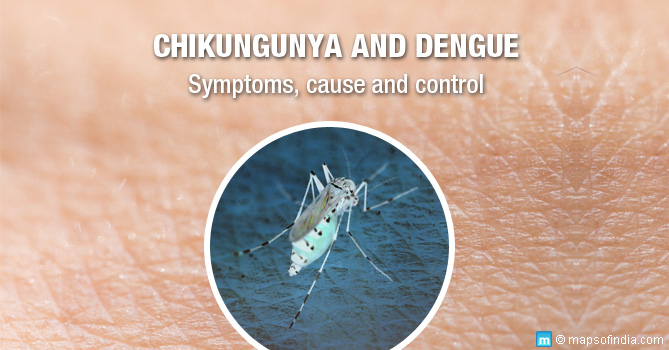
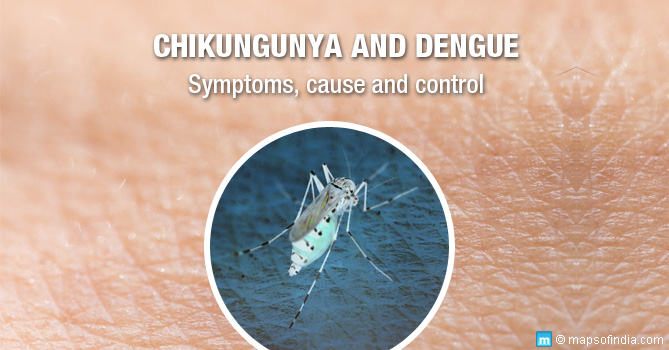
Both Chikungunya and Dengue are caused by mosquito bite. The bite of the female Aedes aegypti mosquito is believed to be cause, but in some cases, the Aedes albopictus mosquito may also be the carrier. Medical experts believe that there are 5 different types viruses spread by these mosquitoes, any of which may cause the disease. Dengue is non-infectious, that is, it cannot be spread directly from a patient to another person. The Chikungunya virus is also carried by the same mosquito. Antibodies against the specific virus present in the blood may also help in detection and differentiation between the two.Symptoms to look out for
Chikungunya - Chikungunya may be asymptomatic in some patients, but in more than 72 percent patients it leaves lasting symptoms. The onset is characterised by high fever, persistent headache, conjunctivitis, and chronic fatigue. Following this phase, the fever subsides but fatigue and headache persist. Most patients suffer from pains and stiffness of the joints. This pain may persist for weeks and even months. A distinct rash and digestive problems may also be present during the onset of this disease. Dengue - Like Chikungunya, Dengue too presents with a high fever, severe headache, nausea, pains in the limbs, and reddish rashes. In a number of patients Dengue causes a hemorrhagic fever which results in precariously low blood platelets levels and leakage of blood plasma. Blood transfusion may be required in such cases. Dengue may also cause massive bleeding and result in death. Clinical examination and blood tests may be required to differentiate between Chikungunya and Dengue in a patient. These tests can detect the specific virus in the patient's blood.What are municipal corporations doing?
In the battle against the outbreak of Dengue and Chikungunya, the three municipal corporations in Delhi are carrying out fumigation of areas that have reported the diseases. The civic bodies together have carried out fumigation in 13 percent households under their jurisdictions, a news report says. The efforts, however, are not quite enough, many believe. The slackness of the corporations has been a major let down, especially in light of last year's disastrous dengue outbreak. The three MCDs claim to be battling their own concerns. The South Delhi Municipal Corporation (SDMC), East Delhi Municipal Corporation (EDMC), and North Delhi Municipal Corporation (NDMC) together have reported about 1000 vacancies affecting their performance.How can you prevent Dengue and Chikungunya
Prevention of Dengue and Chikungunya is the best precaution one may take against these diseases.- Keep the house and neighbourhood clean. Use closed dustbins and garbage disposal systems.
- Do not let water stagnate in the neighbourhood. Mosquitoes breed in stagnant water and open water storages are breeding grounds. Clean out tanks and air coolers regularly.
- Use mosquito nets, and mosquito coils and repellents containing DEET.
- Allow fumigators to carry out their duties diligently. Report open garbage systems to the MCD.