Reconnecting the Skies: Resumption of Direct Flights
Among the most significant solutions agreed upon by the two parties is to restart air traffic between China and India. The suspension of air services took place years ago and was initially caused by the fallout of the 2017 Doklam standoff, and was later extended due to the ongoing pandemic. This affected business travellers, students, tourists, and families who had connected lives across the border, posing serious difficulties for them. Flights have also been slated to resume at the earliest as an updated Air Services Agreement has been in the works. This goes beyond convenience; it sends a great symbolic message- the readiness to rebuild trust and people-to-people relations. In addition, the process of issuing visas has been simplified across the board, including tourism, business, education, and media, which will result in more inflow and outflow between the two countries.Reopening Border Trade Routes
Equally significant is to renew the border trade. The cross-border trade will resume in three mountain passes: Lipulekh, Shipki La and Nathu La. These corridors are the lifelines of the communities that reside along the border regions, and most of them rely on local trade as their source of livelihood. With these trading points reopening, small businesses and regional economies that have long experienced falls through years of these trading points being closed will be given a fresh lease of life. It is also an indication that both administrations are willing to permit grassroots exchanges, as that is where trust-building takes place in its most concrete mode. India and China have also agreed to establish at least three new border management mechanisms to make this engagement more sustainable. Such structures are supposed to use diplomatic and military communication mediums to evade flashpoints, enhance coordination and help in enhancing efforts at de-escalation.Expanding Spiritual Tourism
The other important decision is that of cultural and spiritual exchanges. As of the year 2026, Indian pilgrims will be allowed to extend and deepen their visits to holy places in Tibet, like Mount Kailash and Lake Manasarovar. The sacred places carry with them a grandiosity of divine values to thousands of pilgrims who make the pilgrimage every year. The resolve to help and widen the pilgrimage routes indicates how cultural diplomacy can be used complementarily in the strategy talks. Opening the doors to such exchanges, these two countries make it clear that their relationship is not confined to the realm of politics and trade but is based on the commonalities in civilizational and spiritual relations.High-Level Talks and Diplomatic Breakthroughs
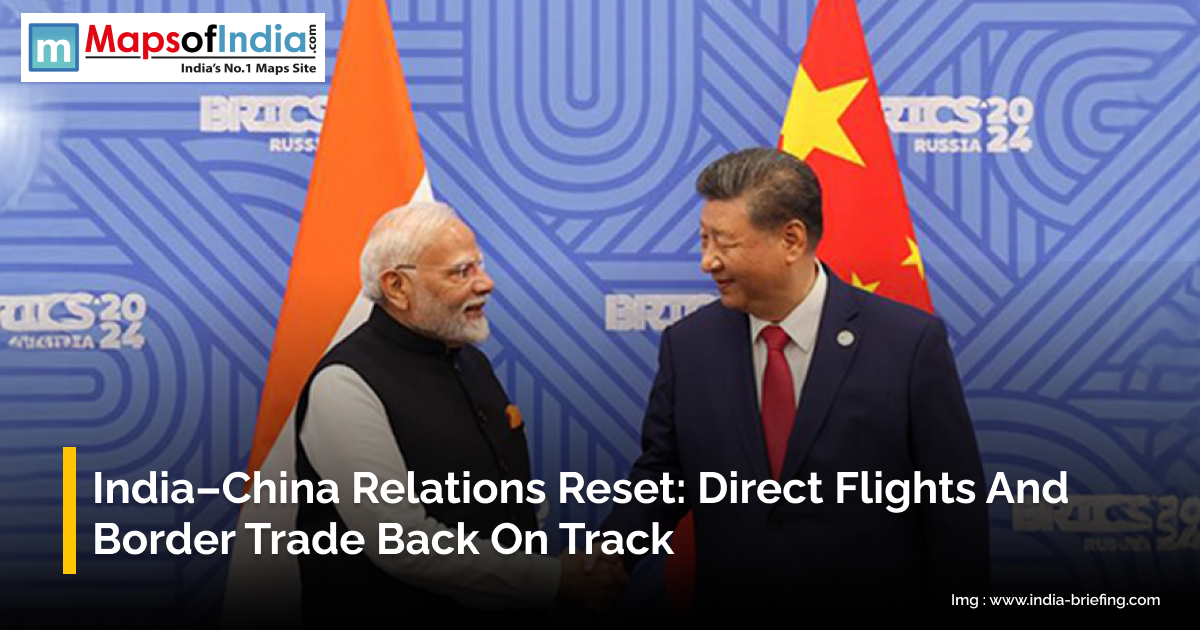
These decisions were not arrived at in a vacuum but as a result of top-to-top diplomacy. At the 24th round of Special Representative talks, Chinese Foreign Minister Wang Yi met India's National Security Advisor, Ajit Doval, and External Affairs Minister, S. Jaishankar, in New Delhi. The negotiations not only dealt with the short-term factors on flights and trade but also with larger concerns on the management of the borders and regional cooperation. The meetings ended with the meeting of Wang Yi with Prime Minister Narendra Modi. In his comments, the Prime Minister underlined that sound, predictable, and positive India-China relations are critical to the welfare of not only their people but also to peace at the regional and global level. Also, Ajit Doval has made a formal announcement that Prime Minister Narendra Modi will also visit China to attend the upcoming SCO Summit in Tianjin on August 31 and September 1, and with this, the Special Representatives talks have assumed very special importance. Such a spirit of dialogue and cooperation is a sharp break with stalemates of the recent past, and it bodes well in terms of bilateral ties being characterized by pragmatism and a less confrontational nature.Looking Ahead: The SCO Summit
This reset is also critical in time. Later this month, India will join the Shanghai Cooperation Organization (SCO) Summit to be held in Tianjin, China. Due to be held on August 31 - September 1, the summit will also allow the two countries to constructively engage on further issues of dialogue and potential collaborations and even more steps in de-escalating the age-old issues of border contentiousness. The fact that India is taking an active part in the SCO is also telling of the idea that the country will be pursuing a balance in relations in a more complicated world order overall, due to shifting alliances and the other issues surrounding economics, necessitating its diplomatic elasticity.Why This Reset Matters
Lifting of direct flights, border trade and enhancements in cultural exchanges also have a great implication to each country and the region at large:- Economic Benefits: The re-establishment of connectivity will improve tourism, cross-border investments and trade relations. This is more so at a time when the two economies are facing the storms of the global economy.
- Security and Stability: The creation of new border management systems is a logical means of preventing escalation and developing confidence even in delicate places.
- Cultural Bridges: The growth of visits of pilgrims to holy places widens people-to-people ties to reinforce soft diplomacy.
- Diplomatic Balance: It is being done at a time when India is adjusting its foreign attitudes to adapt to changing global alignments. The relationship with China provides versatility in the foreign policy of India.