Overview of the Kandla-Gorakhpur LPG Pipeline (KGPL)
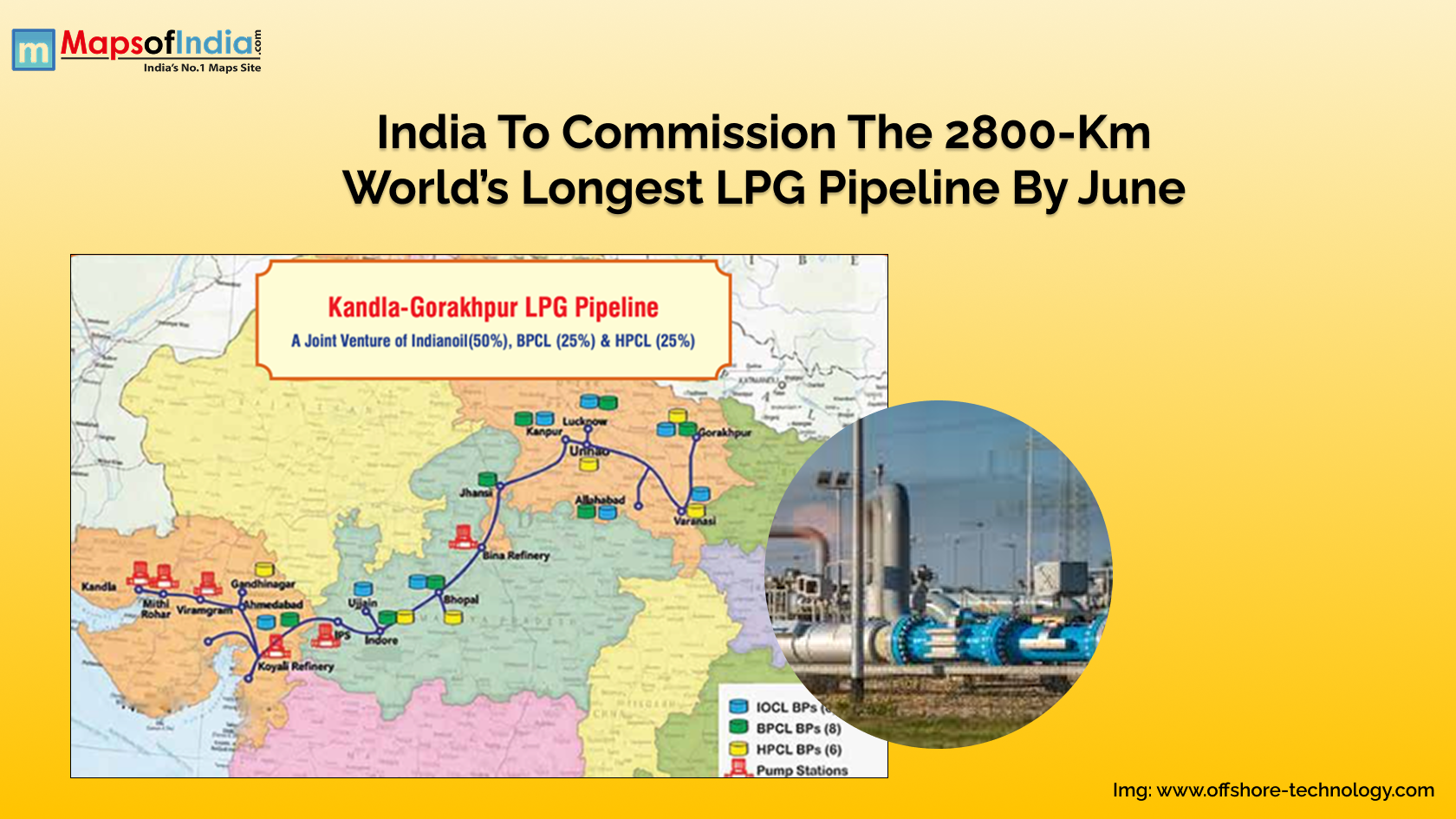
The ambitious project, Kandla Gorakhpur Petroleum Pipeline (KGPL), passes through Gujarat, Madhya Pradesh and Uttar Pradesh. The long reach of the pipeline is broken down like this:- Gujarat: 1,076 kilometres
- Madhya Pradesh: 621 kilometres
- Uttar Pradesh: 1,108 kilometres
Stakeholders and Project Execution
The IHB Limited, which is a combination of three of the major public sector undertakings, is implementing the KGPL project, which is as follows:- Indian Oil Corporation (IOCL): 50% stake
- Bharat Petroleum Corporation Limited (BPCL): 25% stake
- Hindustan Petroleum Corporation Limited (HPCL): 25% stake
Strategic Importance of the KGPL
With a commitment to deliver, the KGPL is all set to revolutionise LPG transportation in India, providing a more efficient and economical mode of transportation than conventional transportation methods like road and rail. Key advantages include:- Safety: In the event of a rupture, the risk of LPG transmission is lower in pipelines.
- Operational Efficiency: This pipeline ensures uninterrupted supply by minimising delays and bottlenecks usually involved in facilitating transportation by surface.
- Environmental Impact: This pipeline is a great solution to reduce the number of trucks and trains on the road, reducing many carbon footprints. This is a great part of the global sustainability strategy.
Technical Specifications and Infrastructure
KGPL is equipped with the latest technology to provide the best performance and safety. Key components include:- Pumping Stations: They are positioned at strategic distances to sustain pressure and flow. They are Kandla, Mithi Rohar, Viramgam, Dahej, Pipavav, Dumad, Bina Refinery, and an intermediate pumping station close to Indore.
- LPG Sources: The pipeline interconnects several LPG import terminals and refineries, including Kandla, Mundra (Mithi Rohar), Dahej, and Pipavav, providing a vibrant supply chain.
Historical Context and Predecessors
Before KGPL, the Jamnagar-Loni pipeline, at 1,415 kilometres, was India's longest LPG pipeline. At the time, it was the longest cross-state LPG transmission pipeline in the world and was commissioned to be built by GAIL (India) Limited in 2001. The Jamnagar-Loni pipeline created a landmark record in supplying 17 lakh tonnes per annum (TPA) of LPG for Northern India and also set the trend for large-scale LPG pipeline projects in the country.Economic and Social Implications
The economic and social impact of the commissioning of KGPL will be enormous:- Economic on the Ground: The pipeline serves industries like manufacturing and hospitality by keeping a steady supply of LPG and increasing economic activity.
- Economic Development: The pipeline construction and eventual maintenance have resulted in substantial job creation, fostering regional growth.
- Fuel Access: The pipeline also makes liquefied petroleum gas (LPG) more readily available to distant locations as a relatively clean cooking solution compared to biomass.
Challenges and Mitigation Strategies
There are many challenges to be faced in executing a project of this size:- Land Procurement: You need to meticulously plan negotiating across several states with land owners and local authorities to get the necessary land use.
- Environmental Concerns: They require large infrastructure, which can lead to significant environmental disruption. They also demand extensive environmental assessments and strict regulatory control.
- Geological Challenges: Geographic diversity and geological conditions require complex engineering solutions to ensure the pipeline remains operational and unaffected.
- Engagement with Stakeholders: Building a continuous dialogue with local communities and stakeholders to address their concerns and ensure cooperation.
- Environmental Protection: Eco-conscious construction practices and restoration of affected areas after the end of construction
- High-Tech Design: Used advanced technology and materials to increase durability and resist ecological factors.
Future Prospects and Expansion Plans
The commissioning of KGPL will open up a new venture for infrastructure projects. Possible developments include:- Pipeline Extension: Expansion of the pipeline network to supply new refineries and bottling plants, thus facilitating the supply of LPG.
- Digital Upgrades: Implementing digital monitoring systems and automation for operational efficiency and safety improvements.
- International Collaborations: Analysing multinational pipeline initiatives for regional energy trading and collaborations.