The Humble Beginning of India’s Space Program
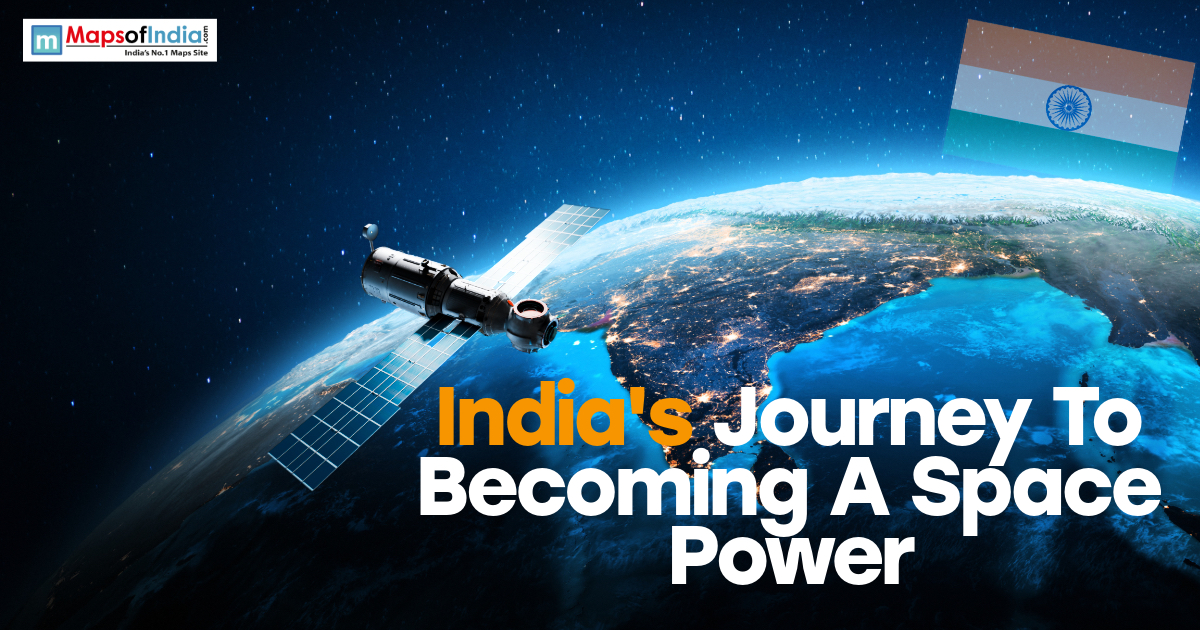
India's space programme began in 1962 when the Indian National Committee for Space Research (INCOSPAR) was established by Dr Vikram Sarabhai, a great scientist. Sarabhai was dubbed the “Father of the Indian Space Program,” and he had faith in the potential of space technology for national development. During the initial years, India was devoid of infrastructure, resources and advanced technology. Rocket parts were delivered by bike and bullock cart to the launch sites. Notwithstanding some of these constraints, the country was still determined to develop local capacities. ISRO is a major achievement in the scientific path of India, established in 1969. The objective of ISRO was to use space technology for communication, weather forecasting, education and national development.Aryabhata: India’s First Satellite
India was launched into the space age in 1975 when it sent its first satellite, called Aryabhata, named after the great Indian mathematician and astronomer of the Middle Ages. It was launched with the help of the Soviet Union, and it came to embody India's fledgling scientific prowess. Though the mission had been an experimental one, it provided the Indian scientists with valuable experience in designing and operating a satellite. Aryabhata paved the way for subsequent developments in communication and remote sensing satellites.Building Indigenous Launch Capabilities
The development of one of India's biggest achievements of India was its own launch vehicles. ISRO was not relying on any foreign countries for its rockets, but aimed to develop indigenous rocket systems. In 1980, Dr A.P.J. Abdul Kalam successfully launched the Rohini satellite into orbit, under the Satellite Launch Vehicle (SLV-3). With this success, India became one of the few countries to be able to launch satellites all on its own. ISRO advanced their rockets over the years, such as:- Polar Satellite Launch Vehicle (PSLV)
- Geosynchronous Satellite Launch Vehicle (GSLV)
- The launch vehicle Mark 3 (LVM3)
Revolutionizing Communication and Weather Forecasting
India's space program was not all about prestige missions. ISRO's focus was on the application of technology that can positively affect the lives of the common people. Indian Communication and Broadcasting has been revolutionized by the INSAT and GSAT series. Satellite technology greatly boosted the growth of Television networks, telecommunication services and internet connectivity. Weather satellites contributed to the better tracking of cyclones and disaster management measures, which saved thousands of lives during natural disasters. Agri, water resource management, urban planning and environmental monitoring were other uses of remote sensing satellites. The performance of these achievements illustrated the direct contribution of space technology to economic and social development.Chandrayaan Missions: India Reaches the Moon
Lunar exploration missions in the 21st century gave a big boost to India's aspirations.Chandrayaan-1
Chandrayaan-1 is India's first lunar mission that was launched in 2008. The mission became world-famous following their announcement of the presence of water molecules on the lunar surface, a breakthrough in lunar science, which was all the news all over the world. In this success, India proved itself a serious space exploration nation.Chandrayaan-2
India launched the Chandrayaan-2 mission in 2019, which was to explore the south pole of the Moon using a rover. While the Vikram lander went out of touch during the last moments of the landing phase, the orbiter successfully carried out its scientific operations and delivered valuable data. The mission, however, highlighted India's emerging technological prowess and determination.Chandrayaan-3
In 2023, India made history with Chandrayaan-3! The mission was able to get down near the south pole of the Moon, making India the first nation to do so and the fourth country in all to soft-land on the Moon. This achievement was greeted with great enthusiasm and enthusiasm throughout the world and was a milestone in India's space journey.Mission Mars: Mangalyaan’s Historic Success
In 2013, India came as a surprise to the world with its Mars Orbiter Mission (Mangalyaan). In 2014, it was able to successfully enter into Mars orbit, becoming the first country to do so in its first attempt. What was so incredible about the mission was that it was an inexpensive one! The mission had proved India's capability in the field of space exploration, which was highly efficient and economical. Mangalyaan was a harbinger of the innovation and engineering skills of India.India’s Growing Global Reputation
ISRO is recognized internationally for providing reliable and affordable space services. Many countries have now confided in India for launching their satellites. ISRO set a new record of 104 satellites being launched by the PSLV in one mission in 2017. This success proved the efficiency and high-level launching capabilities of India. India's proficiency in space science has also enabled it to join forces with organizations such as NASA and the European Space Agency (ESA in Europe.The Rise of Private Space Startups
The space ecosystem in India is rapidly transforming and getting private players and startups involved. The government has encouraged the private sector to become involved in various ways and schemes, including IN-SPACe. Now, Indian startups are trying their hands at Satellite, Launch vehicles, space data services and reusable technologies. The growth of the private sector is expected to strengthen India's presence in the space economy. Young people are more engaged in entrepreneurship, thus opening new doorways for innovation and employment.Gaganyaan and the Future Ahead
India is now readying itself for one of its most ambitious missions – Gaganyaan, the country's first human spaceflight mission. The project is to make space travel with an indigenous spacecraft to put Indian astronauts in space. Indian Space Research Organisation (ISRO) is also working on:- Solar exploration missions
- Space station development
- Advanced satellite technologies
- Deep-space exploration
- Reusable rocket systems