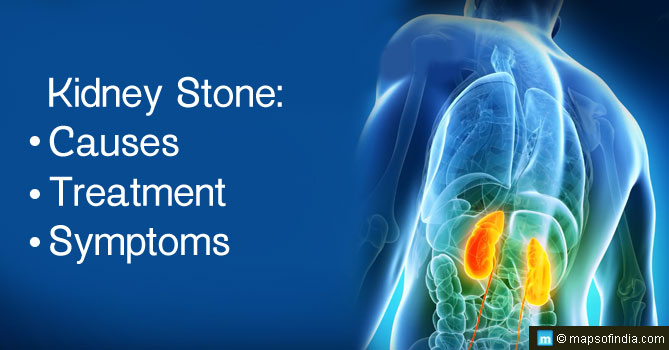
 Kidney stones are medically known as nephrolithiasis or renal lithiasis. When the crystal-forming substances (including calcium, oxalate and uric acid) start getting deposited in your kidneys in the absence of adequate fluid in your urine, kidney stones begin to form. As kidneys help in the removal of waste and fluid from the body by filtering out toxins, excess salt and urea, imbalance between the waste particles and fluid can cause kidney stones. Nowadays, kidney stones have become common because of the sedentary lifestyle of the modern world.
Kidney stones can be extremely painful when they move around in the kidney, or pass through the ureter. They do not cause permanent damage, provided they are detected, recognized, and treated on time. You need surgery only when these hard crystals get lodged in the urinary tract.
Causes of Kidney Stones
Kidney stones are of different types, depending on the crystal-forming substances (Calcium, struvite, uric acid, and cystine stones) from which they are formed. There is no single cause for the formation of kidney stones. Multiple factors increase the risk of stone formation.
Kidney stones are medically known as nephrolithiasis or renal lithiasis. When the crystal-forming substances (including calcium, oxalate and uric acid) start getting deposited in your kidneys in the absence of adequate fluid in your urine, kidney stones begin to form. As kidneys help in the removal of waste and fluid from the body by filtering out toxins, excess salt and urea, imbalance between the waste particles and fluid can cause kidney stones. Nowadays, kidney stones have become common because of the sedentary lifestyle of the modern world.
Kidney stones can be extremely painful when they move around in the kidney, or pass through the ureter. They do not cause permanent damage, provided they are detected, recognized, and treated on time. You need surgery only when these hard crystals get lodged in the urinary tract.
Causes of Kidney Stones
Kidney stones are of different types, depending on the crystal-forming substances (Calcium, struvite, uric acid, and cystine stones) from which they are formed. There is no single cause for the formation of kidney stones. Multiple factors increase the risk of stone formation.
- Causes of Calcium Kidney Stones
- Causes of Struvite Kidney Stones
- Causes of Uric Acid Kidney Stones
- Causes of Cystine Kidney Stones
- Pain at the time of urination
- Pain coming in waves and fluctuating in intensity
- Unusual urine color (pink/ red/ brown)
- Pain radiating to the lower abdomen and groin
- Pain felt below the ribs, side, and back
- Urine is cloudy and foul smelling
- Nausea
- Vomiting
- Urge to urinate more (than usual)
- Urinate more frequently than usual
- Small amounts of urination
- Fevers and chills (in case of renal infection)
- In case of small kidney stone, doctor may advise the patient to drink lots of water and also take pain relief medicine.
- In case of large kidney stone or blockage of urinary tract, other treatment options may be advised such as: