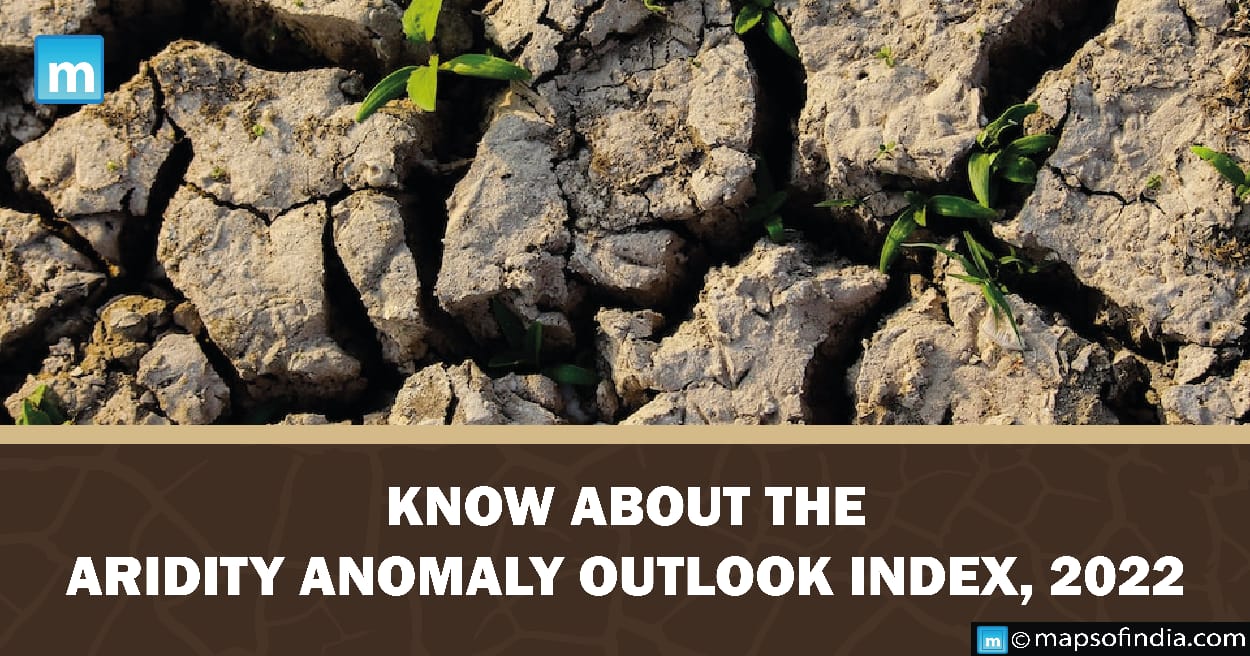
- Water balance is taken into account in a real-time drought index.
- The Aridity Index (AI) is calculated weekly or biweekly.
- The actual aridity for each period is matched to the expected aridity for that period.
- Moisture excess is shown by negative values, whereas positive values indicate moisture stress.
- Actual evapotranspiration and computed potential evapotranspiration, which need wind, temperature, and solar radiation values, are the parameters.
- Actual evapotranspiration is the amount of water eliminated from a surface due to transpiration and evaporation.
- The greatest feasible or achievable evapotranspiration for a specific crop owing to evaporation and transpiration is referred to as potential evapotranspiration.
- Drought damages agriculture, particularly in the tropics, where distinct wet and dry seasons are part of the climatic regime.
- This approach may evaluate both the winter and summer cropping seasons.
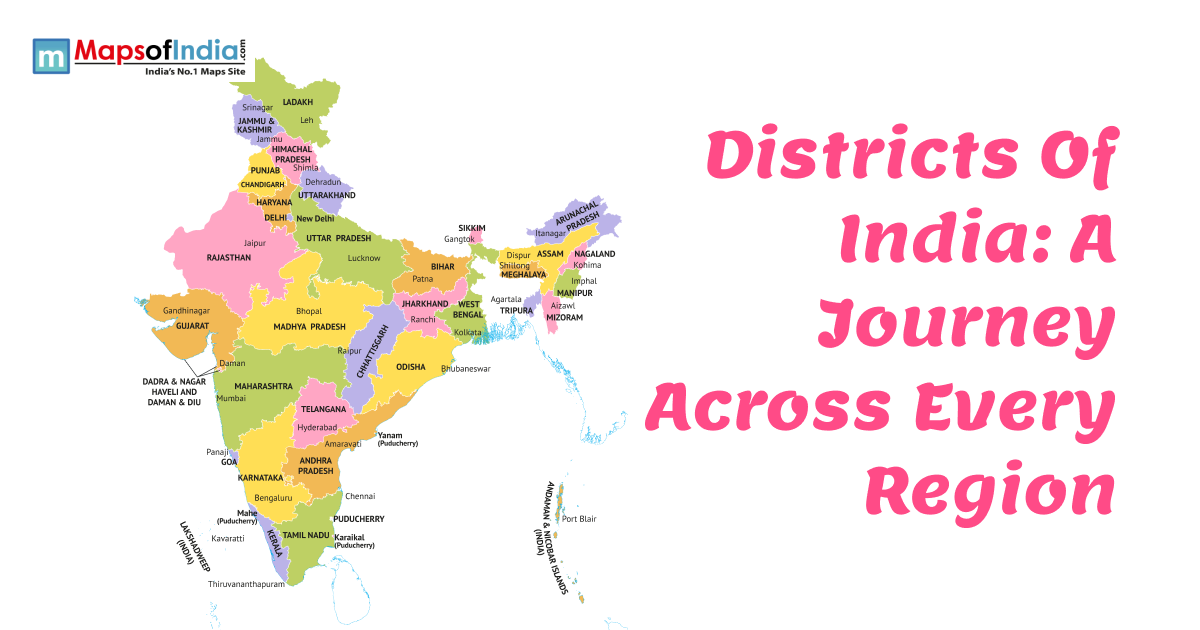
- It is estimated that only 63 of 756 districts are not arid, and the remaining 660 experience varying degrees of aridity (mild, moderate, and severe).
- A total of 196 districts are experiencing severe dryness, with 65 located in Uttar Pradesh (highest).
- Bihar has the second-highest number of dry districts (33) behind Rajasthan. The region also has a 45% rainfall deficit.
- Maharashtra, Rajasthan, Madhya Pradesh, Haryana, Delhi, Jammu and Kashmir, Telangana, Jharkhand, Andhra Pradesh, Punjab, West Bengal, Karnataka, and Tamil Nadu are among the other States affected by severe aridity.'
- The SPI on the DEWS platform also shows that there has been a persistent rainfall shortfall in these locations over the previous six months.
- Arid conditions have influenced current Kharif sowing, as the area seeded under various Kharif crops as of July 2022 was 13.26 million hectares smaller than at a similar time in 2021.
- The SPI is frequently used for describing meteorological dryness over many periods.
- The SPI is intimately tied to soil moisture on short durations and can be linked to underground water and reservoir storage on longer timelines.
- The SPI on the Drought Early Warning System (DEWS), an authentic drought monitoring platform operated by the Indian Institute of Technology, Gandhinagar (IIT-G), reveals a six-month rainfall deficiency in these places.
- Bihar, UP, Jharkhand, West Bengal, and portions of the North East are experiencing severe drought, and agriculture in these areas may suffer as a result.
- IMD was founded in 1875.
- It functions as a department under the Ministry of Earth Sciences.
- It is the primary agency in meteorological monitoring, forecasts, and seismology.