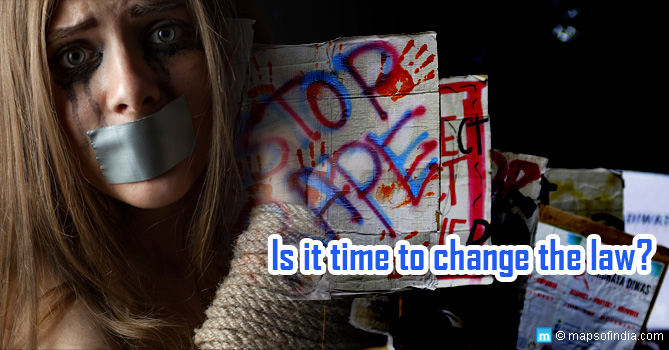
 Ironical. Disgusting. Outrageous. No matter what you feel or believe, the juvenile Nirbhaya rapist, who has turned 20 this year, became a free man when the Juvenile Justice Board signed his release order on 20 December 2015. Due to threat to his life, he was shifted out earlier from the Timarpur Juvenile Correctional Home and handed over to an NGO, under whose care and supervision his apparent rehabilitation is due to start.
To support the process, the government has expunged his criminal record, will hand him Rs 10,000 and a sewing machine, in the hope that he will be rehabilitated as a law abiding citizen and can join mainstream society.
The Delhi Commission for Women (DCW) chief Swati Maliwal, in a last minute appeal, approached the concerned Supreme Court Judge late Saturday night with a fervent hope that the Supreme Court would stay his release but the judge refused to oblige. The Supreme Court, however, will hear an appeal at 1030 hrs on Monday 21 December, but under current laws, there is almost no ground under which the apex court can overturn its own decision.
Parents of Nirbhaya have been doing their bit to stop the juvenile’s release and even tried to hold a protest at India Gate on Sunday evening, but were detained by the police and taken to Parliament Road Police Station. They will continue to protest at the Jantar Mantar on Monday.
This once again brings up the contentious debate between a victim’s right to seek justice and the society’s responsibility in giving a convict a second chance to reform. Civil society remains deeply divided on this issue.
How effective is the law in fulfilling its goal for either side?
Ironical. Disgusting. Outrageous. No matter what you feel or believe, the juvenile Nirbhaya rapist, who has turned 20 this year, became a free man when the Juvenile Justice Board signed his release order on 20 December 2015. Due to threat to his life, he was shifted out earlier from the Timarpur Juvenile Correctional Home and handed over to an NGO, under whose care and supervision his apparent rehabilitation is due to start.
To support the process, the government has expunged his criminal record, will hand him Rs 10,000 and a sewing machine, in the hope that he will be rehabilitated as a law abiding citizen and can join mainstream society.
The Delhi Commission for Women (DCW) chief Swati Maliwal, in a last minute appeal, approached the concerned Supreme Court Judge late Saturday night with a fervent hope that the Supreme Court would stay his release but the judge refused to oblige. The Supreme Court, however, will hear an appeal at 1030 hrs on Monday 21 December, but under current laws, there is almost no ground under which the apex court can overturn its own decision.
Parents of Nirbhaya have been doing their bit to stop the juvenile’s release and even tried to hold a protest at India Gate on Sunday evening, but were detained by the police and taken to Parliament Road Police Station. They will continue to protest at the Jantar Mantar on Monday.
This once again brings up the contentious debate between a victim’s right to seek justice and the society’s responsibility in giving a convict a second chance to reform. Civil society remains deeply divided on this issue.
How effective is the law in fulfilling its goal for either side?
Ironical. Disgusting. Outrageous. No matter what you feel or believe, the juvenile Nirbhaya rapist, who has turned 20 this year, became a free man when the Juvenile Justice Board signed his release order on 20 December 2015. Due to threat to his life, he was shifted out earlier from the Timarpur Juvenile Correctional Home and handed over to an NGO, under whose care and supervision his apparent rehabilitation is due to start.
To support the process, the government has expunged his criminal record, will hand him Rs 10,000 and a sewing machine, in the hope that he will be rehabilitated as a law abiding citizen and can join mainstream society.
The Delhi Commission for Women (DCW) chief Swati Maliwal, in a last minute appeal, approached the concerned Supreme Court Judge late Saturday night with a fervent hope that the Supreme Court would stay his release but the judge refused to oblige. The Supreme Court, however, will hear an appeal at 1030 hrs on Monday 21 December, but under current laws, there is almost no ground under which the apex court can overturn its own decision.
Parents of Nirbhaya have been doing their bit to stop the juvenile’s release and even tried to hold a protest at India Gate on Sunday evening, but were detained by the police and taken to Parliament Road Police Station. They will continue to protest at the Jantar Mantar on Monday.
This once again brings up the contentious debate between a victim’s right to seek justice and the society’s responsibility in giving a convict a second chance to reform. Civil society remains deeply divided on this issue.
How effective is the law in fulfilling its goal for either side?
Ironical. Disgusting. Outrageous. No matter what you feel or believe, the juvenile Nirbhaya rapist, who has turned 20 this year, became a free man when the Juvenile Justice Board signed his release order on 20 December 2015. Due to threat to his life, he was shifted out earlier from the Timarpur Juvenile Correctional Home and handed over to an NGO, under whose care and supervision his apparent rehabilitation is due to start.
To support the process, the government has expunged his criminal record, will hand him Rs 10,000 and a sewing machine, in the hope that he will be rehabilitated as a law abiding citizen and can join mainstream society.
The Delhi Commission for Women (DCW) chief Swati Maliwal, in a last minute appeal, approached the concerned Supreme Court Judge late Saturday night with a fervent hope that the Supreme Court would stay his release but the judge refused to oblige. The Supreme Court, however, will hear an appeal at 1030 hrs on Monday 21 December, but under current laws, there is almost no ground under which the apex court can overturn its own decision.
Parents of Nirbhaya have been doing their bit to stop the juvenile’s release and even tried to hold a protest at India Gate on Sunday evening, but were detained by the police and taken to Parliament Road Police Station. They will continue to protest at the Jantar Mantar on Monday.
This once again brings up the contentious debate between a victim’s right to seek justice and the society’s responsibility in giving a convict a second chance to reform. Civil society remains deeply divided on this issue.
How effective is the law in fulfilling its goal for either side?