The Magic of Bamboo & Cane
A Tradition Forged from Nature
These states, Assam, Arunachal Pradesh, Meghalaya, Mizoram, Tripura, and Nagaland, have a lot of bamboo, which is known as green gold. Tribes living close to the forest, as well as farmers, use its flexibility to produce ordinary and artistic goods.Making Everyday Extraordinary
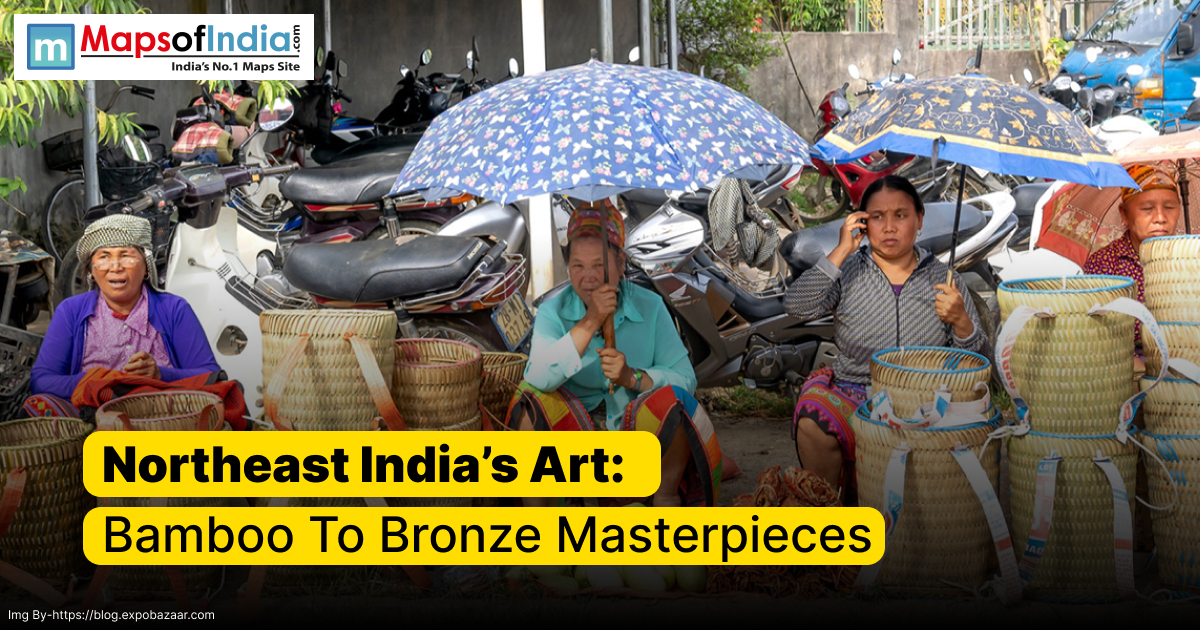
By using their hands, specialists work with bamboo to make many things:- Functional items: Baskets, mats, trays, lampshades, stools, hats (jaapi), fish traps, and houses or bridges.
- Decorative showpieces: At these fairs and exhibition, you can see wall panels, chandeliers, and other decorative works made for show.
- Arunachal Pradesh: There are specialized barrel-shaped baskets known as barsi baskets as well as rothak baskets.
- Mizoram: flower vases, cane stools, and traditional hats are among their products.
- Nagaland: People in Nagaland craft popular bamboo chairs and hurricane proof cots as well as many accessories made of woven cane.
- Assam:people have jhapi hats and jaapi, as well as mats, baskets, and big utensils.
Silk, Textiles & Weaves
Assam’s Muga, Eri & Tussar Silks
Golden Muga and calm Eri silk are found in ethnic costumes in Assam and give importance to their culture and economy. A lot of shawls, stoles, and sarees are made using cotton or tussar threads along with silk or other materials.Manipuri Textiles: Phanek & Shaphee Lanphee
Women in Manipur create unique varieties of clothing.- The preferred look for women includes the phanek and innaphi.
- Shaphee Lanphee designed shawls and incorporated everything from GI status to rich tribal shapes.
Naga, Khasi, Monpa & Others
Shawls and other clothing from Nagaland stand for the tribes’ identity and reveal their beliefs and social customs. The tribes here, for example, Meghalaya, Mizoram, and Arunachal, make their own unique patterns using looms and natural dyes.Metalwork & Ceramics
Bell-Metal Xorai and Bronze in Assam
The brass and bronze items found on Xorai trays are the main highlight of these pieces from Kamrup (Hajo & Sarthebari). Flowers are meaningful in cultures, appearing at religious services, ceremonies, and are offered as presents.Dokra & Lost-Wax Traditions
Near the Northeast, Bengal’s Dhokra metal casting motivates local craftsmen to make metal artwork. Despite being found elsewhere, bronzes are still part of what tribal people in the region make.Manipur’s Black Pottery
What is unusual about Andro village, their black pottery is made with hand-molding and special black stones. People around the world recognize the Swiss designer’s simple yet stylish designs.Natural-Fiber Crafts: Water Hyacinth & Beyond
People in Assam turn the water hyacinth plant into baskets, bags, coasters, and trays that are good for the environment. Thanks to iTokri, these crafts are introduced to people from all corners of India.Wood Carving & Horn-Bone Crafts
Northeast Woodworking
In Carving, tribes from Arunachal and Meghalaya produce utensils, masks for rituals, carved bowls, different musical instruments, and wood carvings.Horn, Bone & Bead Innovations
People here make jewellery using horns, bones, and beads. People of the Naga tribes use beads to mark who they are and their standing within a group. Mizo people make beaded ornaments for use in ceremonies.Cultural Significance & Preservation
Festivals & Emporiums
Hornbill Festival allows the public to see many different tribal crafts and support their appreciation. The new Nagaland state emporium has the main aim of preserving and selling over 17 tribal traditions, such as various arts, textiles, and handicrafts.Challenges & Support
Artisans compete with big companies that produce many items and often miss out on promotional efforts or money. Even so, helping the crafts is done by means of GI registration, state emporiums, internet shops, and tourism-connected fairs.The Way Forward: Sustain & Celebrate
- Promote Geographical Indications — Notices that special crafts like Muga, Shaphee Lanphee, Xorai exist.
- Build Digital Presence — Online marketplaces give rural artisans the opportunity to sell to people across the world.
- Strengthen Market Access — State emporiums, fairs, and craft tour circuits are good ways to increase publicity.
- Train & Innovate — Bring together old methods with current design rules.
- Cultural Tourism — A festival such as the Hornbill Festival gives visitors the chance to watch crafts being created.