1. The Scene: Scenic Escape Amid Danger
Kundamala, embedded in Maval tehsil, is normally a haven throughout the monsoons; green fields, gushes of rivers, and the rural ambience of Maharashtra invite urbanites. Its centerpiece was a simple iron footbridge built in the beginning of the 1990s and designed to be used predominantly by humans and two-wheelers at best but, with the years as it turned out, it became a hub to greet those who sought to get some picturesque memories of how to beat the rains and post them in Instagram later. According to reports, there were about 125-200 individuals on the bridge at the time of the collapse, prompted by selfie taking and group poses which had concealed the fragility of the bridge.2. Disaster Unfolds: A Bridge Gives Way
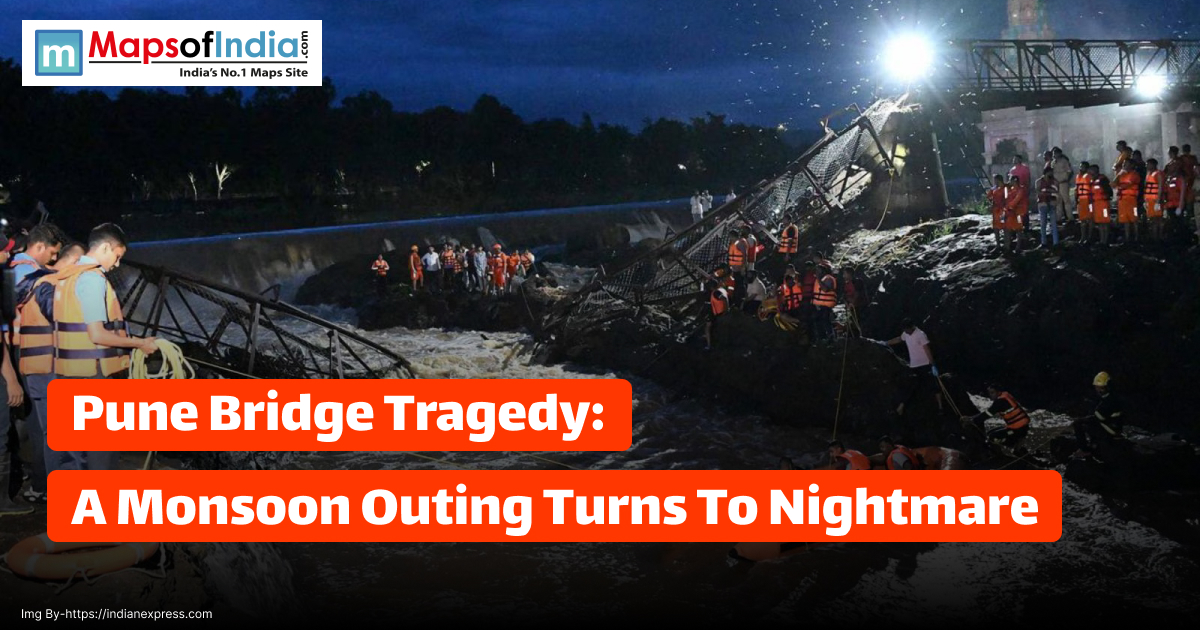
About 3.30 p.m. on June 15, a disaster happened. The middle span of the iron structure gave way to weight and compression and broke with a jolt, sending the crowd down to the turbid waters below. People who were there narrate exactly what happened: “And one survivor said that there were more than 150 to 200 people on the bridge, but at the point where the bridge collapsed, more than 50, he continued saying that we were in panic and we ran away down… It is the grace of God that my family is spared”. It was a desperate panic. Others were simply swept into the rapidly moving currents; others were badly maimed by the toppling metal structure itself.3. The Human Toll: Lives Lost, Many Injured
The first rescue efforts showed terrible results:- Fatalities: Four factual deaths, one of which was a 5-year-old child. Among the victims, one could mention Chandrakant Sathale (65), Rohit Mane (35), and Vihaan Mane.
- Unaccounted: There are two missing persons by Monday evening, as the search is still ongoing.
- Injured: The number of people injured ranges differently, and it has been reported that there are between 32 and 51 individuals who suffered injuries, and dozens of people have been admitted to hospitals. Six of the injured were at least in a serious condition.
4. What Failed: Rust, Overcrowding, and Structural Lapses
Preliminary evidence indicates that there has been a disaster of interactions:- Rust and decay: The bridge, which was constructed around 1992-1995, had rusted metal parts that reduced its strength.
- Overcrowding: A maximum of 100 people gathered at a time, according to the officials and the survivors, as compared to the expected number of pedestrians in a pedestrian structure.
- Neglected warnings: Warnings were abound, and police had been patrolling the weekends. However, after the end of police scrutiny, visitors carried on with the crossing- it was the beauty of the monsoon at work.
5. State Response: Emergency Measures and Inquiry
The reaction of the government and civil authorities was very prompt:- Deploying rescue forces: Mobilization of rescue forces, NDRF led river-based rescue, more teams and medical support were maintained.
- Relief fund declared: 5 lakh rupees per family in which a member dies, and free medical support for other survivors was approved by the Maharashtra government.
- Audit of bridges: CM Fadnavis instructed to review all the river bridges in Pune district, and ensure the safety of bridges in the tourist zone first.
- Formal investigation: A committee will be dealt with, which is to investigate neglect- investigation of planning, maintenance, enforcement and crowd management.
- Expansion activities: 8 crore rupees were sanctioned to construct a new bridge, which is safe to carry heavier loads, but due to the onset of monsoon, the construction is still in progress.
6. Broader Context: A Pattern of Infrastructure Failures
This is a tragedy that resonates with the others that have struck:- 2019 Mumbai CST footbridge failure: took away 6 lives and sheltered dozens.
- In 2022 Morbi suspension bridge: In 2022, Morbi suspension bridge collapsed, killing more than 140 people.
- 2016 Collapse of Kolkata flyover- 27 killed.
7. Lessons Learned & the Road Ahead
- Audits of infrastructure should be proactive: Authorities should carry out regular auditing of bridges in monsoon-prone areas and those along tourist attractions.
- Enforce crowd management: Barriers, managed entry, and patrols during the high-activity weekends should also have been a no-go.
- The importance of publicity: Alerts, local campaigns, and advice should be increased on warning signs, preferably in the regional language and a big font.
- Accountability never ends: Should the investigation reveal any shortcomings of the administration, the legal and disciplinary procedure should be undertaken.
- Making the area future-proof: The construction of a durable new bridge should be kept on schedule, preferably within this monsoon season.