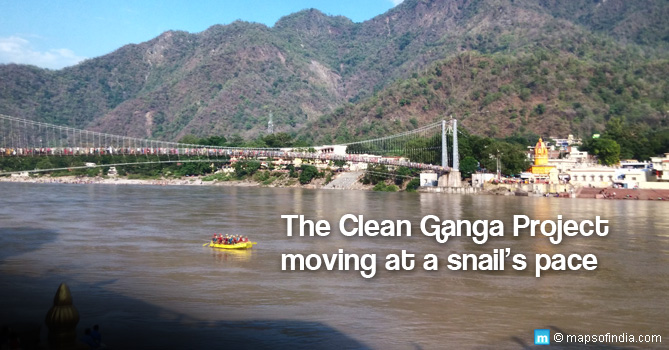
 The Clean Ganga Project was started with a significant amount of fanfare in 2014 after Narendra Modi became the Prime Minister of India following what could be termed as a landslide victory. However, as far as Uttarakhand is concerned, the work is going on at a snail’s pace. A major project has been proposed till date in the state and it is supposed to be executed at 16 locations. The projects have been sanctioned by the National River Cleaning Plan and the National Ganga River Basin Authority (NGRBA) has done the planning for the same. As per the plan, sewage treatment plants are to be set up in locations such as Dehradun, Devprayag, Rishikesh, Rudraprayag and Badrinath.
Sewage Issues in Uttarakhand
However, till now, the work has been completed only in Rishikesh and Haridwar. The Sewage Treatment Plants (STPs) are supposed to be installed near the natural drains that connect the river and its tributaries. As of now, the sewage facilities in this hilly state are not sufficiently equipped to deal with sewage-related problems. There are 95 natural drains in the state and through all of them, the untreated sewage of various towns and hamlets flows into the river.Natural Drains Issue
The maximum number of drains is at Uttarkashi with 28 and Swargashram occupies the second place with 14 drains. Following are some other prominent names in this regard: Badrinath – 3 Karnaprayag – 3 Srinagar – 8 Gopeshwar – 7 Devprayag – 4 Joshimath – 5Progress of Project
The projects were sanctioned five to six years back. However, in the part of state underneath Gangotri, the project has failed to achieve any proper progress as such. Experts such as Padmashree Dr. Anil Joshi, however, are not surprised at the sorry state of affairs because according to them, till date the different governments in the state have never had any concrete planning for handling civic waste. The fact that there are so many natural drains in the state that are yet to be tapped is because the state government has resorted to alternative technologies to clean up its sewers instead of using sewage treatment plans – the conventional method to be followed in these cases.Problems in Installing STPs
The state government has cited several reasons as to why these projects have been delayed. In 2013, the excessive rainfall poured cold water on the efforts to install the STPs. In places such as Badrinath, Rudraprayag, and Karnaprayag soil erosion owing to the 2013 deluge stopped the installation of STPs. In certain villages, the local people have opposed plans to install the facilities. This is why the state officials in charge of the NGRBA projects in Uttarakhand are looking at alternative methods to execute the project. The officials are looking to place interceptors to block the sewage from the natural drains into the Ganga. The interceptors are supposed to clean out the sewage and then, the water will be switched to its main course. However, the officials have said that this process will take some time to be completed. Companies’ Unwillingness to Spend Money on the Project For the Clean Ganga project to be successful, it is important that private entities in India dispense with some money. A lot of money – Rs. 51,000 crore in the next two decades - is needed in order to clean up the longest and perhaps one of the most important rivers in India and big corporate houses can be ideal contributors for the cause. However, it seems that business houses are not so willing to take part in the programme from their disinclination to spend any money for the same. Instead of that, they are more intent on the national government accomplishing this humongous task by spending from its own pocket.Where Has All CSR Gone?
Many years back, legendary musician and composer Pete Seeger had penned the immortal words – ‘Where Have All the Flowers Gone?’ In the same vein, one can ask where the corporate social responsibility funds of these major houses are. One feels that a certain part of – if not the entire - amount can be spent for improving the pitiful condition of the river as well as maintaining the ghats (areas in holy river-side cities). The companies are now bidding for tenders that the government is issuing for doing the work related to the cleaning of the river. Considering the huge amount of money needed to execute the project properly, the Union Ministry of Corporate Affairs had stated that the money given for the Clean Ganga Fund and Swachh Bharat Kosh will be regarded as a part of CSR donations of companies. However, the response has been rather underwhelming. A number of companies such as the following have expressed interest in bidding for the tenders being issued by the national administration for carrying out of the various works related to the project: • Tata Group • National Projects Construction Corporation • Yes Bank • IVRCL • Bharat Vikas Group A few days back, the National Mission for Clean Ganga (NMCG), the agency that is carrying out the project, had a meeting with the companies in Lucknow before the bidding process began. There the companies were made aware of the various details for bidding. CSR Rules in India According to rules that govern CSR in India, the following kinds of companies are supposed to have a minimum of 2% of their average profits for CSR:- Companies that earn more than Rs. 1,000 crore in a year
- Companies whose net profit is at least Rs. 5 crore
- Companies whose net worth is at least Rs. 500 crore