 Why is it that some of the most beautiful places in the world are also prone to violence? While this question is often asked in India with reference to Kashmir, Arunachal Pradesh, the land that meets the Sun's first rays, remains conveniently eclipsed.
The Forgotten State
A chat with both the civilians and military personnel living in the mountainous parts of Arunachal Pradesh throws up startling revelations. Arunachal is what the faujis call 'hard posting' – a tenure in the harshest, most unforgiving of terrains, without family for company, and often without even the basics of living such as electricity, medical facilities, and telephone connectivity. The severe monsoons and winters leave the inhabitants waging a constant battle against the cold or against natural calamities. Those who have witnessed the tremendous progress made by the rest of the nation through the decades of independence can only wonder why this state remains forgotten. “The North East has made little progress, and whatever you see has come up in the past five years”, said a local. According to the last census in 2011, the state has a population of about 13.84 lakh but a population density of only 17 per sq km vis-à-vis a national population density of about 382 per sq km. While it may be claimed that this is due to the mountainous terrain and the difficult conditions, one cannot stop to wonder if things are such due to sheer neglect. Other mountainous and forested parts of our country (such as the Nilgiris) have developed their tourism potential, and have become hubs for posh boarding schools.
Memories of Midnight
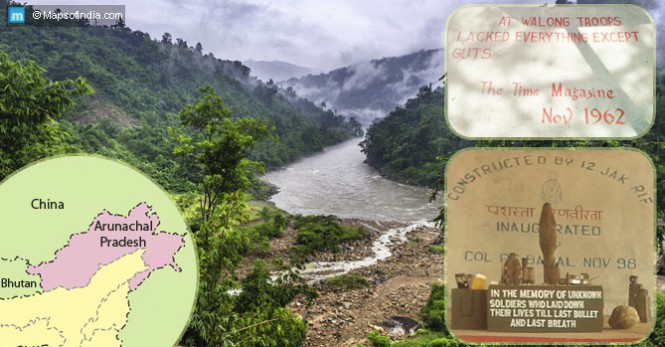
China. That is the looming word that resonates across the state. Arunachal has, quite honestly been unable to emerge from the shadows of the 1962 war. One arduous, backbreaking drive up from Walong to Helmet Top (about 18 kilometers) will take you to a war memorial – a small shed – that stands as the only reminder of the mindless battle that was fought here and the sacrifices of brave men. The people of Arunachal Pradesh are unforgiving of the many opportunities that have been passed up by the political leadership of India to resolve the border dispute with China and bring peace to this state. While China has never acknowledged the McMahon Line as the LoC, negotiations between the two countries to settle on an International Border have been unsuccessful even after five decades of the war where India suffered a humiliating defeat.
Why is it that some of the most beautiful places in the world are also prone to violence? While this question is often asked in India with reference to Kashmir, Arunachal Pradesh, the land that meets the Sun's first rays, remains conveniently eclipsed.
The Forgotten State
A chat with both the civilians and military personnel living in the mountainous parts of Arunachal Pradesh throws up startling revelations. Arunachal is what the faujis call 'hard posting' – a tenure in the harshest, most unforgiving of terrains, without family for company, and often without even the basics of living such as electricity, medical facilities, and telephone connectivity. The severe monsoons and winters leave the inhabitants waging a constant battle against the cold or against natural calamities. Those who have witnessed the tremendous progress made by the rest of the nation through the decades of independence can only wonder why this state remains forgotten. “The North East has made little progress, and whatever you see has come up in the past five years”, said a local. According to the last census in 2011, the state has a population of about 13.84 lakh but a population density of only 17 per sq km vis-à-vis a national population density of about 382 per sq km. While it may be claimed that this is due to the mountainous terrain and the difficult conditions, one cannot stop to wonder if things are such due to sheer neglect. Other mountainous and forested parts of our country (such as the Nilgiris) have developed their tourism potential, and have become hubs for posh boarding schools.
Memories of Midnight
China. That is the looming word that resonates across the state. Arunachal has, quite honestly been unable to emerge from the shadows of the 1962 war. One arduous, backbreaking drive up from Walong to Helmet Top (about 18 kilometers) will take you to a war memorial – a small shed – that stands as the only reminder of the mindless battle that was fought here and the sacrifices of brave men. The people of Arunachal Pradesh are unforgiving of the many opportunities that have been passed up by the political leadership of India to resolve the border dispute with China and bring peace to this state. While China has never acknowledged the McMahon Line as the LoC, negotiations between the two countries to settle on an International Border have been unsuccessful even after five decades of the war where India suffered a humiliating defeat.
Why is it that some of the most beautiful places in the world are also prone to violence? While this question is often asked in India with reference to Kashmir, Arunachal Pradesh, the land that meets the Sun's first rays, remains conveniently eclipsed.
The Forgotten State
A chat with both the civilians and military personnel living in the mountainous parts of Arunachal Pradesh throws up startling revelations. Arunachal is what the faujis call 'hard posting' – a tenure in the harshest, most unforgiving of terrains, without family for company, and often without even the basics of living such as electricity, medical facilities, and telephone connectivity. The severe monsoons and winters leave the inhabitants waging a constant battle against the cold or against natural calamities. Those who have witnessed the tremendous progress made by the rest of the nation through the decades of independence can only wonder why this state remains forgotten. “The North East has made little progress, and whatever you see has come up in the past five years”, said a local. According to the last census in 2011, the state has a population of about 13.84 lakh but a population density of only 17 per sq km vis-à-vis a national population density of about 382 per sq km. While it may be claimed that this is due to the mountainous terrain and the difficult conditions, one cannot stop to wonder if things are such due to sheer neglect. Other mountainous and forested parts of our country (such as the Nilgiris) have developed their tourism potential, and have become hubs for posh boarding schools.
Memories of Midnight
China. That is the looming word that resonates across the state. Arunachal has, quite honestly been unable to emerge from the shadows of the 1962 war. One arduous, backbreaking drive up from Walong to Helmet Top (about 18 kilometers) will take you to a war memorial – a small shed – that stands as the only reminder of the mindless battle that was fought here and the sacrifices of brave men. The people of Arunachal Pradesh are unforgiving of the many opportunities that have been passed up by the political leadership of India to resolve the border dispute with China and bring peace to this state. While China has never acknowledged the McMahon Line as the LoC, negotiations between the two countries to settle on an International Border have been unsuccessful even after five decades of the war where India suffered a humiliating defeat.
Why is it that some of the most beautiful places in the world are also prone to violence? While this question is often asked in India with reference to Kashmir, Arunachal Pradesh, the land that meets the Sun's first rays, remains conveniently eclipsed.
The Forgotten State
A chat with both the civilians and military personnel living in the mountainous parts of Arunachal Pradesh throws up startling revelations. Arunachal is what the faujis call 'hard posting' – a tenure in the harshest, most unforgiving of terrains, without family for company, and often without even the basics of living such as electricity, medical facilities, and telephone connectivity. The severe monsoons and winters leave the inhabitants waging a constant battle against the cold or against natural calamities. Those who have witnessed the tremendous progress made by the rest of the nation through the decades of independence can only wonder why this state remains forgotten. “The North East has made little progress, and whatever you see has come up in the past five years”, said a local. According to the last census in 2011, the state has a population of about 13.84 lakh but a population density of only 17 per sq km vis-à-vis a national population density of about 382 per sq km. While it may be claimed that this is due to the mountainous terrain and the difficult conditions, one cannot stop to wonder if things are such due to sheer neglect. Other mountainous and forested parts of our country (such as the Nilgiris) have developed their tourism potential, and have become hubs for posh boarding schools.
Memories of Midnight
China. That is the looming word that resonates across the state. Arunachal has, quite honestly been unable to emerge from the shadows of the 1962 war. One arduous, backbreaking drive up from Walong to Helmet Top (about 18 kilometers) will take you to a war memorial – a small shed – that stands as the only reminder of the mindless battle that was fought here and the sacrifices of brave men. The people of Arunachal Pradesh are unforgiving of the many opportunities that have been passed up by the political leadership of India to resolve the border dispute with China and bring peace to this state. While China has never acknowledged the McMahon Line as the LoC, negotiations between the two countries to settle on an International Border have been unsuccessful even after five decades of the war where India suffered a humiliating defeat.