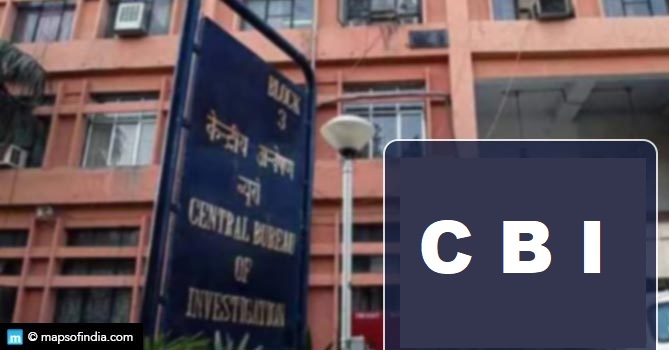
The CBI Director
As Inspector-General of Police, Director of the CBI, Subodh Kumar Jaiswal, leads the organisation's administration. The government-appointed the director based on the DSPE Act, 1946, until 2014. The government amended the act on the apex Court's recommendation in the Vineet Narain case. A committee comprising the members of Secretaries from Home Ministry, the Central Vigilance Commission, Ministry of Personnel and Public Grievances would submit recommendations to the Central Government to designate the position of the CBI Director. The Lokpal Act, in 2014, prepared a committee for the appointment of the CBI Director, led by the Prime Minister, including members such as the leader of Opposition/ leader of the single largest opposition party and Chief Justice of India or a Supreme Court Judge.Following are some of the types of cases that CBI deals with:
- Anti-Corruption Crimes: CBI manages the investigation of cases under the Prevention of Corruption Act against public officials and central government employees, Public Sector Undertakings (PSUs), Corporations or Bodies owned or controlled by the central government of India.
- Economic Crimes: It probes the cases of huge financial scams and serious economic frauds, comprising crimes relating to fake Indian currency notes, bank frauds and cybercrime, import-export & foreign exchange violations, cultural property, mega smuggling racket of narcotics, antiques and smuggling of other contraband items.
- Suo Moto Cases: CBI accelerates investigation of offences only in the Union Territories by taking them up on a priority basis. The central government can ask the CBI to probe a crime in a state but only with due permission from the respective State Government. The Supreme Court and High Court can also direct CBI to investigate crimes anywhere in the country without the state's approval. For example, the recent Sushant Singh Rajput case.
- Special Crimes: CBI manages the investigation of serious and pre-planned crimes under the Indian Penal Code (IPC) and other laws on the requests of the state governments or the direction of the Supreme Court and High Courts. For instance, cases like bomb blasts, terrorism, abduction for ransom and crimes committed by the mafia or the underworld at a particular place in the country.