Traditional Jaggery Production in Rural India
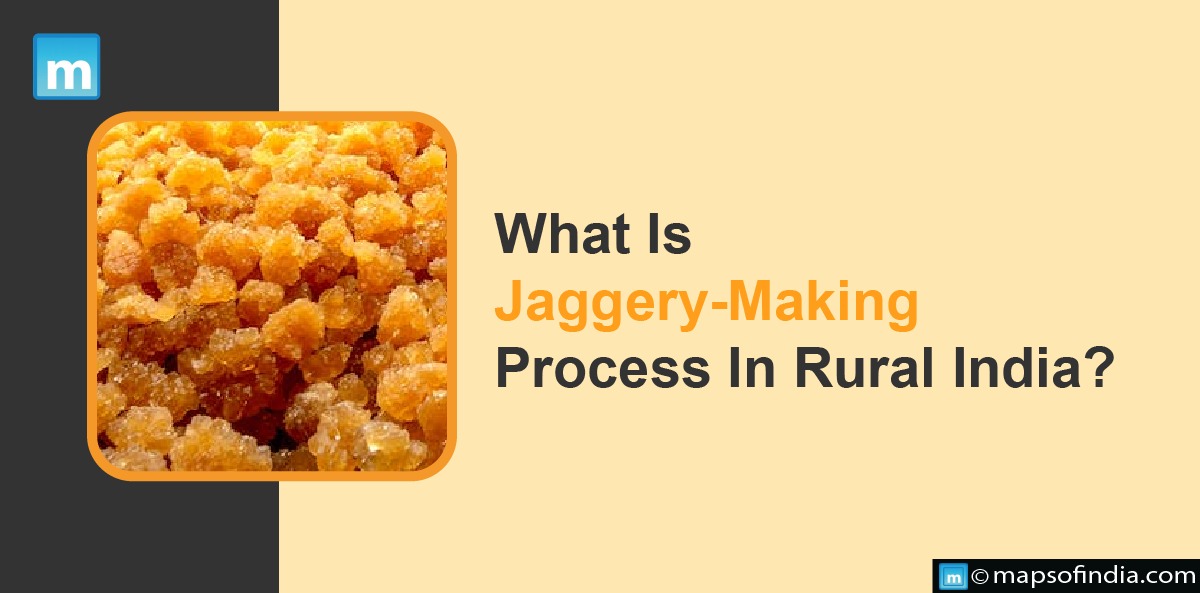
Traditional jaggery production in rural India is a labor-intensive method handed down through generations. It is usually done in small, family-owned businesses. The traditional jaggery-making process involves the following steps:- Juice extraction: The first step is to extract the juice from sugarcane or palm. This is done using a traditional crusher powered by bullocks or a diesel engine. The sugarcane or palm fronds are crushed between two or three rollers to extract the juice.
- Juice clarification: The extracted juice is then filtered to remove impurities. This is done by passing the juice through a cloth strainer or adding a clarifying agent, such as lime.
- Juice boiling: The clarified juice is boiled in a large iron pan. The juice is boiled until it thickens and crystallises. This process can take several hours.
- Jaggery molding: The thickened juice is poured into moulds to cool and solidify. The moulds are typically made of clay or wood.
- Jaggery drying: The moulded jaggery is dried in the sun for several days. This process helps to harden the jaggery and extend its shelf life.
Jaggery's Advantages
Jaggery is a better substitute for refined sugar. It contains minerals and vitamins, including iron, calcium, magnesium, and potassium. Jaggery also has a lower glycemic index than refined sugar, meaning blood sugar levels do not surge as quickly. It is also a natural sweetener, meaning it has no artificial additives. It is also a sustainable sweetener because it is produced using traditional methods that do not utilise chemicals or fertilisers.Government Initiatives to Promote Jaggery Production in Rural India
The Indian government has started various programs to promote jaggery production in rural India. Among these initiatives are:- Financial help for jaggery farmers
- Establishing jaggery processing units
- Promoting jaggery use in government programs
- Increasing public knowledge of the benefits of jaggery