What is the Marie Sklodowska-Curie Fellowship?
In 2020, the IAEA established the Marie Sklodowska-Curie Fellowship Programme (MSCFP) to encourage women to build careers in nuclear science and technology, nuclear safety, nuclear security, and non-proliferation. Named after the physicist and chemist Marie Curie, the first woman to win a Nobel Prize and the only person to win in two fields of science, the fellowship reflects the life and career of the scientific pioneer. The fellowship provides a financial grant yearly to outstanding female students of any nationality attending an accredited university and enrolled in a master’s degree programme related to nuclear subjects. In addition to financial support, the fellowship secures internships through the IAEA and its partners, offering practical experience and insight into the most advanced uses of nuclear technologies. The programme aims to tackle the gender disparity in the nuclear sector. Women represent approximately 30% of the global nuclear workforce. Through this fellowship, the IAEA hopes to inspire more women to assume positions as leaders, innovators, and contributors in nuclear science.The Indian Trailblazer: A New Path
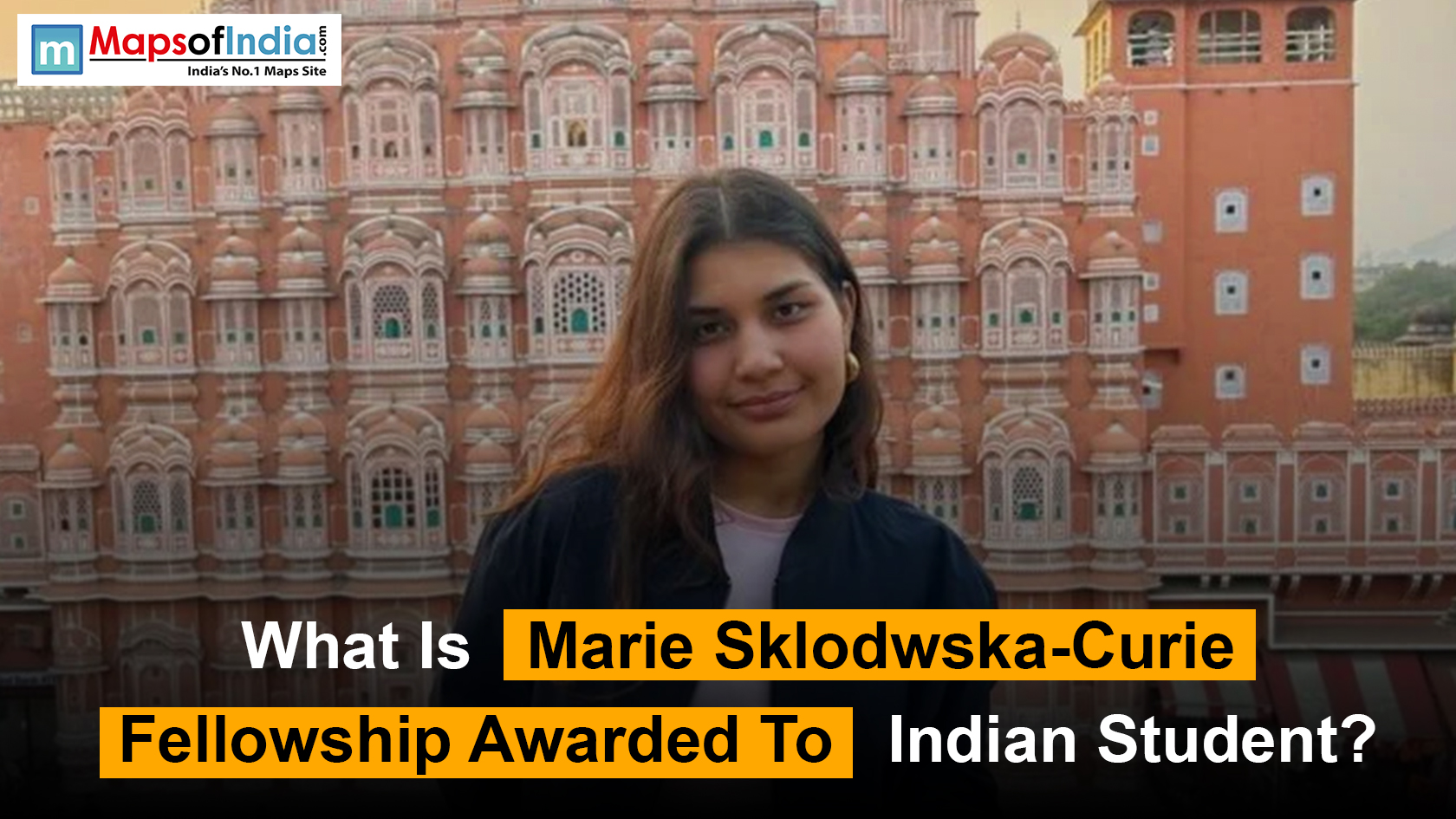
Ananya Sharma, 24, an Indian student domiciled in Hyderabad, India, was awarded the Marie Sklodowska-Curie Fellowship this year, one of the few Indian women of all time to be awarded this fellowship. A postgraduate student at the Homi Bhabha National Institute (HBNI) in Mumbai, Ananya is working towards her master's in nuclear engineering and technology, with a research interest in nuclear reactor safety and radiation shielding. Her story of her studies is one of persistence, excellence, and love of science. Ananya, hailing from a humble background, developed an interest in nuclear physics when she first read about Marie Curie during her schooling. With encouragement from her teachers and her curiosity, she eventually topped her state’s engineering entrance exam and earned a seat at the Indian Institute of Technology (IIT) of her choice. During her course at IIT Kanpur, she engaged in various research projects, internships, and paper presentations, giving her a strong foundation in reactor physics and thermodynamics. She then joined HBNI and gained an in-depth study of nuclear energy and simulation models specifically for PHWRs, which form the basis of India’s nuclear energy programme. Her academic accomplishments, along with her passion for sustainable energy solutions and encouraging female representation in scientific fields, made her the perfect candidate for the MSCFP. This fellowship selection process is very competitive, with significant scrutiny on a candidate's academic background, research proposal, motivation and promise.A World Stage: What the Fellowship Has to Offer
Beyond a scholarship, the Marie Sklodowska-Curie Fellowship facilitates the building of global scientific networks.As a fellow, Ananya Sharma will be awarded:
- Tuition fees up to €20,000 at a recognised university.
- Up to €20,000 toward living expenses during her two-year master’s degree programme.
- Nuclear research labs, regulatory bodies or power plants.
- Global access to scientists, mentors, industry leaders, colleagues, and career advancement.
Nuclear Science: What One Needs to Know
Nuclear science is central to solving some of the world’s greatest challenges:
- Clean Energy: Nuclear energy provides a low-carbon, reliable way to curb climate change.
- Medical Field: Nuclear technology has applications in treating cancer, imaging for diagnosis, and sterilising medical instruments.
- Food and Agriculture: Radiation techniques enhance crop yields, control pests and ensure food safety.
- Water Resources: Use of isotope hydrology in water resources.
Women in Nuclear: Bridging the Gender Gap
The gender imbalance in nuclear science is not specific to India; it is a worldwide trend. According to the IAEA, despite female students outperforming their male peers, women remain substantially underrepresented in leadership, research and technical positions in the nuclear industry.There are several obstacles to be overcome that lead to this disparity:
- The absence of mentorship and role models
- Gender bias in STEM fields
- Inadequate research funding and access to opportunities
- Work-life balance issues, particularly in high-pressure research settings
Nuclear Science: Contribution by India
India’s nuclear enterprise since the 1940s is admirable. All these milestones were ensured by leaders from Dr Homi Bhabha to the ongoing missions of the Department of Atomic Energy (DAE):- Pressurised Heavy Water Reactors (PHWRs)
- Fast Breeder Reactors (FBRs)
- Nuclear waste management