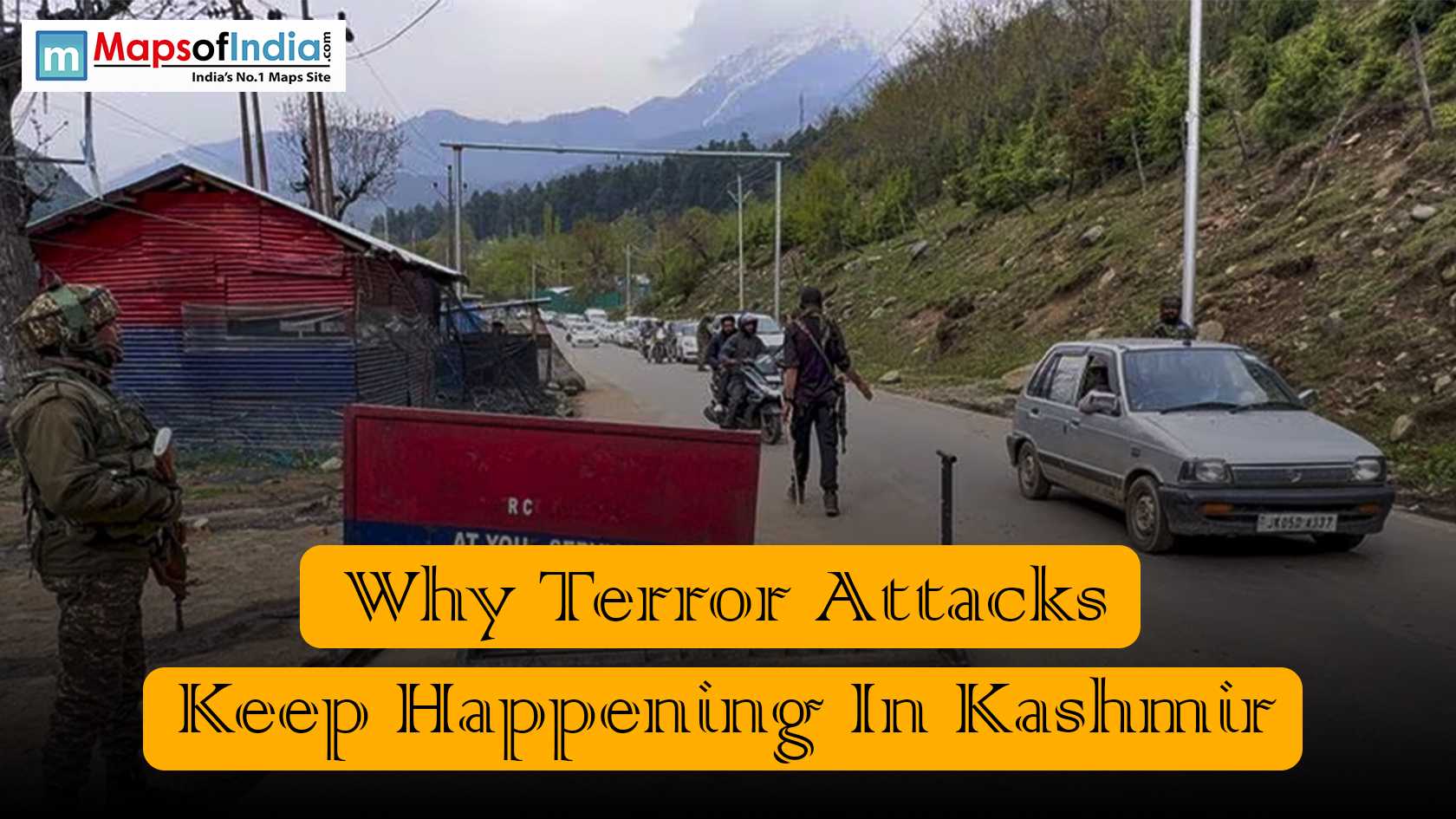
Why Terror Attacks Keep Happening in Kashmir
Kashmir has been a region torn apart by conflict for many years. Days often pass without peace, as violence and terror attacks hit almost every community there. People who live in Kashmir constantly face danger, fear for their safety, and the pain of losing loved ones. The ongoing violence tears families apart and destroys homes, leaving a trail of grief and disruption. Understanding why these attacks happen so often is key to finding a way to bring peace to the region. It’s not just about stopping the violence but also about understanding its roots. The conflict in Kashmir is complex and has deep roots that stretch back many decades. It is shaped by a mix of history, politics, and social issues that are all connected. Both countries claim Kashmir as their own, which has led to wars and constant tension. Over time, many local groups have also fought for independence or greater rights, adding to the chaos. The political situation is often unstable, with governments changing and peace talks breaking down repeatedly. Social issues like poverty, unemployment, and lack of education make many people vulnerable and more likely to join groups involved in violence. To truly solve this problem, we need to look at all these factors carefully. We must understand how history has shaped current tensions. We need to consider how political decisions have fueled unrest. We should also recognize the social challenges that leave many feeling hopeless. Only by examining all these parts together can we find a path toward peace. Without addressing the deep causes of the conflict, violence will likely continue. Building peace requires effort from all sides, understanding each other’s viewpoints, and working toward solutions that last.Historical Context and Political Background of Kashmir
Roots of the Kashmir Conflict
The story of Kashmir’s conflict begins back in 1947 during the Partition of India. When British India was split into two new countries, India and Pakistan, regions with different religious majorities faced tough choices. Kashmir was one such region. It was mostly Muslim, but its ruler was a Hindu prince. This created a big problem because the local people had different beliefs from their ruler. The Hindu prince was unsure whether to join India or Pakistan. But this decision did not settle the dispute. Soon after, the ruler chose to accede to India. He signed an agreement that made Kashmir part of India. This decision angered many in the Muslim-majority area, who wanted to join Pakistan or become independent. The first confrontation, the Indo-Pakistani War of 1947–1948, was caused by the move. The war ended with a United Nations ceasefire, creating a line called the Line of Control, which still divides Kashmir today. However, the dispute was not settled. Both India and Pakistan claimed the entire region, and tensions continued to grow. Over the years, the conflict has worsened. Both countries fought additional wars over Kashmir in 1965 and 1999. These wars caused enormous suffering and loss of life. The region has seen ongoing violence and military skirmishes. Many Kashmiris want independence or want to join Pakistan instead of being part of India. Some groups have taken up arms and launched insurgencies. These uprisings resulted from decades of frustration, economic hardship, and demand for self-rule. Today, Kashmir remains a flashpoint in South Asia. The region faces constant military presence, restrictions on movement, and human rights concerns. The dispute affects millions of lives and fuels tensions between India and Pakistan, two nuclear-armed nations. Despite many peace talks, a lasting solution remains elusive. The Kashmir conflict is one of the longest unresolved issues stemming from the Partition, with roots that go back more than 75 years. It continues to shape the politics and security of the region.Political Dynamics and Governance
 Kashmir’s local governments are caught between regional demands and Delhi’s control. Policies from the Indian government often influence unrest. Military operations are common, and heavy security stays in place. This presence creates tension. Political parties in the region have different views, some supporting peace while others push for more independence. Their actions can sometimes escalate violence instead of reducing it.