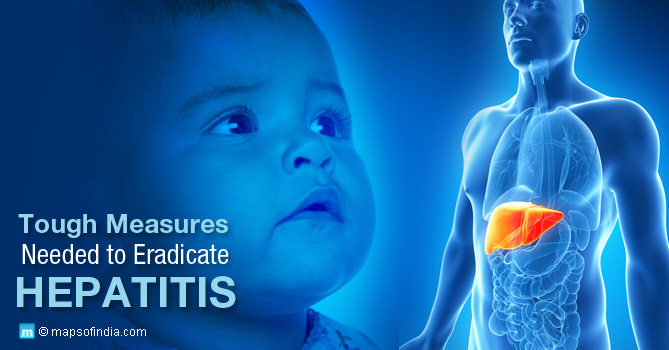
 In a recent report, the World Health Organisation (WHO) issued a statement indicating that India has not done enough to check the spread of hepatitis B. It said that India lacks an initiative along the lines of the polio eradication programme that can launch effective nationwide strategies to eradicate hepatitis. Further, the monitoring of hepatitis vaccination of children is not undertaken uniformly across the country.
According to WHO, around 4-6 crore people have hepatitis B in India, and around 1 lakh die annually due to viral hepatitis. As many as 8 out of 10 cases of liver cancer can be attributed to hepatitis B, and overall, it is the second most common cancer causing agent after tobacco. On the other hand, hepatitis C infection is much more common than HIV infection in India. With the World Hepatitis Day about to be observed on 28 July, it is time that this serious condition is given its due in the public health arena, and programmes are initiated to curb its spread.
In a recent report, the World Health Organisation (WHO) issued a statement indicating that India has not done enough to check the spread of hepatitis B. It said that India lacks an initiative along the lines of the polio eradication programme that can launch effective nationwide strategies to eradicate hepatitis. Further, the monitoring of hepatitis vaccination of children is not undertaken uniformly across the country.
According to WHO, around 4-6 crore people have hepatitis B in India, and around 1 lakh die annually due to viral hepatitis. As many as 8 out of 10 cases of liver cancer can be attributed to hepatitis B, and overall, it is the second most common cancer causing agent after tobacco. On the other hand, hepatitis C infection is much more common than HIV infection in India. With the World Hepatitis Day about to be observed on 28 July, it is time that this serious condition is given its due in the public health arena, and programmes are initiated to curb its spread.
In a recent report, the World Health Organisation (WHO) issued a statement indicating that India has not done enough to check the spread of hepatitis B. It said that India lacks an initiative along the lines of the polio eradication programme that can launch effective nationwide strategies to eradicate hepatitis. Further, the monitoring of hepatitis vaccination of children is not undertaken uniformly across the country.
According to WHO, around 4-6 crore people have hepatitis B in India, and around 1 lakh die annually due to viral hepatitis. As many as 8 out of 10 cases of liver cancer can be attributed to hepatitis B, and overall, it is the second most common cancer causing agent after tobacco. On the other hand, hepatitis C infection is much more common than HIV infection in India. With the World Hepatitis Day about to be observed on 28 July, it is time that this serious condition is given its due in the public health arena, and programmes are initiated to curb its spread.
In a recent report, the World Health Organisation (WHO) issued a statement indicating that India has not done enough to check the spread of hepatitis B. It said that India lacks an initiative along the lines of the polio eradication programme that can launch effective nationwide strategies to eradicate hepatitis. Further, the monitoring of hepatitis vaccination of children is not undertaken uniformly across the country.
According to WHO, around 4-6 crore people have hepatitis B in India, and around 1 lakh die annually due to viral hepatitis. As many as 8 out of 10 cases of liver cancer can be attributed to hepatitis B, and overall, it is the second most common cancer causing agent after tobacco. On the other hand, hepatitis C infection is much more common than HIV infection in India. With the World Hepatitis Day about to be observed on 28 July, it is time that this serious condition is given its due in the public health arena, and programmes are initiated to curb its spread.