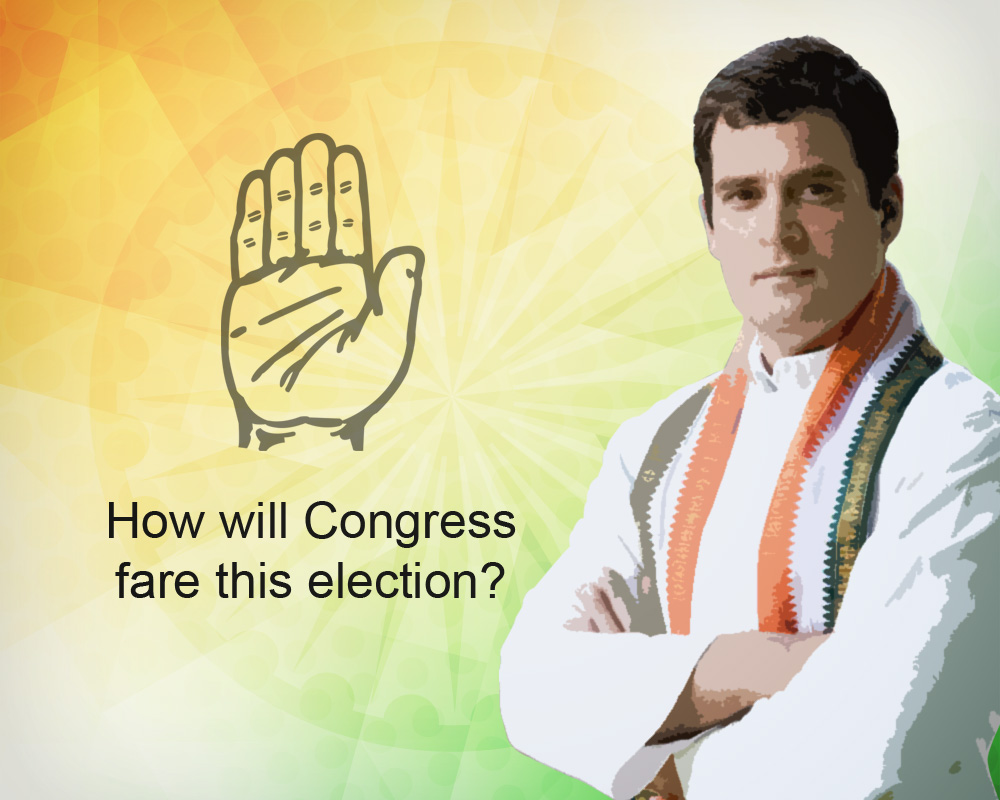
The final round of voting on Thursday, 5 November, will put the Congress to test, not just for itself but for the alliance as well. The stakes for the Congress are higher than they would appear, especially with all the spotlight and attention on Nitish and Lalu. The last round covering the Seemanchal region has a large segment of people from the EBCs, OBC and the Muslim community and it is generally believed that the Grand Alliance has a greater advantage here than in any of the previous phases where voting has taken place in these elections. After the 2014 General elections wipeout, Congress as a party has been struggling to stay relevant in national politics. It has been a declining force largely of its own making and for its inability to find a leadership that can lead and inspire the process of reinventing the party to take on 21st century challenges. The problem with the Congress is that it is a victim of its own legacy, one where its identity is closely linked with the Gandhi family. After Indira Gandhi’s death, rather than begin a process of transition to build a second line of leadership that could form the core in coming years, the party went back to relying on the family, after a brief experiment with P.V. Narasimha Rao as the Prime Minister. After being decimated in 2014 polls, the Congress once again had an opportunity to start all over again and bring in a young and non-Gandhi leader to head the party and build a core of young leaders that would be part the process of rebuilding the party in states, from the grass root level. But deep rooted old timers in the party have neither the confidence nor the ability to take a stand and therefore, the nation has to endure yet another Gandhi struggling to find acceptance, which the people are simply refusing to give. In this backdrop, Congress hopes to contribute in ensuring that the Nitish-Lalu duo are able to form a government and the party remain relevant in some way in the state. In 2010, the INC full of confidence in the aftermath of a resounding victory in the 2009 General elections, entered the poll fray in Bihar on its own and contesting all 243 seats. It completely failed to wake up and smell the coffee and ended up with just 4 seats. It could have rebuilt itself in Bihar but 2014 General elections killed any chances for the party in the state. So what made Nitish Kumar join hands with a sinking party and what made him hand over 41 seats, at the cost of his own party which has a far better chance of winning? Nitish Kumar has been candid enough to admit that he is willing to join hands with anyone to defeat the BJP, even if it’s his bitter rival Lalu Prasad or the fledging Congress. The question is, has he overplayed his options by placing his faith with the Congress in the last and crucial round, especially with INC contesting 12 out of the 24 crucial seats in Seemanchal. If the four earlier rounds throw up a close contest, it could well be a decider in the fifth round but can a party that won just 4 seats in the previous election in 2010 pull out a rabbit in this one, when it hasn’t done anything of consequence in the state since 2010? To make matters worse for the Congress is the recent panchayat poll results in U.P. where the party has taken a beating in its own ‘home’ turf of Amethi. The people at the grass root level in most states are surely and steadily giving up on Congress, so is Nitish Kumar’s gamble with the Congress going to make or break his break his career? We’ll know for sure on 8 November.