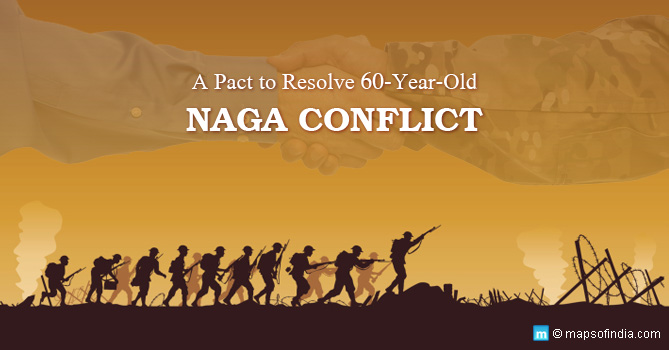
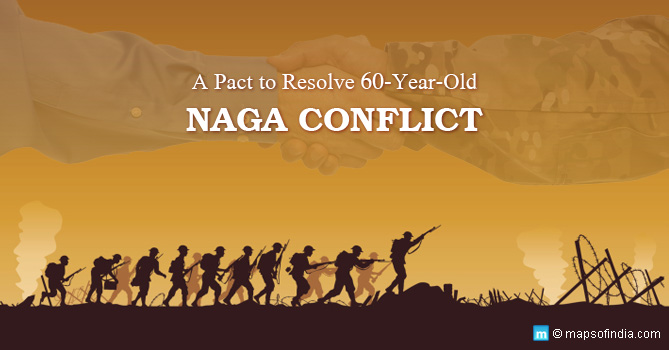
 On August 3, 2015, a historic peace accord was signed between the Centre and the T Muivah-led NSCN (IM) faction, in the presence of Prime Minister Narendra Modi, Centre’s Chief Interlocutor R.N. Ravi and National Security Advisor Ajit Doval.
While the accord has been welcomed by many quarters, the actual response will be known only once the terms of agreement are publicly disclosed. In fact, the secrecy behind the terms of agreement has raised several questions from various stakeholder factions and only time will reveal how they all respond and react to the agreement.
Another fact that sets this accord apart from all others signed earlier is the timing. The geo-political situation today is vastly different from what prevailed in the region over the last six decades. Today, the Indian government has established far closer economic and diplomatic relations with China, a country that has had a history of offering overt and covert support to various insurgent factions operating in the Northeast.
After PM Modi took office, he has been quick to realise the potential that Northeast offers as a gateway to Southeast Asia and possibly to China and therefore, his early tours to China, Myanmar, Bhutan and Bangladesh were aimed at opening the way to future growth in relations. It is in this context that this peace agreement assumes importance.
Nagaland is an important state in terms of its size, resource, population and location. It is also the oldest state amongst the seven sisters in terms of history of insurgency against the central authority. Therefore, for any economic development plan to succeed in the region, it was imperative to establish peace in the region and get the Naga people on board. It must be noted here that during the 2014 General Elections, Nagaland recorded 87.82% voter turnout, the highest in all the North-Eastern states, thus marking a strong willingness of people to participate in parliamentary democracy. Immediately afterwards, while the government was establishing backchannel talks with the NSCN (IM) faction, another militant faction NSCN (K) led by SS Khaplang, a Burmese Naga, has chosen to adopt a hard line against the central government.
The Khaplang faction, operating out of the border region of Nagaland and Myanmar, has brought together various militant groups including Paresh Barua-led ULFA faction, Kangleipak Communist Party (KCP), National Democratic Front of Bodoland (NDFB) – Songbijit faction, People’s Revolutionary Party of Kangleipak (PREPAK), People’s Liberation Army (PLA), United National Liberation Front (UNLF) and Kanglei Yawol Kunna Lup (KYKL) to join hands in fighting the Indian state. The group professes to create Western Southeast Asia (WESEA) as a larger separate state and comprising of all regions of the Northeast.
On August 3, 2015, a historic peace accord was signed between the Centre and the T Muivah-led NSCN (IM) faction, in the presence of Prime Minister Narendra Modi, Centre’s Chief Interlocutor R.N. Ravi and National Security Advisor Ajit Doval.
While the accord has been welcomed by many quarters, the actual response will be known only once the terms of agreement are publicly disclosed. In fact, the secrecy behind the terms of agreement has raised several questions from various stakeholder factions and only time will reveal how they all respond and react to the agreement.
Another fact that sets this accord apart from all others signed earlier is the timing. The geo-political situation today is vastly different from what prevailed in the region over the last six decades. Today, the Indian government has established far closer economic and diplomatic relations with China, a country that has had a history of offering overt and covert support to various insurgent factions operating in the Northeast.
After PM Modi took office, he has been quick to realise the potential that Northeast offers as a gateway to Southeast Asia and possibly to China and therefore, his early tours to China, Myanmar, Bhutan and Bangladesh were aimed at opening the way to future growth in relations. It is in this context that this peace agreement assumes importance.
Nagaland is an important state in terms of its size, resource, population and location. It is also the oldest state amongst the seven sisters in terms of history of insurgency against the central authority. Therefore, for any economic development plan to succeed in the region, it was imperative to establish peace in the region and get the Naga people on board. It must be noted here that during the 2014 General Elections, Nagaland recorded 87.82% voter turnout, the highest in all the North-Eastern states, thus marking a strong willingness of people to participate in parliamentary democracy. Immediately afterwards, while the government was establishing backchannel talks with the NSCN (IM) faction, another militant faction NSCN (K) led by SS Khaplang, a Burmese Naga, has chosen to adopt a hard line against the central government.
The Khaplang faction, operating out of the border region of Nagaland and Myanmar, has brought together various militant groups including Paresh Barua-led ULFA faction, Kangleipak Communist Party (KCP), National Democratic Front of Bodoland (NDFB) – Songbijit faction, People’s Revolutionary Party of Kangleipak (PREPAK), People’s Liberation Army (PLA), United National Liberation Front (UNLF) and Kanglei Yawol Kunna Lup (KYKL) to join hands in fighting the Indian state. The group professes to create Western Southeast Asia (WESEA) as a larger separate state and comprising of all regions of the Northeast.
On August 3, 2015, a historic peace accord was signed between the Centre and the T Muivah-led NSCN (IM) faction, in the presence of Prime Minister Narendra Modi, Centre’s Chief Interlocutor R.N. Ravi and National Security Advisor Ajit Doval.
While the accord has been welcomed by many quarters, the actual response will be known only once the terms of agreement are publicly disclosed. In fact, the secrecy behind the terms of agreement has raised several questions from various stakeholder factions and only time will reveal how they all respond and react to the agreement.
Another fact that sets this accord apart from all others signed earlier is the timing. The geo-political situation today is vastly different from what prevailed in the region over the last six decades. Today, the Indian government has established far closer economic and diplomatic relations with China, a country that has had a history of offering overt and covert support to various insurgent factions operating in the Northeast.
After PM Modi took office, he has been quick to realise the potential that Northeast offers as a gateway to Southeast Asia and possibly to China and therefore, his early tours to China, Myanmar, Bhutan and Bangladesh were aimed at opening the way to future growth in relations. It is in this context that this peace agreement assumes importance.
Nagaland is an important state in terms of its size, resource, population and location. It is also the oldest state amongst the seven sisters in terms of history of insurgency against the central authority. Therefore, for any economic development plan to succeed in the region, it was imperative to establish peace in the region and get the Naga people on board. It must be noted here that during the 2014 General Elections, Nagaland recorded 87.82% voter turnout, the highest in all the North-Eastern states, thus marking a strong willingness of people to participate in parliamentary democracy. Immediately afterwards, while the government was establishing backchannel talks with the NSCN (IM) faction, another militant faction NSCN (K) led by SS Khaplang, a Burmese Naga, has chosen to adopt a hard line against the central government.
The Khaplang faction, operating out of the border region of Nagaland and Myanmar, has brought together various militant groups including Paresh Barua-led ULFA faction, Kangleipak Communist Party (KCP), National Democratic Front of Bodoland (NDFB) – Songbijit faction, People’s Revolutionary Party of Kangleipak (PREPAK), People’s Liberation Army (PLA), United National Liberation Front (UNLF) and Kanglei Yawol Kunna Lup (KYKL) to join hands in fighting the Indian state. The group professes to create Western Southeast Asia (WESEA) as a larger separate state and comprising of all regions of the Northeast.
On August 3, 2015, a historic peace accord was signed between the Centre and the T Muivah-led NSCN (IM) faction, in the presence of Prime Minister Narendra Modi, Centre’s Chief Interlocutor R.N. Ravi and National Security Advisor Ajit Doval.
While the accord has been welcomed by many quarters, the actual response will be known only once the terms of agreement are publicly disclosed. In fact, the secrecy behind the terms of agreement has raised several questions from various stakeholder factions and only time will reveal how they all respond and react to the agreement.
Another fact that sets this accord apart from all others signed earlier is the timing. The geo-political situation today is vastly different from what prevailed in the region over the last six decades. Today, the Indian government has established far closer economic and diplomatic relations with China, a country that has had a history of offering overt and covert support to various insurgent factions operating in the Northeast.
After PM Modi took office, he has been quick to realise the potential that Northeast offers as a gateway to Southeast Asia and possibly to China and therefore, his early tours to China, Myanmar, Bhutan and Bangladesh were aimed at opening the way to future growth in relations. It is in this context that this peace agreement assumes importance.
Nagaland is an important state in terms of its size, resource, population and location. It is also the oldest state amongst the seven sisters in terms of history of insurgency against the central authority. Therefore, for any economic development plan to succeed in the region, it was imperative to establish peace in the region and get the Naga people on board. It must be noted here that during the 2014 General Elections, Nagaland recorded 87.82% voter turnout, the highest in all the North-Eastern states, thus marking a strong willingness of people to participate in parliamentary democracy. Immediately afterwards, while the government was establishing backchannel talks with the NSCN (IM) faction, another militant faction NSCN (K) led by SS Khaplang, a Burmese Naga, has chosen to adopt a hard line against the central government.
The Khaplang faction, operating out of the border region of Nagaland and Myanmar, has brought together various militant groups including Paresh Barua-led ULFA faction, Kangleipak Communist Party (KCP), National Democratic Front of Bodoland (NDFB) – Songbijit faction, People’s Revolutionary Party of Kangleipak (PREPAK), People’s Liberation Army (PLA), United National Liberation Front (UNLF) and Kanglei Yawol Kunna Lup (KYKL) to join hands in fighting the Indian state. The group professes to create Western Southeast Asia (WESEA) as a larger separate state and comprising of all regions of the Northeast.