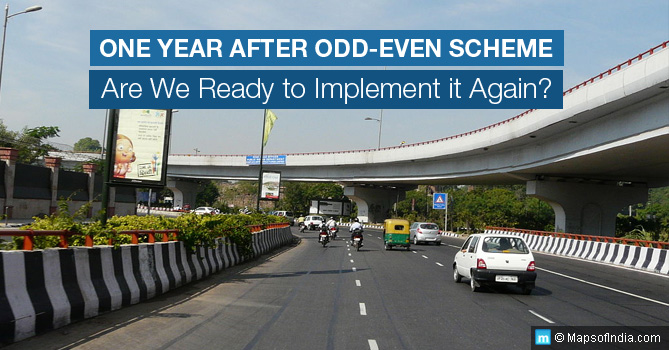
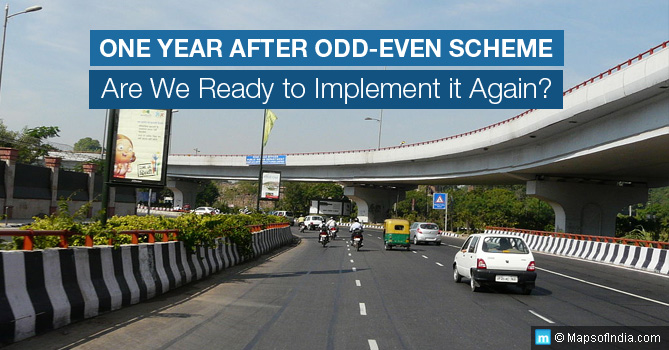
 Grandiose plans without adequate planning and public support never really take off. Let's take the example of Akbar, who tried to build Fatehpur Sikri near Agra as the capital of the Mughal Empire but failed due to lack of adequate water in the region. After 13 years of living there, he shifted back to Agra. Tughlaq tried a similar move to build Tughlakabad as the new capital, only to abandon it later. And more recently, Prime Minister Narendra Modi has learnt the hard way with demonetisation making no clear headway and failing miserably to achieve the stated fiscal objectives. So when Delhi's Chief Minister Arvind Kejriwal decided to launch the odd-even scheme on alternate days for private cars in Delhi in a bid to reduce pollution, it should have resulted in clear and unambiguous gains, but did it? What’s common in all the above instances of grand ambition is that they were the result of one leader’s big vision that was implemented without seeking expert opinion or adequate planning. And that’s why they all failed. To be fair, Arvind Kejriwal is not really part of the above examples since his scheme was a result of adequate feedback and suggestions from many transportation experts, social activists and people, who had been advocating over the years to introduce the odd-even scheme and encourage car-pooling as a measure for reducing pollution in the state capital.
Grandiose plans without adequate planning and public support never really take off. Let's take the example of Akbar, who tried to build Fatehpur Sikri near Agra as the capital of the Mughal Empire but failed due to lack of adequate water in the region. After 13 years of living there, he shifted back to Agra. Tughlaq tried a similar move to build Tughlakabad as the new capital, only to abandon it later. And more recently, Prime Minister Narendra Modi has learnt the hard way with demonetisation making no clear headway and failing miserably to achieve the stated fiscal objectives. So when Delhi's Chief Minister Arvind Kejriwal decided to launch the odd-even scheme on alternate days for private cars in Delhi in a bid to reduce pollution, it should have resulted in clear and unambiguous gains, but did it? What’s common in all the above instances of grand ambition is that they were the result of one leader’s big vision that was implemented without seeking expert opinion or adequate planning. And that’s why they all failed. To be fair, Arvind Kejriwal is not really part of the above examples since his scheme was a result of adequate feedback and suggestions from many transportation experts, social activists and people, who had been advocating over the years to introduce the odd-even scheme and encourage car-pooling as a measure for reducing pollution in the state capital.
Grandiose plans without adequate planning and public support never really take off. Let's take the example of Akbar, who tried to build Fatehpur Sikri near Agra as the capital of the Mughal Empire but failed due to lack of adequate water in the region. After 13 years of living there, he shifted back to Agra. Tughlaq tried a similar move to build Tughlakabad as the new capital, only to abandon it later. And more recently, Prime Minister Narendra Modi has learnt the hard way with demonetisation making no clear headway and failing miserably to achieve the stated fiscal objectives. So when Delhi's Chief Minister Arvind Kejriwal decided to launch the odd-even scheme on alternate days for private cars in Delhi in a bid to reduce pollution, it should have resulted in clear and unambiguous gains, but did it? What’s common in all the above instances of grand ambition is that they were the result of one leader’s big vision that was implemented without seeking expert opinion or adequate planning. And that’s why they all failed. To be fair, Arvind Kejriwal is not really part of the above examples since his scheme was a result of adequate feedback and suggestions from many transportation experts, social activists and people, who had been advocating over the years to introduce the odd-even scheme and encourage car-pooling as a measure for reducing pollution in the state capital.