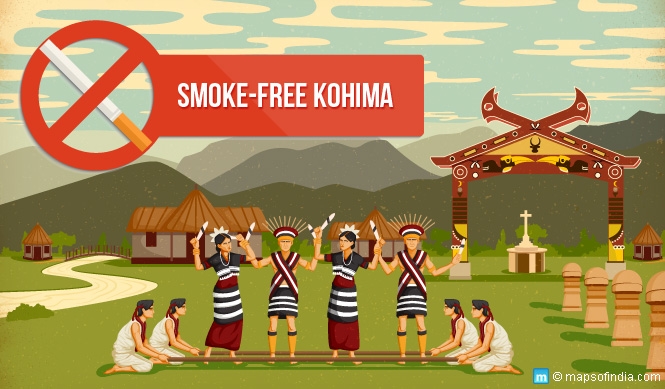
 Kohima, the capital of Nagaland, was declared a “smoke-free” city on 29 April, by its Deputy Commissioner, Rovilatuo Mor. He announced this before a gathering, mentioning rules and guidelines to better equip the authorities and the district administration for implementation. Back in 2014, though, it was Gariphema, which bagged the distinction of being the first village in the city to go tobacco-free.
Prior to this landmark announcement, students from 22 prominent educational institutes had organised a campaign to spread awareness about the ill-effects of smoking and chewing tobacco. The District Tobacco Control Cell (DTCC) and Department of Health and Family Welfare duly supported them. What was interesting was the kind of messages that were seen on the placards during the campaign: ‘Show your care by making a difference’, ‘Burn calorie not cigarette’, ‘Consume your ego not tobacco’, and ‘Tobacco companies kill their best customers’.
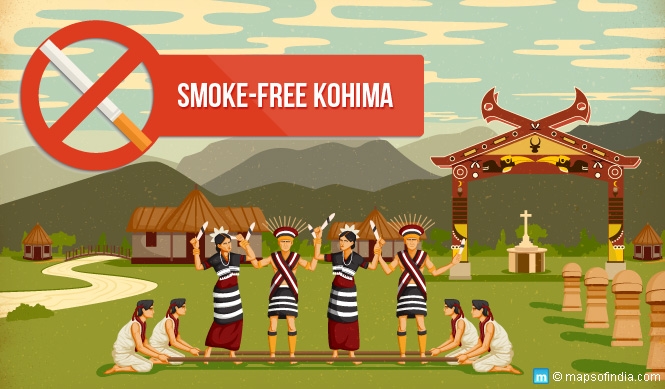
Kohima, the capital of Nagaland, was declared a “smoke-free” city on 29 April, by its Deputy Commissioner, Rovilatuo Mor. He announced this before a gathering, mentioning rules and guidelines to better equip the authorities and the district administration for implementation. Back in 2014, though, it was Gariphema, which bagged the distinction of being the first village in the city to go tobacco-free.
Prior to this landmark announcement, students from 22 prominent educational institutes had organised a campaign to spread awareness about the ill-effects of smoking and chewing tobacco. The District Tobacco Control Cell (DTCC) and Department of Health and Family Welfare duly supported them. What was interesting was the kind of messages that were seen on the placards during the campaign: ‘Show your care by making a difference’, ‘Burn calorie not cigarette’, ‘Consume your ego not tobacco’, and ‘Tobacco companies kill their best customers’.
Reason Behind this Decision
- Fact that school children were at grave risk of both active and passive smoking greatly persuaded the authorities to back this campaign.
- Also, Kohima being selected within the gamut of the ‘Smart City’ initiative launched by the Govt. of India, it was imperative for the officials to go ahead with this.
Worrying Trends in Kohima
- One of the officials rightly raised a concern over the growing tobacco menace. He was right when he said that tobacco is the only legal product being sold in the open market which kills over half of its consumers and that Nagaland ranked second in the nation with 57% of its population indulging in tobacco abuse in one form or the other.
- Shockingly, his study revealed that around 28% of school-going children were tobacco consumers.
- Another worrying trend cited by him was that of 41% children buying tobacco-related products on behalf of their parents.