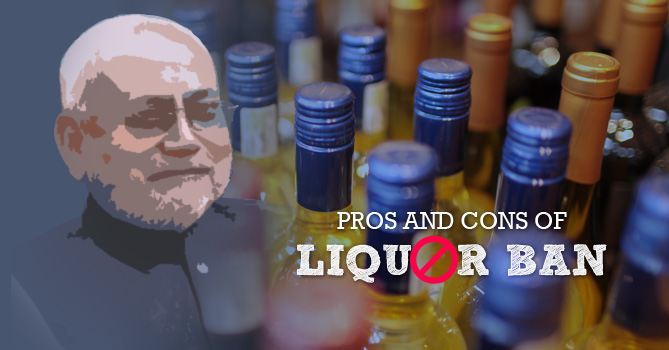
 I am against any form of ban for the simple reason that it causes collateral damage. It either stifles someone’s freedom or imposes a totalitarian ideology that leaves the affected people with no plank to stand on and defend. I had objected to beef ban and now, I present my reservations against blanket ban on liquor. You may judge me for this and question my morality, but that won’t change the truth that Bihar government’s decision on liquor ban violates the fundamental right of a citizen to decide what to eat and drink.
Bihar is not the only state to have found ‘dry’ crusaders who feel that the state-wide ban on possession and consumption of liquor is a “victory for public morals”. The US of the 20s and early 30s had seen the bitter battle between the anti-alcohol activists and ‘wets’. The Great Depression and the loss of revenue were compelling enough for the country to revoke the ban in 1933. While Nitish Kumar may have made a smart move and won hearts of anti-liquor activists of his states, he must surely look a worried man because he has to soon find ways to make up for the loss of revenue worth thousands of crores (Rs. 2,000 crores from the sale of IMFL and Rs. 4,000 crores from the sale of country liquor).
I am against any form of ban for the simple reason that it causes collateral damage. It either stifles someone’s freedom or imposes a totalitarian ideology that leaves the affected people with no plank to stand on and defend. I had objected to beef ban and now, I present my reservations against blanket ban on liquor. You may judge me for this and question my morality, but that won’t change the truth that Bihar government’s decision on liquor ban violates the fundamental right of a citizen to decide what to eat and drink.
Bihar is not the only state to have found ‘dry’ crusaders who feel that the state-wide ban on possession and consumption of liquor is a “victory for public morals”. The US of the 20s and early 30s had seen the bitter battle between the anti-alcohol activists and ‘wets’. The Great Depression and the loss of revenue were compelling enough for the country to revoke the ban in 1933. While Nitish Kumar may have made a smart move and won hearts of anti-liquor activists of his states, he must surely look a worried man because he has to soon find ways to make up for the loss of revenue worth thousands of crores (Rs. 2,000 crores from the sale of IMFL and Rs. 4,000 crores from the sale of country liquor).
I am against any form of ban for the simple reason that it causes collateral damage. It either stifles someone’s freedom or imposes a totalitarian ideology that leaves the affected people with no plank to stand on and defend. I had objected to beef ban and now, I present my reservations against blanket ban on liquor. You may judge me for this and question my morality, but that won’t change the truth that Bihar government’s decision on liquor ban violates the fundamental right of a citizen to decide what to eat and drink.
Bihar is not the only state to have found ‘dry’ crusaders who feel that the state-wide ban on possession and consumption of liquor is a “victory for public morals”. The US of the 20s and early 30s had seen the bitter battle between the anti-alcohol activists and ‘wets’. The Great Depression and the loss of revenue were compelling enough for the country to revoke the ban in 1933. While Nitish Kumar may have made a smart move and won hearts of anti-liquor activists of his states, he must surely look a worried man because he has to soon find ways to make up for the loss of revenue worth thousands of crores (Rs. 2,000 crores from the sale of IMFL and Rs. 4,000 crores from the sale of country liquor).
I am against any form of ban for the simple reason that it causes collateral damage. It either stifles someone’s freedom or imposes a totalitarian ideology that leaves the affected people with no plank to stand on and defend. I had objected to beef ban and now, I present my reservations against blanket ban on liquor. You may judge me for this and question my morality, but that won’t change the truth that Bihar government’s decision on liquor ban violates the fundamental right of a citizen to decide what to eat and drink.
Bihar is not the only state to have found ‘dry’ crusaders who feel that the state-wide ban on possession and consumption of liquor is a “victory for public morals”. The US of the 20s and early 30s had seen the bitter battle between the anti-alcohol activists and ‘wets’. The Great Depression and the loss of revenue were compelling enough for the country to revoke the ban in 1933. While Nitish Kumar may have made a smart move and won hearts of anti-liquor activists of his states, he must surely look a worried man because he has to soon find ways to make up for the loss of revenue worth thousands of crores (Rs. 2,000 crores from the sale of IMFL and Rs. 4,000 crores from the sale of country liquor).