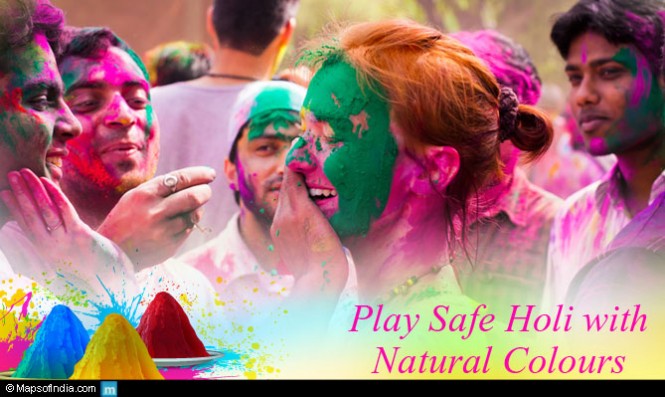
 The countdown is about to end as Holi is approaching within a day. The festival is bringing lots of joyous and happy moments for us. Markets are decorated well and shopkeepers are busy selling multi-coloured water guns, gulals and other Holi accessories. The plethora of bright colours looks very attractive and on a busy day, we can see the children asking for more colours and balloons. But most of all the synthetic colours we use are made of toxic chemicals which if once exposed to the skin might prove to be very dangerous for skin and eyes.
Harmful Components in Synthetic “Gulal”
Basically, the variety of “gulals” that are available in the market are usually meant for industrial and dyeing purposes. Some of the harmful elements found in these colours are:- Copper sulphate gives the green colour
- Mercury sulphate is used for red colour
- Lead oxide for black
- Aluminium bromide for silver
- Chromium iodide for purple colour
- Prussian blue for blue colour
- Shinny colours are a result of the powdered glass being added to the gulal
Harmful Effects
The materials used in synthetic colours are toxic and can lead to:- Eye irritation
- Skin allergies
- Blindness
- Dust allergies
- Rashes, and in extreme cases various chronic ailments and terminal diseases.
Growing Importance of Herbal or Natural Colours
No matter how attractive these colours may seem, it is very essential to check the quality so as to avoid health problems that may follow. This ancient festival of colours can be more fun and harmless if you play with natural or organic colours. In fact, in recent years, the importance of eco-friendly and chemical-free colours has been stressed. These colours are skin-friendly and are also not harmful to the environment. The basic features of organic colours are:- Non-toxic
- Skin-friendly
- Free from heavy metals
- Easy to remove
- Organic ingredients