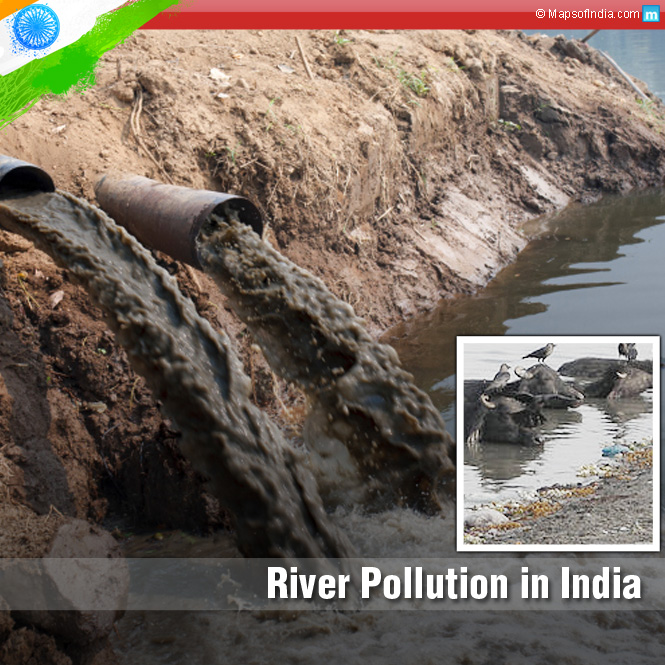
 India is a blessed country when we consider its rich natural sources of water in the form of numerous rivers and lakes. The country has rightly been referred to as the “Land of Rivers” and the people worship the rivers as gods and goddesses. But what is ironical is that in spite of our profound respect and reverence for our rivers, we have not been able to maintain their purity, cleanliness and the physical well-being. Be it Ganga, Yamuna, Brahmaputra or Kaveri or any other river flowing in the soil of our motherland, not a single river is free from pollution. River pollution has been causing serious water-borne diseases and health problems affecting human population as well as animals, fish, and birds in the environment.
Causes of river pollution
River pollution is increasing day by day. In spite of various governmental projects going on in many rivers, there is no sign of water pollution being prevented or stopped. Whom do we blame? Lots of factors lead to water pollution and reducing overall quality of river water. Some of the most serious contributing factors are:
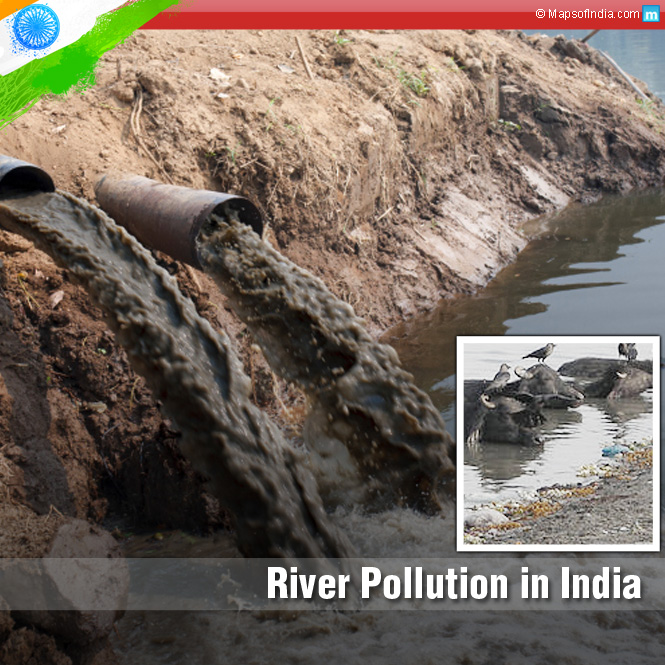
India is a blessed country when we consider its rich natural sources of water in the form of numerous rivers and lakes. The country has rightly been referred to as the “Land of Rivers” and the people worship the rivers as gods and goddesses. But what is ironical is that in spite of our profound respect and reverence for our rivers, we have not been able to maintain their purity, cleanliness and the physical well-being. Be it Ganga, Yamuna, Brahmaputra or Kaveri or any other river flowing in the soil of our motherland, not a single river is free from pollution. River pollution has been causing serious water-borne diseases and health problems affecting human population as well as animals, fish, and birds in the environment.
Causes of river pollution
River pollution is increasing day by day. In spite of various governmental projects going on in many rivers, there is no sign of water pollution being prevented or stopped. Whom do we blame? Lots of factors lead to water pollution and reducing overall quality of river water. Some of the most serious contributing factors are:
- Industrial wastes, mixtures of chemicals, heavy metals are all discharged in water and these are difficult to clean up.
- Agricultural wastes, chemicals, feritilisers, pesticides used in agriculture have made the river water bodies contaminated.
- Nature’s rain also brings with it pollutants as it falls through polluted air. We call this acid rain, which when reached the soil, releases harmful substances.
- Domestic wastes from households and the sewage that we throw into rivers increases the pollution levels.
- Regular disposal of plastic bags and plastic objects, solid wastes, flowers, garlands is another cause of pollution.
- People responding to nature’s call in open spaces near the water bodies also contribute to river pollution.
- Animals washing, car washing, clothes washing are other causes.
- Another cause of river pollution is the dumping of human remains, partially burned bodies, dead bodies, which pose serious health threats.
- Out of the 445 rivers surveyed, not even a quarter of them are fit for bathing.
- Indian cities generate 10 billion gallons or 38 billion litres of municipal waste water every day, out of which only 29% of it is treated.
- The Central Pollution Control Board also stated that there were only 160 sewerage systems and sewage treatment plants in nearly 8,000 towns surveyed in 2011.
- Only 20% out of nearly 40,000 million litres of sewage produced daily in Indian cities are treated.
- Yamuna has become a garbage dump area with more than 57 % of Delhi's waste thrown into it.
- Only 55% of Delhi’s residents are connected to a proper sewerage system.
- According to the CSE, around 80% of Yamuna’s pollution is due to raw sewage.
- Ganga is considered to be the most polluted river in India.
- Approximately 1 billion litres of raw, untreated sewage is dumped in Ganga regularly.
- Ganga contains 60,000 faecal coliform bacteria per 100 ml, which is a threat to human health.