| Delhi-Meerut RRTS Stations | |||
| Elevated | Underground | Depot | |
| Jangpura | Meerut South | Anand Vihar | Duhai Depot |
| Sarai Kale Khan | Partapur | Meerut Central | Modipuram Depot |
| New Ashok Naga | Rithani | Bhaisali | |
| Sahibabad | Shatabdi Nagar | Begumpul | |
| Ghaziabad | Bramhapuri | ||
| Guldhar | M E S Colony | ||
| Duhai | Daurli Metro | ||
| Muradnagar | Meerut North | ||
| Modi Nagar South | Modipuram | ||
| Modi Nagar North | |||
- The Delhi-Meerut RRTS corridor is 82.15 Km long. Out of which, 70 Km of the corridor is elevated and 12 Km underground.
- It will cover the distance from Delhi to Meerut in 55 minutes.
- Two maintenance depots are created at Duhai and Modipuram.
- The total cost of completion of this project is ₹30,274 crore.
- Different investors do the funding for RRTS. Around $1 Billion is invested by ADB, and $500 Million are invested by NDB and AIIB each. Apart from them, the central government is investing 20%, the Delhi government 3.22%, and the Uttar Pradesh government is investing 16.68%.
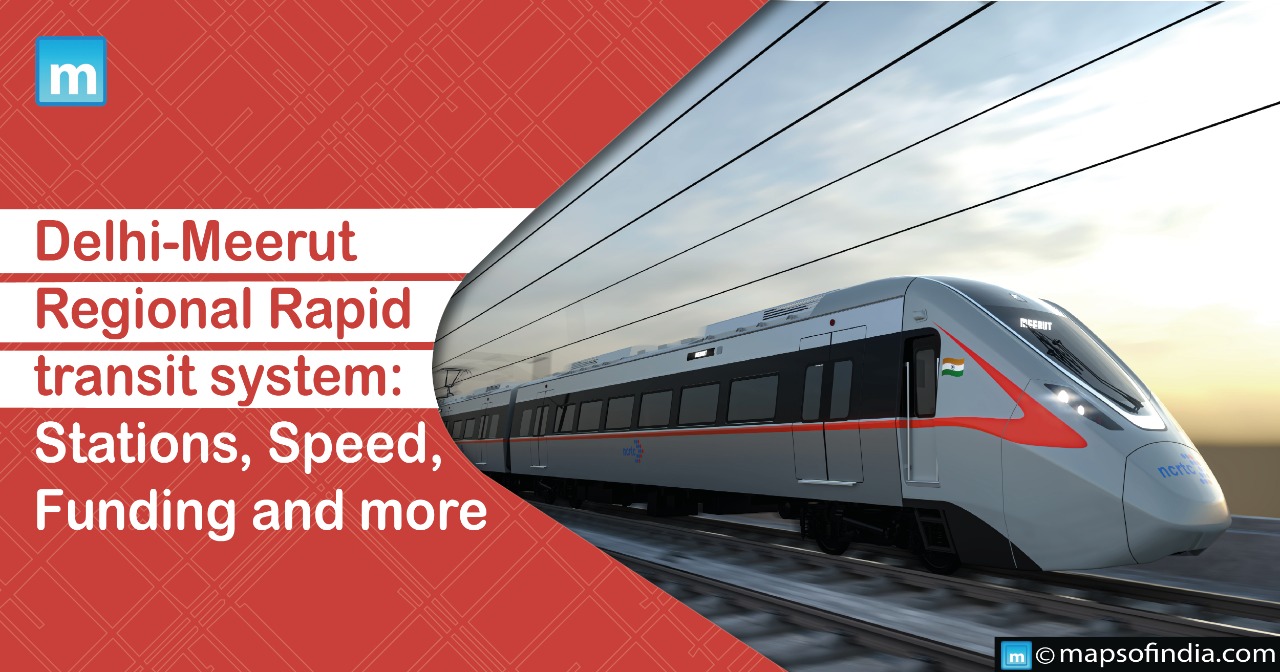
- A total of 40 trainsets containing 210 coaches will be manufactured. Off lately, the first train set has already been delivered.
- These trains are well equipped with 2x2 cushioned seats, premium and standard coaches, overhead luggage racks, wifi, charging sockets, infotainment systems, and other modern facilities.
- The ticket prices and ticketing system that RRTS will adopt are still in the planning process.
- A Memorandum of Understanding is signed with Solar Energy Corporation of India for the energy needs of RRTS.
- While the design speed of the Metro is 90 Km per hour, it is 180 Km per hour for the RRTS.
- The average speed of RRTS is 100 Km per hour generally and 150 Km per hour when running non-stop. On the other hand, the average speed for Metro is 32 Km per hour.
- To travel a distance of 100 Km, Metro will take 3 hours, and RRTS will take only an hour.
- Delhi - Ghaziabad - Meerut Corridor
- Delhi - Gurugram - SNB - Alwar corridor
- Delhi - Panipat Corridor