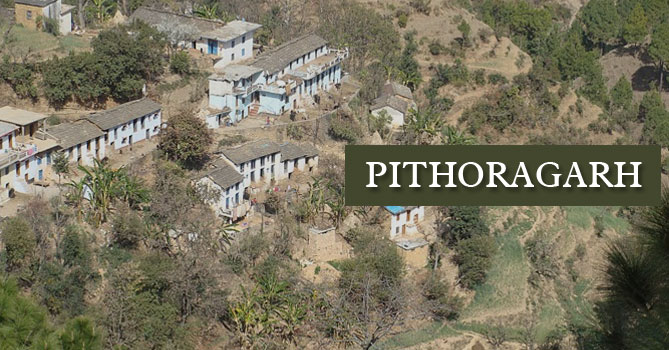
 Little Kashmir - That is the name conferred upon Pithoragarh - the easternmost district of the Himalayan state of Uttarakhand. As the name suggests, this region is breathtakingly beautiful. But what makes Pithoragarh better than many parts of Kashmir is its pristine and untouched beauty, unsullied by hoards of tourists. Among its greatest attractions is the majestic Nanda Devi, India’s second highest peak. Pilgrims on the sacred Kailash Mansarovar yatra need to go through Pithoragarh to make it to their destination. The town of Pithoragarh, the district headquarters, is a quaint and charming town - a veritable paradise for those who answer the call of the mountains and dare venture beyond Almora.
Not far from Tibet and Nepal, the cultural influences of these two regions on the people of Pithoragarh are evident. The recorded history of Pithoragarh goes back many centuries but this hilly region rose to prominence only when the Pals annexed it and ruled over it in the 14th century. Through the mid 15th century, however, the Pithoragarh region became a significant part of the kingdom of the Chands (lost to and regained from the Brahm kings). The Chand kings commissioned the famous Pithoragarh fort here. The Chand rulers were kind and great patrons of art. They left an indelible impression on the cultural legacy of this region.
Little Kashmir - That is the name conferred upon Pithoragarh - the easternmost district of the Himalayan state of Uttarakhand. As the name suggests, this region is breathtakingly beautiful. But what makes Pithoragarh better than many parts of Kashmir is its pristine and untouched beauty, unsullied by hoards of tourists. Among its greatest attractions is the majestic Nanda Devi, India’s second highest peak. Pilgrims on the sacred Kailash Mansarovar yatra need to go through Pithoragarh to make it to their destination. The town of Pithoragarh, the district headquarters, is a quaint and charming town - a veritable paradise for those who answer the call of the mountains and dare venture beyond Almora.
Not far from Tibet and Nepal, the cultural influences of these two regions on the people of Pithoragarh are evident. The recorded history of Pithoragarh goes back many centuries but this hilly region rose to prominence only when the Pals annexed it and ruled over it in the 14th century. Through the mid 15th century, however, the Pithoragarh region became a significant part of the kingdom of the Chands (lost to and regained from the Brahm kings). The Chand kings commissioned the famous Pithoragarh fort here. The Chand rulers were kind and great patrons of art. They left an indelible impression on the cultural legacy of this region.
Little Kashmir - That is the name conferred upon Pithoragarh - the easternmost district of the Himalayan state of Uttarakhand. As the name suggests, this region is breathtakingly beautiful. But what makes Pithoragarh better than many parts of Kashmir is its pristine and untouched beauty, unsullied by hoards of tourists. Among its greatest attractions is the majestic Nanda Devi, India’s second highest peak. Pilgrims on the sacred Kailash Mansarovar yatra need to go through Pithoragarh to make it to their destination. The town of Pithoragarh, the district headquarters, is a quaint and charming town - a veritable paradise for those who answer the call of the mountains and dare venture beyond Almora.
Not far from Tibet and Nepal, the cultural influences of these two regions on the people of Pithoragarh are evident. The recorded history of Pithoragarh goes back many centuries but this hilly region rose to prominence only when the Pals annexed it and ruled over it in the 14th century. Through the mid 15th century, however, the Pithoragarh region became a significant part of the kingdom of the Chands (lost to and regained from the Brahm kings). The Chand kings commissioned the famous Pithoragarh fort here. The Chand rulers were kind and great patrons of art. They left an indelible impression on the cultural legacy of this region.
Little Kashmir - That is the name conferred upon Pithoragarh - the easternmost district of the Himalayan state of Uttarakhand. As the name suggests, this region is breathtakingly beautiful. But what makes Pithoragarh better than many parts of Kashmir is its pristine and untouched beauty, unsullied by hoards of tourists. Among its greatest attractions is the majestic Nanda Devi, India’s second highest peak. Pilgrims on the sacred Kailash Mansarovar yatra need to go through Pithoragarh to make it to their destination. The town of Pithoragarh, the district headquarters, is a quaint and charming town - a veritable paradise for those who answer the call of the mountains and dare venture beyond Almora.
Not far from Tibet and Nepal, the cultural influences of these two regions on the people of Pithoragarh are evident. The recorded history of Pithoragarh goes back many centuries but this hilly region rose to prominence only when the Pals annexed it and ruled over it in the 14th century. Through the mid 15th century, however, the Pithoragarh region became a significant part of the kingdom of the Chands (lost to and regained from the Brahm kings). The Chand kings commissioned the famous Pithoragarh fort here. The Chand rulers were kind and great patrons of art. They left an indelible impression on the cultural legacy of this region.