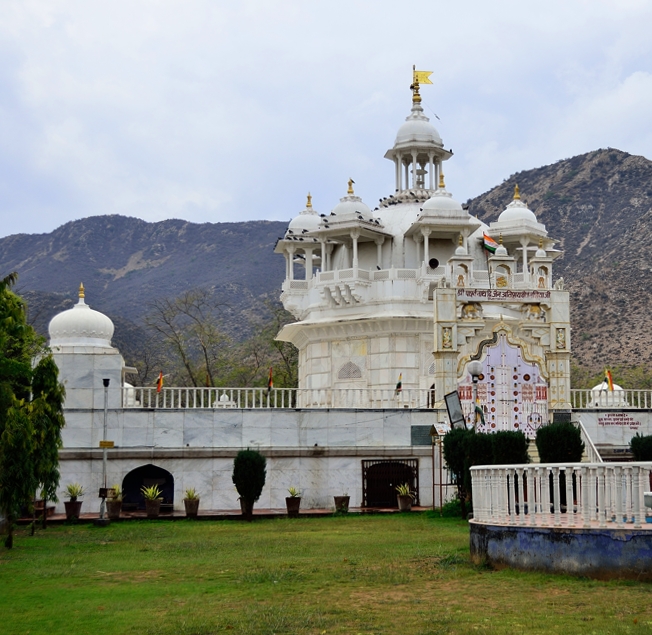
 Shri Digambar Jain Nasiya (Parshvanath) Temple[/caption]
By the time the driver parked the car outside Shri Digambar Jain (Parshvanath) Nasiya Temple, our first stop of the day, rain had stopped. A few visitors were already there. The temple door was locked.
[caption id="attachment_42313" align="aligncenter" width="665"]
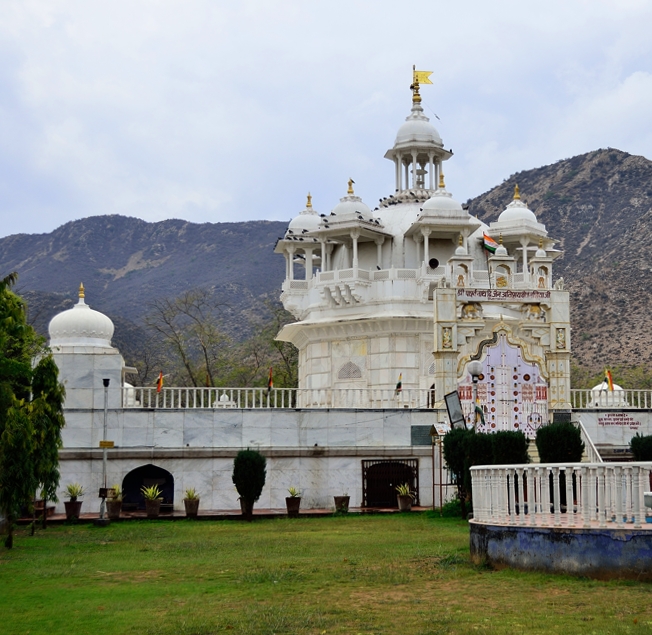
Shri Digambar Jain Nasiya (Parshvanath) Temple[/caption]
By the time the driver parked the car outside Shri Digambar Jain (Parshvanath) Nasiya Temple, our first stop of the day, rain had stopped. A few visitors were already there. The temple door was locked.
[caption id="attachment_42313" align="aligncenter" width="665"]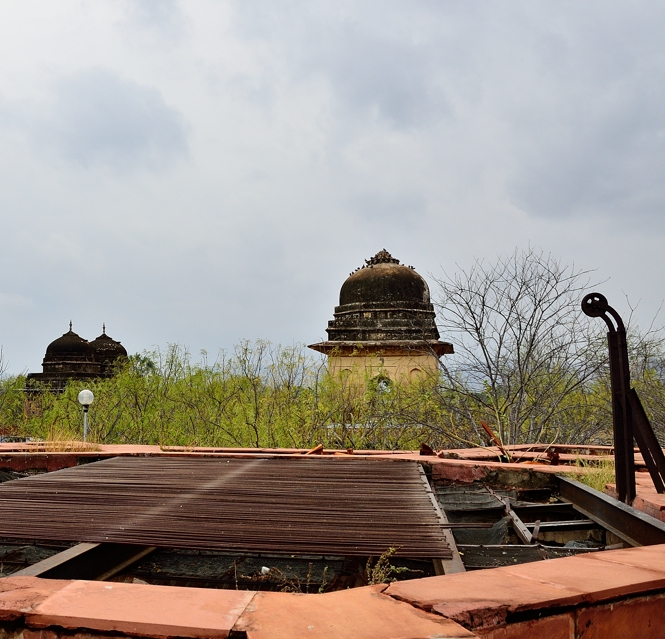 An old stepwell within the temple compound[/caption]
We walked within the temple compound consisting of a marble pillar, a statue of Lord Parshvanath, a guesthouse, a number of old Mughal-style structures, and an old stepwell that was dry.
[caption id="attachment_42315" align="aligncenter" width="665"]
An old stepwell within the temple compound[/caption]
We walked within the temple compound consisting of a marble pillar, a statue of Lord Parshvanath, a guesthouse, a number of old Mughal-style structures, and an old stepwell that was dry.
[caption id="attachment_42315" align="aligncenter" width="665"]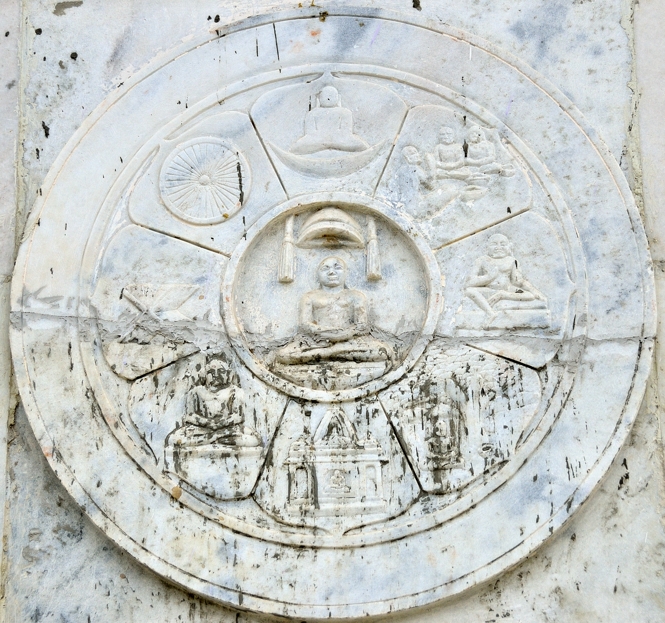 A relief panel on the exterior wall of the temple[/caption]
The temple dedicated to Lord Parshvanath, one of the Tirthankaras (saviours) of Jainism, is made of marble. You can easily identify the saviour by the snake-hood canopy over his head. The canopy is part of all his images, paintings, and sculptures because, according to legends, a black serpent crawled by the side of his mother when she was pregnant.
[caption id="attachment_42312" align="aligncenter" width="665"]
A relief panel on the exterior wall of the temple[/caption]
The temple dedicated to Lord Parshvanath, one of the Tirthankaras (saviours) of Jainism, is made of marble. You can easily identify the saviour by the snake-hood canopy over his head. The canopy is part of all his images, paintings, and sculptures because, according to legends, a black serpent crawled by the side of his mother when she was pregnant.
[caption id="attachment_42312" align="aligncenter" width="665"]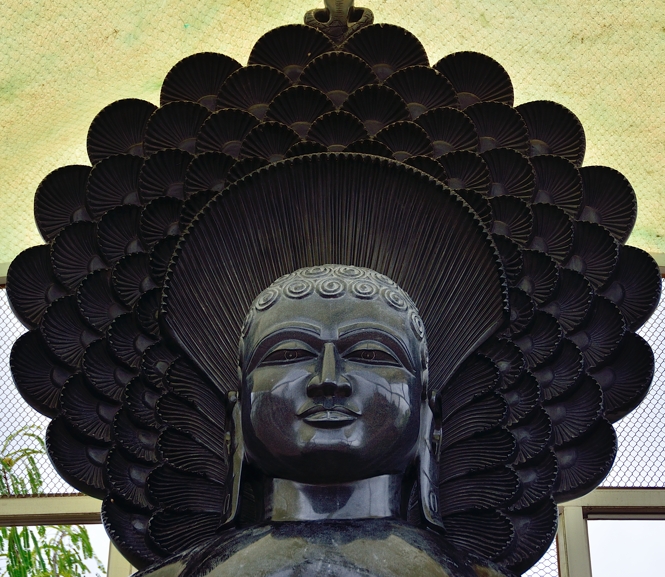 A statue of Shri Parshvanath within the Jain Nasiya temple compound[/caption]
Mughal Gate, the next destination, was a few steps from the temple. However, we had to wait till the rain ran out of steam.
[caption id="attachment_42316" align="aligncenter" width="665"]
A statue of Shri Parshvanath within the Jain Nasiya temple compound[/caption]
Mughal Gate, the next destination, was a few steps from the temple. However, we had to wait till the rain ran out of steam.
[caption id="attachment_42316" align="aligncenter" width="665"]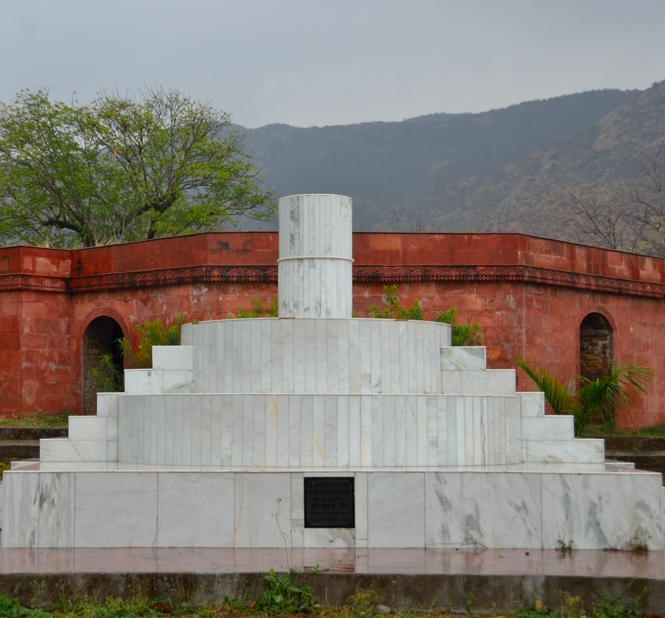 Pandu Shila, a memorial near the stepwell[/caption]
We strolled through the multistorey yellow gate standing amid lush fields. The sky changed its hue from flat grey to dramatic blue and grey.
[caption id="attachment_42324" align="aligncenter" width="665"]
Pandu Shila, a memorial near the stepwell[/caption]
We strolled through the multistorey yellow gate standing amid lush fields. The sky changed its hue from flat grey to dramatic blue and grey.
[caption id="attachment_42324" align="aligncenter" width="665"]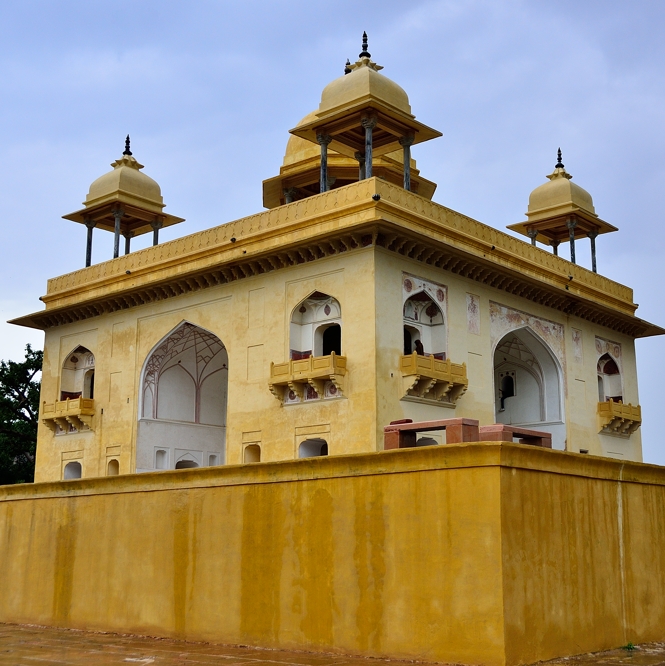 Mughal Gate located opposite Jain Nasiya[/caption]
A brigade of kids exuded curiosity at our arrival. Excited faces could also be seen among them.
[caption id="attachment_42327" align="aligncenter" width="658"]
Mughal Gate located opposite Jain Nasiya[/caption]
A brigade of kids exuded curiosity at our arrival. Excited faces could also be seen among them.
[caption id="attachment_42327" align="aligncenter" width="658"]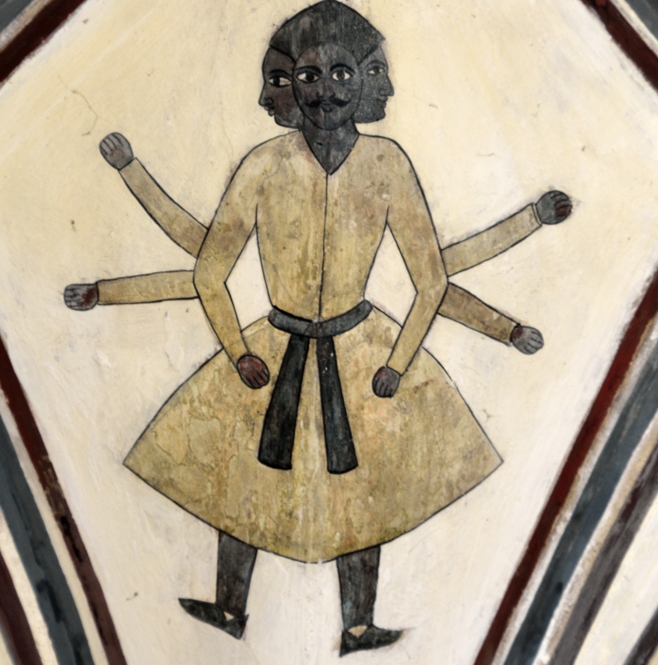 A 3-faced figure on the ceiling of Mughal Gate[/caption]
This protected monument is considered a replica of Taj Mahal. Old frescoes are still there. Raja Man Singh had built the gate for Emperor Akbar in the 16th century. The emperor used to halt here during his hunting expeditions and tours to Ajmer.
[caption id="attachment_42317" align="aligncenter" width="665"]
A 3-faced figure on the ceiling of Mughal Gate[/caption]
This protected monument is considered a replica of Taj Mahal. Old frescoes are still there. Raja Man Singh had built the gate for Emperor Akbar in the 16th century. The emperor used to halt here during his hunting expeditions and tours to Ajmer.
[caption id="attachment_42317" align="aligncenter" width="665"]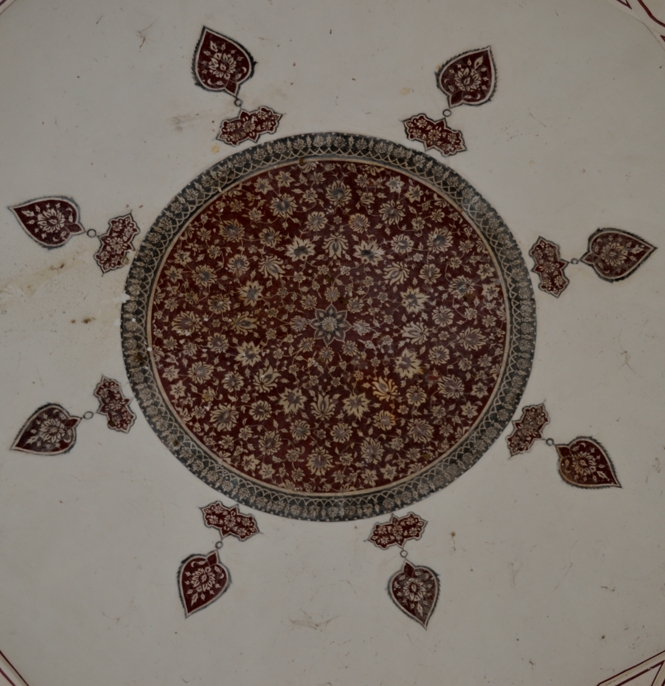 A floral design on the ceiling of Mughal Gate[/caption]
We drove to our third destination of the day: Pandu Caves and museum at Bhim Ki Dungari (Pandu Hill). It was quiet on the weather front. We walked up to the main cave from the parking lot.
From the dungari, we got a bird’s eye view of the Mughal Gate and the Jain Temple. A huge cave in the hill houses a statue of nandi and a shivling decorated with 12 faces of Shiva in black stone. Many other caves, which are believed to be used by the brothers of Bhim, are also located nearby. Some of these caves feature rock edicts. Out of these, some edicts are illegible. The readable edicts have already been transferred to the museums.
[caption id="attachment_42325" align="aligncenter" width="665"]
A floral design on the ceiling of Mughal Gate[/caption]
We drove to our third destination of the day: Pandu Caves and museum at Bhim Ki Dungari (Pandu Hill). It was quiet on the weather front. We walked up to the main cave from the parking lot.
From the dungari, we got a bird’s eye view of the Mughal Gate and the Jain Temple. A huge cave in the hill houses a statue of nandi and a shivling decorated with 12 faces of Shiva in black stone. Many other caves, which are believed to be used by the brothers of Bhim, are also located nearby. Some of these caves feature rock edicts. Out of these, some edicts are illegible. The readable edicts have already been transferred to the museums.
[caption id="attachment_42325" align="aligncenter" width="665"]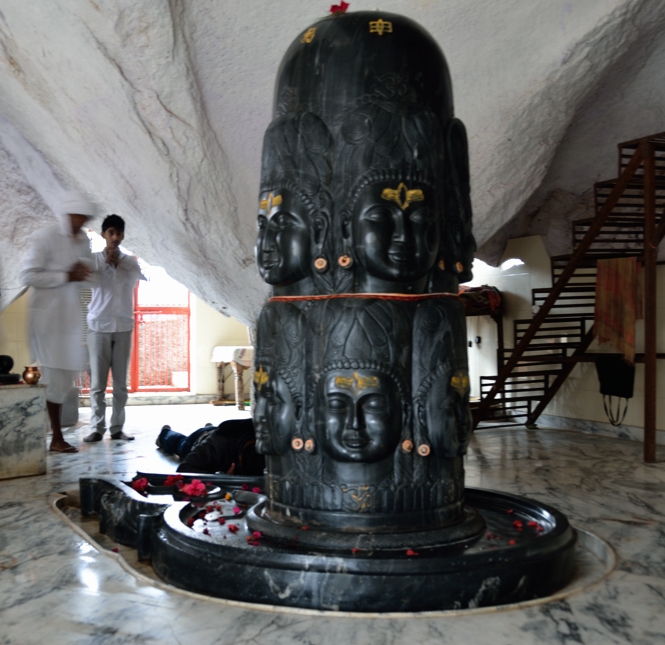 12 faces of Shiva on the phallus sculpted within the cave temple at Pandu Hill[/caption]
Viratnagar (Bairath), the capital of ancient Matsyadesa, is a historically important place because of the following reasons:
12 faces of Shiva on the phallus sculpted within the cave temple at Pandu Hill[/caption]
Viratnagar (Bairath), the capital of ancient Matsyadesa, is a historically important place because of the following reasons:
- According to legends, Pandava brothers (Mahabharata) spent 13-year agyatwas (exile) in the town ruled by King Virat.
- It was the venue for the parleys initiated to avoid the war between Pandavas and Kauravas. The King Virat used to act as a peacemaker during these parleys.
- The cave shelters found in the town are testimony to pre-historic communities. Two specimens of Stone Age shelters are on the Beejak ki Pahari, where remains of a Buddhist monastery and stupa still await their celebrity visitor King Asoka. According to legends, Asoka used to frequent this place and meditate here. The town was famous for its copper mines.
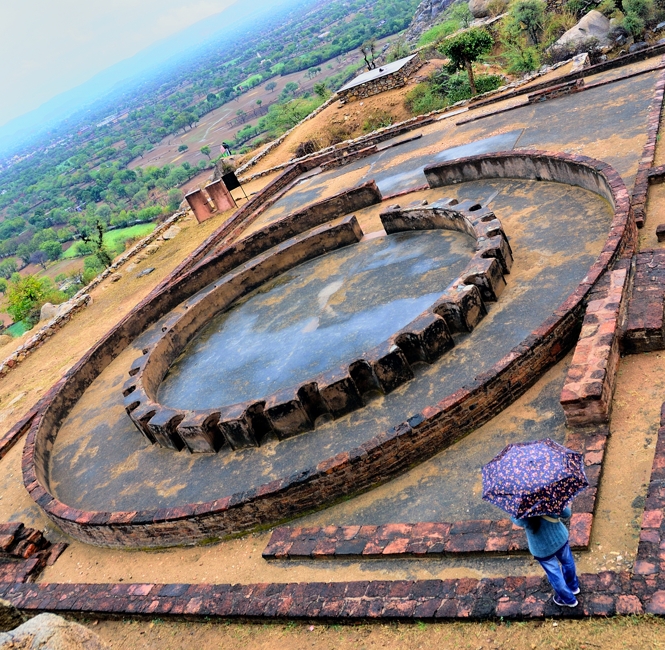 Remains of a Buddhist stupa on Beejak-ki-Pahari[/caption]
During the excavations at the hill in 1930s, the remains of the Mauryan stupa was found. It was made of wooden pillars and bricks joined with lime plaster. There were 26 octagonal pillars. None of these exist today. The Asoka inscriptions discovered from here belong to 3rd century B.C.
Even before we could see all the attractions in Viratnagar, evening was upon us. The place is really true to its name , which means a vast place. It needs at least two days to see entire legacy of King Asoka, protagonists from the epic Mahabharata, and other legends.
Remains of a Buddhist stupa on Beejak-ki-Pahari[/caption]
During the excavations at the hill in 1930s, the remains of the Mauryan stupa was found. It was made of wooden pillars and bricks joined with lime plaster. There were 26 octagonal pillars. None of these exist today. The Asoka inscriptions discovered from here belong to 3rd century B.C.
Even before we could see all the attractions in Viratnagar, evening was upon us. The place is really true to its name , which means a vast place. It needs at least two days to see entire legacy of King Asoka, protagonists from the epic Mahabharata, and other legends.