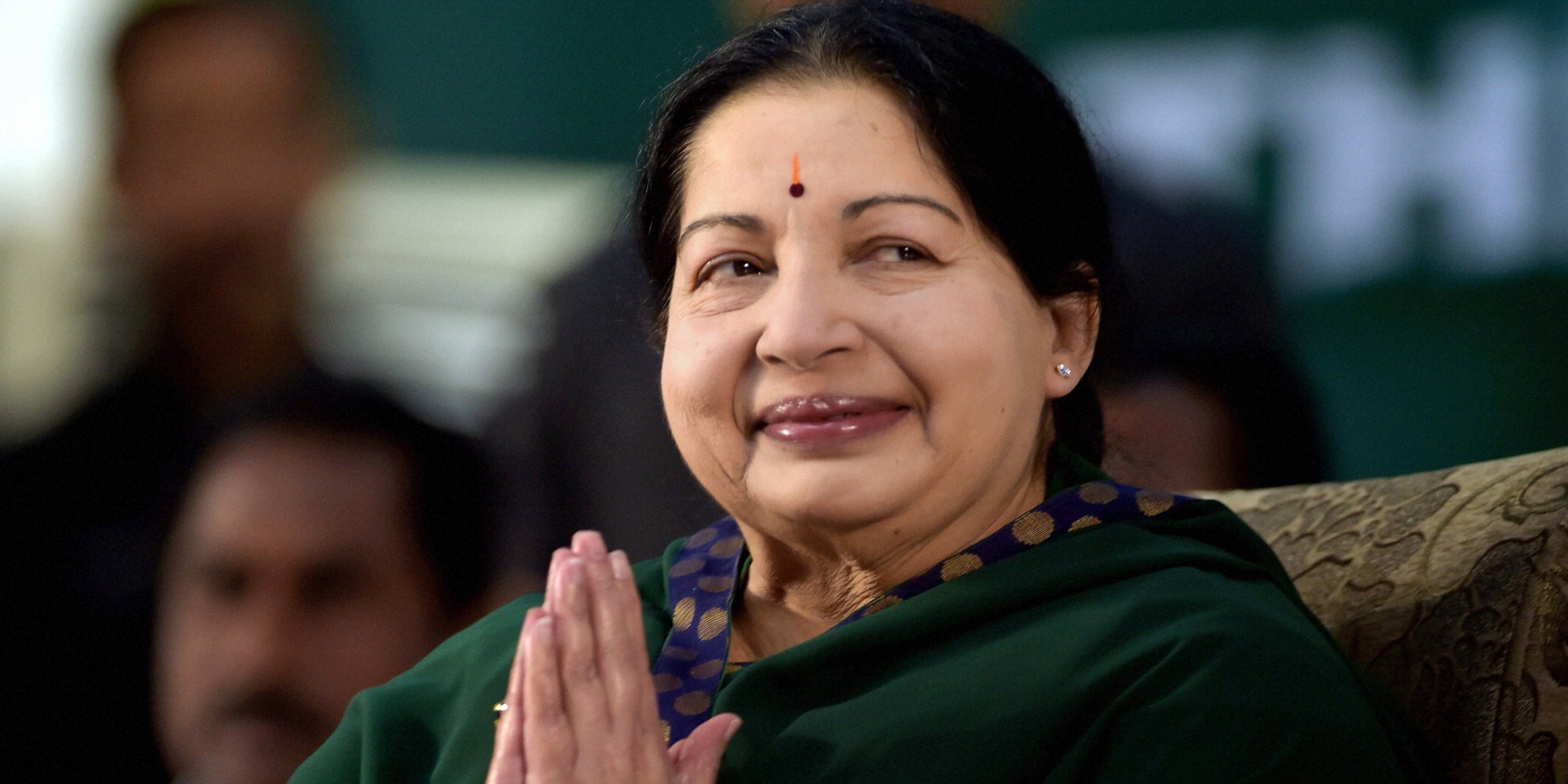
 Even though she had joined politics at the behest of her mentor M. G. Ramachandran in 1982, J. Jayalalithaa required no introduction. She was a successful actor who had appeared in more than 100 films, including in Hindi. She was a quick learner and perhaps this was the reason she took no time to learn the art of politics, even though the odds were heavily stacked against her.
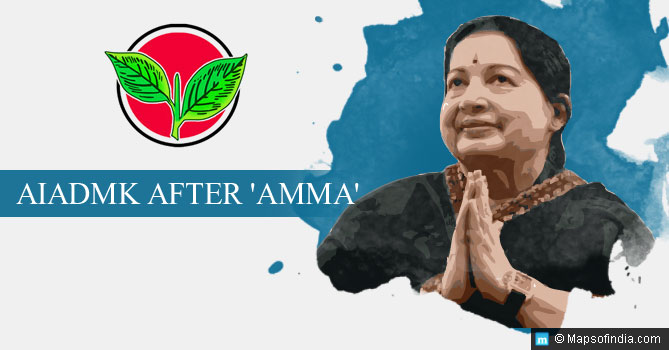
First of all, she was a female in the political landscape of Tamil Nadu and secondly, she was a Brahmin. In the male dominated Dravidian politics which existed on anti-Brahmin plank, not only did she manage to establish herself as a true successor to Ramachandran after his death in 1987, but she also proved her critics wrong when her party the All India Anna Dravida Munnetra Kazhagam (AIADMK) got landslide victory in the 1991 assembly polls in the state. She went on to become Tamil Nadu's chief minister for a record six times, indicating clearly the loyalty and support she commanded in the state. In fact, in the past three decades of this southern state’s politics, no one managed to form government two times in a row, except for Jayalalithaa. She symbolised stability and development in Tamil Nadu. But now when she is no more, people have begun serious speculations over the future of the AIADMK and the survival of the party-led Tamil Nadu government whose term ends in 2021. Like all regional parties, the AIADMK has been a one-man show (one-woman show rather) political outfit which derives sustenance from the charisma, magnetism and dynamism of their supremos. They seem to struggle for existence when their leaders are gone.
Even though she had joined politics at the behest of her mentor M. G. Ramachandran in 1982, J. Jayalalithaa required no introduction. She was a successful actor who had appeared in more than 100 films, including in Hindi. She was a quick learner and perhaps this was the reason she took no time to learn the art of politics, even though the odds were heavily stacked against her.
First of all, she was a female in the political landscape of Tamil Nadu and secondly, she was a Brahmin. In the male dominated Dravidian politics which existed on anti-Brahmin plank, not only did she manage to establish herself as a true successor to Ramachandran after his death in 1987, but she also proved her critics wrong when her party the All India Anna Dravida Munnetra Kazhagam (AIADMK) got landslide victory in the 1991 assembly polls in the state. She went on to become Tamil Nadu's chief minister for a record six times, indicating clearly the loyalty and support she commanded in the state. In fact, in the past three decades of this southern state’s politics, no one managed to form government two times in a row, except for Jayalalithaa. She symbolised stability and development in Tamil Nadu. But now when she is no more, people have begun serious speculations over the future of the AIADMK and the survival of the party-led Tamil Nadu government whose term ends in 2021. Like all regional parties, the AIADMK has been a one-man show (one-woman show rather) political outfit which derives sustenance from the charisma, magnetism and dynamism of their supremos. They seem to struggle for existence when their leaders are gone.
Even though she had joined politics at the behest of her mentor M. G. Ramachandran in 1982, J. Jayalalithaa required no introduction. She was a successful actor who had appeared in more than 100 films, including in Hindi. She was a quick learner and perhaps this was the reason she took no time to learn the art of politics, even though the odds were heavily stacked against her.
First of all, she was a female in the political landscape of Tamil Nadu and secondly, she was a Brahmin. In the male dominated Dravidian politics which existed on anti-Brahmin plank, not only did she manage to establish herself as a true successor to Ramachandran after his death in 1987, but she also proved her critics wrong when her party the All India Anna Dravida Munnetra Kazhagam (AIADMK) got landslide victory in the 1991 assembly polls in the state. She went on to become Tamil Nadu's chief minister for a record six times, indicating clearly the loyalty and support she commanded in the state. In fact, in the past three decades of this southern state’s politics, no one managed to form government two times in a row, except for Jayalalithaa. She symbolised stability and development in Tamil Nadu. But now when she is no more, people have begun serious speculations over the future of the AIADMK and the survival of the party-led Tamil Nadu government whose term ends in 2021. Like all regional parties, the AIADMK has been a one-man show (one-woman show rather) political outfit which derives sustenance from the charisma, magnetism and dynamism of their supremos. They seem to struggle for existence when their leaders are gone.
Even though she had joined politics at the behest of her mentor M. G. Ramachandran in 1982, J. Jayalalithaa required no introduction. She was a successful actor who had appeared in more than 100 films, including in Hindi. She was a quick learner and perhaps this was the reason she took no time to learn the art of politics, even though the odds were heavily stacked against her.
First of all, she was a female in the political landscape of Tamil Nadu and secondly, she was a Brahmin. In the male dominated Dravidian politics which existed on anti-Brahmin plank, not only did she manage to establish herself as a true successor to Ramachandran after his death in 1987, but she also proved her critics wrong when her party the All India Anna Dravida Munnetra Kazhagam (AIADMK) got landslide victory in the 1991 assembly polls in the state. She went on to become Tamil Nadu's chief minister for a record six times, indicating clearly the loyalty and support she commanded in the state. In fact, in the past three decades of this southern state’s politics, no one managed to form government two times in a row, except for Jayalalithaa. She symbolised stability and development in Tamil Nadu. But now when she is no more, people have begun serious speculations over the future of the AIADMK and the survival of the party-led Tamil Nadu government whose term ends in 2021. Like all regional parties, the AIADMK has been a one-man show (one-woman show rather) political outfit which derives sustenance from the charisma, magnetism and dynamism of their supremos. They seem to struggle for existence when their leaders are gone.