The Origins of Kalamkari
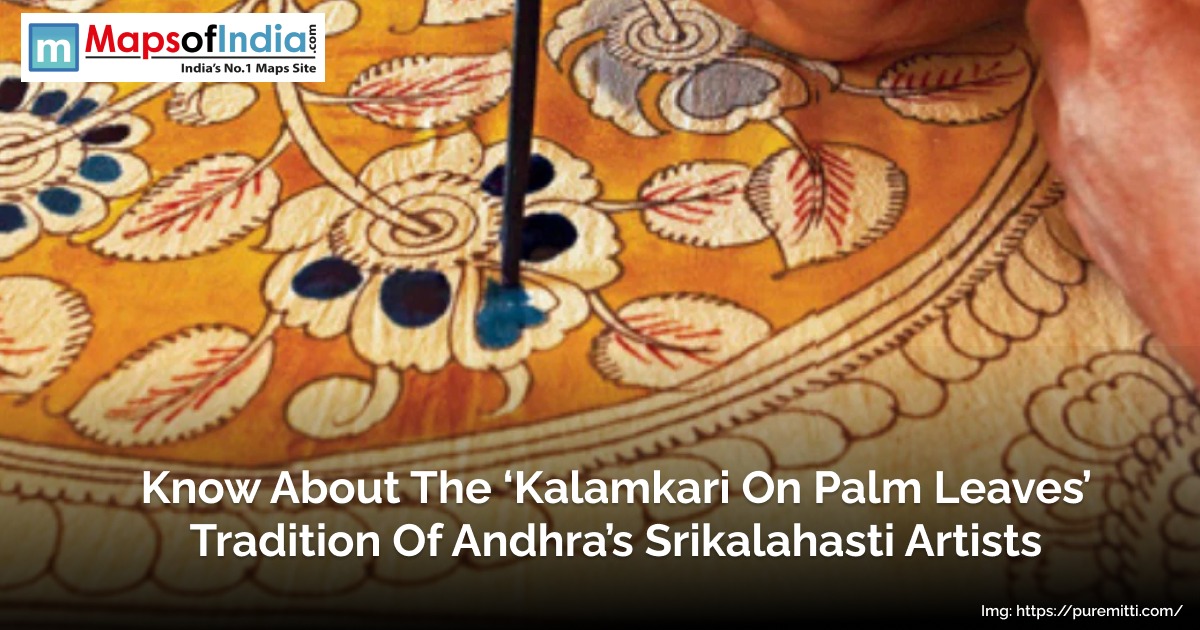
Kalamkari is derived from the Persian words: 'kalam' (pen) and 'KARI' (craftsmanship), which means 'painting pen style.' It is a more than 3000-year-old art form, and Indian literature generally refers to it when discussing it. Pictorial epic notations of any religion, be it the Ramayana, Mahabharata, or the Puranas, into which many great events or characters are to be pictorialists, made extensive use of Kalamkari and became one of the most important media involved.Kalamkari is of two types:
Machilipatnam Kalamkari: A Kalamkari carved through the block-print method. Srikalahasti Kalamkari: Hand-painted in freehand drawings, done entirely by human effort. Temple-town Srikalahasti art, which is used in much divine worship, influences temple hangings and chariot banners. A significant feature of this art style, Srikalahasti, also affects the temple's environmental surroundings: its hangings and chariot banners.Kalamkari on Palm Leaves: Eco-Friendly Revived in the Textile
Before the advent of paper and other modern fibres, the Indigenous people of India wrote and painted their stories with the help of palm leaves (Coleoptera). They used them to ink down the tablets of knowledge, sciences, and other scriptures. The palm-leaf manuscripts proliferated throughout South India and different zones, with their scope spreading from religious scriptures to storied folklore and finally to medical sciences. This ingenious fusion of Kalamkari style and palm-leaf art means the virtuoso artists from Srikalahasti have breathed new life into this art form by crafting nature-friendly products that promise timelessness and beauty.The Process of Creating Kalamkari on Palm Leaves
-
Selecting and Preparing the Palm Leaves
-
Drawing the Design
-
Preparation of Natural Dyes
-
Painting and Detailing
-
Preservation