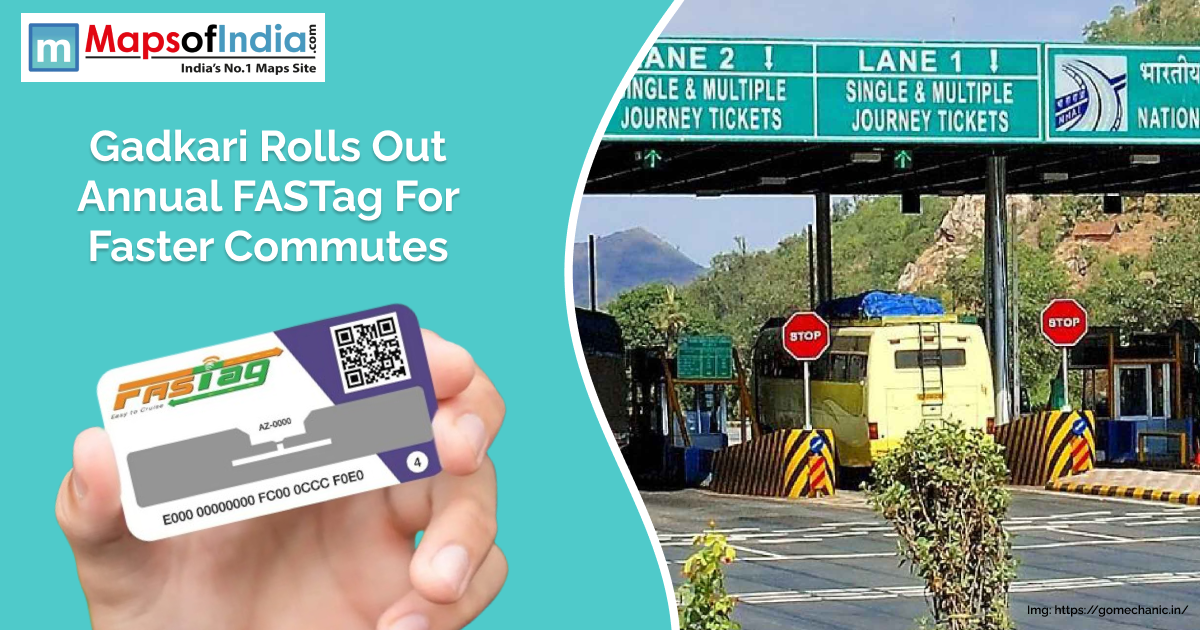
What is the Annual FASTag?
The Annual FASTag is an idea, according to which vehicle owners will pay a one-year toll price, rather than a price that would depend on the distance travelled or on the number of times a vehicle owner crosses toll booths. Once the payment is complete, the vehicle can access the entire highway network in the country free of charge for the entire year. This change is in contrast to the scenarios of the current prepaid FASTag framework, where a particular vehicle is billed dynamically at each toll plaza at a rate based on the distance travelled and the type of road. With the new system, FASTags will act more as a yearly subscription to use the highway. The Ministry has not yet come up with the date of the rollout; however, pilot testing and consultations with stakeholders are said to be in progress.Why Was This Announced?
The FASTag annual plan is a result of the various barriers to the established toll system, in principle, both logistical and economic.- Congestion at Toll Plazas: The merge of vehicles rarely diminishes despite using electronic toll collection at the plaza because of several reasons; the car scanning can make mistakes, or the vehicle might have a low balance, or some argument has taken place.
- Variable Charges: Users pay various amounts of toll based on the distance, type of vehicle and location of the office, which creates confusion and dissatisfaction.
- Revenue Leakage: As much as FASTag is digital, there have been cases of revenue leakage, avoidance and manipulation.
- Need for Uniformity: The government needs to have a uniform, equitable, and predictable system.
Benefits of the Annual FASTag System
The FASTag initiative, proposed annually, might come along with numerous benefits to various stakeholders:1. For Commuters and Car Owners
- No more stop-and-pay: Road travel turns into frictionless with the payment of a one-time amount.
- Predictable Costs: You can forget about the charges on the toll and do yearly budgeting.
- Time Saving: Improvement in the speed of movement across toll booths, resulting in great travel time saving.
2. For Commercial Transport and Logistics
- Improved Fleet Management: Transport firms are able to estimate the cost of the tolls per year and make operations efficient.
- Reduced Fuel Consumption: Energy saved by states is through minimizing the wastage of fuel at the toll gates by reducing the incidences of idling.
- Efficiency in Delivery: Faster moves lead to improved delivery turnaround.
3. For the Government
- Upfront Revenue Collection: Toll collection on a yearly basis facilitates stabilized and upfront revenue collection.
- Data Insights: Facilitates in monitoring the vehicle usage trends in order to make effective policies.
- Reduced Enforcement Cost: Enforcement is low in the number of violations and systems that are simplified, which makes enforcement simple and cost-effective.
Concerns and Challenges
However, regardless of the advantages, the proposed system has its collection of problems and criticisms.1. Equity Concerns
The first issue is that low-frequency users might pay more than what they are currently paying. An individual who only uses highways once or twice a year will also feel that the fixed annual fee is expensive as opposed to occasional tolls.2. Cost Calculation
A big question is how the government will arrive at the so-called fair annual fee. Does this take the form of average mileage travelled? Vehicle class? Urban-rural differences?3. Voluntary vs Mandatory
It remains unknown whether the FASTag will be compulsory in all vehicles or will stay an optional one. The side effect is that it might result in opposition when it becomes mandatory.4. Implementation Readiness
Switching to an annual model will necessitate updating of software, training of toll personnel and creation of awareness among the people. This will be important in avoiding confusion.The Bigger Picture: India’s Digital Toll Future
This announcement is only a part of a bigger vision that Nitin Gadkari and the Ministry have about the Indian highways:- GPS-Based Tolling: The government is also trying satellite-based or tolls where users will be charged depending on the amount actually covered.
- Removal of Toll Plazas: By 2027 the government was successful in the elimination of all physical toll plazas and transition fully to automated, location-based tolling.
- Highway Infrastructure Upgrades: Having 25,000 km of new highways under the pipeline and extending electric vehicle corridors, highway infrastructure expansion is perceived as a supplement to development in tolling.
Public and Industry Reactions
The news has resulted in various responses:Logistics Companies
The move has been embraced by most players in the logistics industry, with some observing that the fixed tolling model is beneficial in financial planning as well as optimization of the fleet. Other companies such as VRL Logistics and TCI have mentioned their optimism and also said that they are waiting to get a better clarity on the fee structure.Car Owners
They are still divided in opinions. Some urban populace who commute on a daily basis perceive this as a blessing, but the rural and occasional travellers fear that this will turn into a waste of funds.Economists
They are still divided in opinions. Some urban populace who commute on a daily basis perceive this as a blessing, but the rural and occasional travellers fear that this will turn into a waste of funds.What Comes Next?
As per sources available in the Ministry of Road Transport and Highways:- The Pilot Programs can be carried out on specific expressways such as Delhi-Meerut or Mumbai-Pune expressway.
- Slabs Pricing (depending on the category of the vehicle such as car, SUV, truck and bus) is being worked out.
- Easier subscription and renewal are to be implemented with the help of Mobile App Integration.